Australian Political Landscape Heats Up with Major Announcements and Controversies
As the electoral climate shifts, Prime Minister Albanese announces a massive rescue package, while the Opposition Leader critiques Trump and billionaire Palmer invests heavily in new political endeavors.
In a week marked by significant political activity in Australia, Prime Minister Anthony Albanese deployed a substantial $2.4 billion rescue package aimed at supporting the steelworks in Whyalla, South Australia, accompanied by South Australian Premier Peter Malinauskas.
This announcement reflects ongoing concerns regarding the sustainability of the steel industry in the region, with Malinauskas asserting that the private sector would have to step in or risk nationalisation should a resolution not be found.
During his visit, Albanese emphasized the package as essential for preventing the economic decline of Whyalla, amidst growing pressures from both voters and industry stakeholders.
The announcement comes as Albanese navigates a challenging political landscape, marked by fluctuating opinion poll numbers and an upcoming federal election.
His recent engagements have included informal discussions with constituents that touched on economic issues, particularly a recent rate cut by the Reserve Bank of Australia (RBA).
The RBA's decision to lower interest rates aims to alleviate some financial pressures on households, translating to an estimated saving of approximately $100 per month for the average mortgage holder.
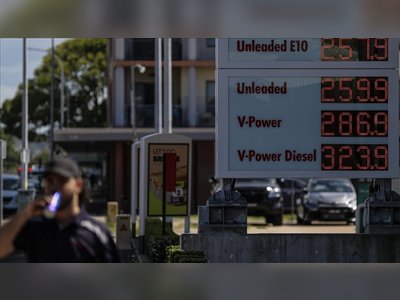
However, rising costs of living, particularly in energy and groceries, continue to exacerbate public discontent.
Opposition Leader Peter Dutton has intensified his scrutiny of the government, questioning whether Australians are better off now than they were three years ago.
Dutton's criticisms have coincided with his open disagreements with former U.S. President Donald Trump, particularly regarding Trump's recent comments on Ukraine.
Dutton voiced concerns that Trump’s potential tariffs on Australia would damage bilateral relations and explicitly condemned Trump’s labeling of Ukrainian President Volodymyr Zelenskyy as a dictator.
Meanwhile, billionaire Clive Palmer has resurfaced in the political arena, announcing a substantial financial commitment to a new political party termed the Trumpet of Patriots (TOP).
This political initiative appears to echo the rhetoric of American political movements, as Palmer seeks to establish an identity distinct from his prior United Australia Party, which struggled to make significant electoral gains.
Palmer's past expenditures on campaign materials amounting to $120 million have drawn attention, as he has pledged to invest heavily again in this new venture before the implementation of new campaign spending regulations.
The political climate is further complicated by impending weather events, as Australia's Bureau of Meteorology strategically altered the naming of an upcoming cyclone, initially expected to bear Albanese's name.
This change has alleviated potential public relations challenges for the government, showcasing the sensitivity surrounding the intersection of environmental issues and political accountability.
As the next federal election looms, political dynamics continue to evolve rapidly, placing added pressure on party leaders as they respond to economic conditions and voter sentiments.
This announcement reflects ongoing concerns regarding the sustainability of the steel industry in the region, with Malinauskas asserting that the private sector would have to step in or risk nationalisation should a resolution not be found.
During his visit, Albanese emphasized the package as essential for preventing the economic decline of Whyalla, amidst growing pressures from both voters and industry stakeholders.
The announcement comes as Albanese navigates a challenging political landscape, marked by fluctuating opinion poll numbers and an upcoming federal election.
His recent engagements have included informal discussions with constituents that touched on economic issues, particularly a recent rate cut by the Reserve Bank of Australia (RBA).
The RBA's decision to lower interest rates aims to alleviate some financial pressures on households, translating to an estimated saving of approximately $100 per month for the average mortgage holder.
However, rising costs of living, particularly in energy and groceries, continue to exacerbate public discontent.
Opposition Leader Peter Dutton has intensified his scrutiny of the government, questioning whether Australians are better off now than they were three years ago.
Dutton's criticisms have coincided with his open disagreements with former U.S. President Donald Trump, particularly regarding Trump's recent comments on Ukraine.
Dutton voiced concerns that Trump’s potential tariffs on Australia would damage bilateral relations and explicitly condemned Trump’s labeling of Ukrainian President Volodymyr Zelenskyy as a dictator.
Meanwhile, billionaire Clive Palmer has resurfaced in the political arena, announcing a substantial financial commitment to a new political party termed the Trumpet of Patriots (TOP).
This political initiative appears to echo the rhetoric of American political movements, as Palmer seeks to establish an identity distinct from his prior United Australia Party, which struggled to make significant electoral gains.
Palmer's past expenditures on campaign materials amounting to $120 million have drawn attention, as he has pledged to invest heavily again in this new venture before the implementation of new campaign spending regulations.
The political climate is further complicated by impending weather events, as Australia's Bureau of Meteorology strategically altered the naming of an upcoming cyclone, initially expected to bear Albanese's name.
This change has alleviated potential public relations challenges for the government, showcasing the sensitivity surrounding the intersection of environmental issues and political accountability.
As the next federal election looms, political dynamics continue to evolve rapidly, placing added pressure on party leaders as they respond to economic conditions and voter sentiments.
AI Disclaimer: An advanced artificial intelligence (AI) system generated the content of this page on its own. This innovative technology conducts extensive research from a variety of reliable sources, performs rigorous fact-checking and verification, cleans up and balances biased or manipulated content, and presents a minimal factual summary that is just enough yet essential for you to function as an informed and educated citizen. Please keep in mind, however, that this system is an evolving technology, and as a result, the article may contain accidental inaccuracies or errors. We urge you to help us improve our site by reporting any inaccuracies you find using the "Contact Us" link at the bottom of this page. Your helpful feedback helps us improve our system and deliver more precise content. When you find an article of interest here, please look for the full and extensive coverage of this topic in traditional news sources, as they are written by professional journalists that we try to support, not replace. We appreciate your understanding and assistance.