0:00
0:00
Australia Slashes Fuel Tax to Shield Households from Surging Energy Costs
Temporary excise cut aims to lower petrol prices as global supply disruptions intensify economic pressure
Australia has announced a significant reduction in fuel taxes in a decisive effort to ease pressure on households and businesses grappling with rapidly rising energy costs.
The government confirmed it will temporarily halve the fuel excise on petrol and diesel, a move expected to reduce prices at the pump by approximately 26 Australian cents per litre.
The measure, set to run for three months, forms part of a broader strategy to cushion the domestic economy from the impact of global energy market disruptions.
The decision comes amid escalating geopolitical tensions in the Middle East, which have disrupted key shipping routes and constrained global oil supply.
These developments have driven sharp increases in fuel prices worldwide, placing renewed strain on economies heavily dependent on imported energy.
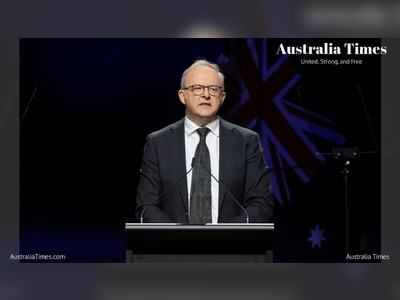
Prime Minister Anthony Albanese emphasized that the policy is designed to provide immediate relief to consumers while maintaining economic stability during a period of heightened uncertainty.
The government has also eliminated the heavy vehicle road user charge over the same period, offering additional support to the transport and logistics sectors that play a critical role in supply chains.
Authorities estimate that the tax cut will deliver noticeable savings for motorists, particularly in regional areas where reliance on private vehicles is high.
The policy is also expected to help moderate inflationary pressures by lowering transportation and distribution costs across the economy.
Officials have acknowledged that the full benefit may take time to reach consumers, as existing fuel stocks purchased at higher prices work through the system.
Nonetheless, the initiative represents one of the most immediate fiscal responses available to address cost-of-living challenges.
The fuel tax reduction is part of a wider national fuel security framework aimed at ensuring stable supply during ongoing global disruptions.
Measures under consideration include coordinated management of fuel reserves, supply chain monitoring, and contingency planning for potential shortages.
As international energy markets remain volatile, the government has signaled that further steps may be considered if conditions worsen, reinforcing its commitment to protecting households and sustaining economic resilience during a period of global uncertainty.
The government confirmed it will temporarily halve the fuel excise on petrol and diesel, a move expected to reduce prices at the pump by approximately 26 Australian cents per litre.
The measure, set to run for three months, forms part of a broader strategy to cushion the domestic economy from the impact of global energy market disruptions.
The decision comes amid escalating geopolitical tensions in the Middle East, which have disrupted key shipping routes and constrained global oil supply.
These developments have driven sharp increases in fuel prices worldwide, placing renewed strain on economies heavily dependent on imported energy.
Prime Minister Anthony Albanese emphasized that the policy is designed to provide immediate relief to consumers while maintaining economic stability during a period of heightened uncertainty.
The government has also eliminated the heavy vehicle road user charge over the same period, offering additional support to the transport and logistics sectors that play a critical role in supply chains.
Authorities estimate that the tax cut will deliver noticeable savings for motorists, particularly in regional areas where reliance on private vehicles is high.
The policy is also expected to help moderate inflationary pressures by lowering transportation and distribution costs across the economy.
Officials have acknowledged that the full benefit may take time to reach consumers, as existing fuel stocks purchased at higher prices work through the system.
Nonetheless, the initiative represents one of the most immediate fiscal responses available to address cost-of-living challenges.
The fuel tax reduction is part of a wider national fuel security framework aimed at ensuring stable supply during ongoing global disruptions.
Measures under consideration include coordinated management of fuel reserves, supply chain monitoring, and contingency planning for potential shortages.
As international energy markets remain volatile, the government has signaled that further steps may be considered if conditions worsen, reinforcing its commitment to protecting households and sustaining economic resilience during a period of global uncertainty.
AI Disclaimer: An advanced artificial intelligence (AI) system generated the content of this page on its own. This innovative technology conducts extensive research from a variety of reliable sources, performs rigorous fact-checking and verification, cleans up and balances biased or manipulated content, and presents a minimal factual summary that is just enough yet essential for you to function as an informed and educated citizen. Please keep in mind, however, that this system is an evolving technology, and as a result, the article may contain accidental inaccuracies or errors. We urge you to help us improve our site by reporting any inaccuracies you find using the "Contact Us" link at the bottom of this page. Your helpful feedback helps us improve our system and deliver more precise content. When you find an article of interest here, please look for the full and extensive coverage of this topic in traditional news sources, as they are written by professional journalists that we try to support, not replace. We appreciate your understanding and assistance.