Tesla Tests Full Self-Driving in Australia, Claims No Regulatory Blockers Amid Push for Wider Rollout
A Melbourne demonstration of Tesla’s supervised autonomous driving system highlights technical progress and a comparatively permissive regulatory environment, though public deployment still depends on final validation and phased approval.
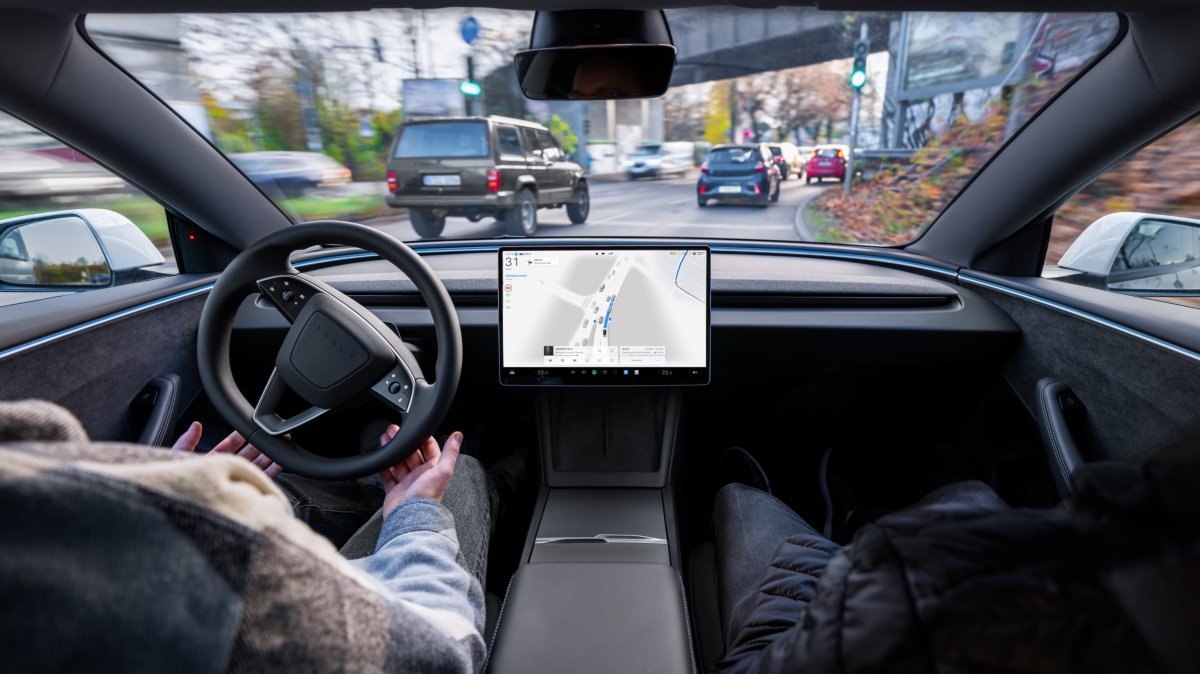
Tesla has showcased its Full Self-Driving (FSD) system on public roads in Australia, using a supervised test drive in Melbourne to demonstrate how its software handles dense urban traffic and complex local driving rules.
The demonstration, which circulated through Tesla’s official channels, is part of a broader effort to expand the company’s semi-autonomous driving technology beyond North America and into right-hand-drive markets.
What is confirmed is that the test vehicle operated in supervised mode on public streets, navigating real-world conditions including intersections, pedestrians, and uniquely Australian road rules such as Melbourne’s hook turn.
This maneuver requires a vehicle turning right from the leftmost lane before completing the turn once traffic signals change, a scenario often cited as unusually demanding even for experienced drivers.
In the demonstration, the system successfully executed this maneuver, which Tesla has presented as evidence of improving adaptability to local driving environments.
A central claim from Tesla’s Australia leadership is that there are currently no explicit regulatory barriers preventing the introduction of supervised FSD in the country.
This reflects statements made by Tesla’s regional management that Australian regulators have not imposed specific prohibitions comparable to more restrictive frameworks in parts of Europe.
However, this does not mean the technology is approved for unsupervised use or fully open public deployment.
Instead, it indicates that Tesla is operating within existing vehicle safety and driver-assistance regulations while continuing validation work.
The key issue is that the system remains classified as a driver-assistance technology requiring human supervision.
Even in advanced demonstrations, the driver is still responsible for monitoring the environment and intervening when necessary.
This distinction is critical: the system is not legally recognized as fully autonomous in Australia or elsewhere, and its use remains constrained by current road safety laws that assume human accountability behind the wheel.
The implications of Tesla’s position are twofold.
Technically, the company is signaling confidence that its software can operate in varied international environments without major legal restructuring.
Strategically, Australia is being positioned as a test market where regulatory friction is relatively low compared to Europe, potentially accelerating iterative deployment and data collection.
At the same time, real-world rollout will still depend on final calibration, local validation, and phased approvals rather than a single regulatory green light.
What remains clear is that Tesla’s demonstration is not a consumer launch but a controlled showcase of capability.
It reflects progress in autonomous driving software performance in complex urban environments, while underscoring that full deployment remains bounded by safety supervision requirements and incremental regulatory acceptance rather than a completed transition to driverless operation.
The demonstration, which circulated through Tesla’s official channels, is part of a broader effort to expand the company’s semi-autonomous driving technology beyond North America and into right-hand-drive markets.
What is confirmed is that the test vehicle operated in supervised mode on public streets, navigating real-world conditions including intersections, pedestrians, and uniquely Australian road rules such as Melbourne’s hook turn.
This maneuver requires a vehicle turning right from the leftmost lane before completing the turn once traffic signals change, a scenario often cited as unusually demanding even for experienced drivers.
In the demonstration, the system successfully executed this maneuver, which Tesla has presented as evidence of improving adaptability to local driving environments.
A central claim from Tesla’s Australia leadership is that there are currently no explicit regulatory barriers preventing the introduction of supervised FSD in the country.
This reflects statements made by Tesla’s regional management that Australian regulators have not imposed specific prohibitions comparable to more restrictive frameworks in parts of Europe.
However, this does not mean the technology is approved for unsupervised use or fully open public deployment.
Instead, it indicates that Tesla is operating within existing vehicle safety and driver-assistance regulations while continuing validation work.
The key issue is that the system remains classified as a driver-assistance technology requiring human supervision.
Even in advanced demonstrations, the driver is still responsible for monitoring the environment and intervening when necessary.
This distinction is critical: the system is not legally recognized as fully autonomous in Australia or elsewhere, and its use remains constrained by current road safety laws that assume human accountability behind the wheel.
The implications of Tesla’s position are twofold.
Technically, the company is signaling confidence that its software can operate in varied international environments without major legal restructuring.
Strategically, Australia is being positioned as a test market where regulatory friction is relatively low compared to Europe, potentially accelerating iterative deployment and data collection.
At the same time, real-world rollout will still depend on final calibration, local validation, and phased approvals rather than a single regulatory green light.
What remains clear is that Tesla’s demonstration is not a consumer launch but a controlled showcase of capability.
It reflects progress in autonomous driving software performance in complex urban environments, while underscoring that full deployment remains bounded by safety supervision requirements and incremental regulatory acceptance rather than a completed transition to driverless operation.
AI Disclaimer: An advanced artificial intelligence (AI) system generated the content of this page on its own. This innovative technology conducts extensive research from a variety of reliable sources, performs rigorous fact-checking and verification, cleans up and balances biased or manipulated content, and presents a minimal factual summary that is just enough yet essential for you to function as an informed and educated citizen. Please keep in mind, however, that this system is an evolving technology, and as a result, the article may contain accidental inaccuracies or errors. We urge you to help us improve our site by reporting any inaccuracies you find using the "Contact Us" link at the bottom of this page. Your helpful feedback helps us improve our system and deliver more precise content. When you find an article of interest here, please look for the full and extensive coverage of this topic in traditional news sources, as they are written by professional journalists that we try to support, not replace. We appreciate your understanding and assistance.