Anzac Day Reckoning: Australia’s Defence Assumptions Face a Strategic Stress Test
Rising geopolitical risk, fragile supply chains, and shifting alliances are challenging long-held beliefs about Australia’s security posture
Australia’s defence strategy is under renewed scrutiny as shifting global power dynamics and regional instability expose structural vulnerabilities that Anzac Day commemorations increasingly bring into focus.
The core issue is not a single incident or political controversy, but a system-level question: whether Australia’s long-standing reliance on distant allies and stable trade routes remains viable in a more volatile world.
What is confirmed is that Australia is operating in a significantly more dangerous strategic environment than in previous decades.
Active conflicts involving major powers, including a widening confrontation in the Middle East, are already affecting global energy markets and supply chains.
This has direct consequences for Australia, which depends heavily on imported refined fuel from regional partners such as Singapore, Malaysia, and South Korea.
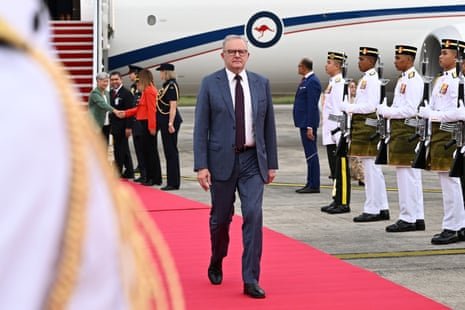
The prime minister’s recent diplomatic activity in Southeast Asia reflects the urgency of securing these supply lines, underscoring how exposed the country is to external disruption.
The mechanism of that vulnerability is straightforward but consequential.
Australia lacks sufficient domestic fuel refining capacity and maintains limited strategic reserves, making it reliant on uninterrupted maritime trade through contested or potentially unstable regions.
Any escalation that disrupts shipping lanes or regional production would have immediate economic and defence implications, affecting everything from civilian transport to military readiness.
At the same time, Australia’s strategic framework remains anchored in its alliance with the United States.
This relationship has underpinned national defence planning for decades, shaping force structure, procurement, and intelligence integration.
However, the reliability and priorities of that alliance are now being reassessed more openly.
Recent global conflicts have demonstrated how quickly U.S. attention and resources can be drawn elsewhere, raising questions about how much capacity or willingness would remain to respond to a crisis in Australia’s immediate region.
This tension is not theoretical.
Australia’s latest defence planning commits substantial funding to new capabilities, including long-range strike systems and expanded domestic defence industry capacity.
Yet the broader strategic settings—particularly the assumption that alliance structures will function as they have in the past—have not fundamentally shifted.
Critics argue that this creates a mismatch between new investments and outdated strategic thinking.
Compounding the issue is the scale of Australia’s military workforce.
Even with active personnel and reservists combined, the total force remains relatively small for a country with vast territory and extensive maritime approaches.
Recruitment challenges have persisted, limiting the speed at which capability expansions can be realised.
This constrains Australia’s ability to act independently in a crisis, reinforcing dependence on partners at the very moment that dependence is becoming less certain.
The regional dimension is equally critical.
Southeast Asia is not only Australia’s primary economic corridor but also a complex geopolitical environment where countries often avoid aligning too closely with major powers.
There is growing recognition that Australia’s security may depend as much on deeper regional integration and diplomacy as on traditional alliance structures.
This requires a shift from viewing the region as a buffer to treating it as the central arena of national security.
Anzac Day, which commemorates military sacrifice and national resilience, has become an implicit reference point for these debates.
The historical lesson most often invoked is not simply courage in war, but the consequences of strategic miscalculation and overreliance on distant powers.
The fall of Singapore during the Second World War remains a defining example of how quickly assumptions about protection and proximity can collapse.
The immediate stakes are practical rather than symbolic.
Energy security, supply chain resilience, force readiness, and alliance credibility are all under pressure simultaneously.
Decisions made now—on defence spending, industrial capacity, and diplomatic positioning—will determine whether Australia can operate with greater autonomy or remain structurally dependent in an increasingly contested region.
The direction of travel is already visible: increased defence investment, intensified regional diplomacy, and a gradual shift toward self-reliance within an alliance framework.
These changes mark the beginning of a strategic adjustment rather than its conclusion.
The core issue is not a single incident or political controversy, but a system-level question: whether Australia’s long-standing reliance on distant allies and stable trade routes remains viable in a more volatile world.
What is confirmed is that Australia is operating in a significantly more dangerous strategic environment than in previous decades.
Active conflicts involving major powers, including a widening confrontation in the Middle East, are already affecting global energy markets and supply chains.
This has direct consequences for Australia, which depends heavily on imported refined fuel from regional partners such as Singapore, Malaysia, and South Korea.
The prime minister’s recent diplomatic activity in Southeast Asia reflects the urgency of securing these supply lines, underscoring how exposed the country is to external disruption.
The mechanism of that vulnerability is straightforward but consequential.
Australia lacks sufficient domestic fuel refining capacity and maintains limited strategic reserves, making it reliant on uninterrupted maritime trade through contested or potentially unstable regions.
Any escalation that disrupts shipping lanes or regional production would have immediate economic and defence implications, affecting everything from civilian transport to military readiness.
At the same time, Australia’s strategic framework remains anchored in its alliance with the United States.
This relationship has underpinned national defence planning for decades, shaping force structure, procurement, and intelligence integration.
However, the reliability and priorities of that alliance are now being reassessed more openly.
Recent global conflicts have demonstrated how quickly U.S. attention and resources can be drawn elsewhere, raising questions about how much capacity or willingness would remain to respond to a crisis in Australia’s immediate region.
This tension is not theoretical.
Australia’s latest defence planning commits substantial funding to new capabilities, including long-range strike systems and expanded domestic defence industry capacity.
Yet the broader strategic settings—particularly the assumption that alliance structures will function as they have in the past—have not fundamentally shifted.
Critics argue that this creates a mismatch between new investments and outdated strategic thinking.
Compounding the issue is the scale of Australia’s military workforce.
Even with active personnel and reservists combined, the total force remains relatively small for a country with vast territory and extensive maritime approaches.
Recruitment challenges have persisted, limiting the speed at which capability expansions can be realised.
This constrains Australia’s ability to act independently in a crisis, reinforcing dependence on partners at the very moment that dependence is becoming less certain.
The regional dimension is equally critical.
Southeast Asia is not only Australia’s primary economic corridor but also a complex geopolitical environment where countries often avoid aligning too closely with major powers.
There is growing recognition that Australia’s security may depend as much on deeper regional integration and diplomacy as on traditional alliance structures.
This requires a shift from viewing the region as a buffer to treating it as the central arena of national security.
Anzac Day, which commemorates military sacrifice and national resilience, has become an implicit reference point for these debates.
The historical lesson most often invoked is not simply courage in war, but the consequences of strategic miscalculation and overreliance on distant powers.
The fall of Singapore during the Second World War remains a defining example of how quickly assumptions about protection and proximity can collapse.
The immediate stakes are practical rather than symbolic.
Energy security, supply chain resilience, force readiness, and alliance credibility are all under pressure simultaneously.
Decisions made now—on defence spending, industrial capacity, and diplomatic positioning—will determine whether Australia can operate with greater autonomy or remain structurally dependent in an increasingly contested region.
The direction of travel is already visible: increased defence investment, intensified regional diplomacy, and a gradual shift toward self-reliance within an alliance framework.
These changes mark the beginning of a strategic adjustment rather than its conclusion.
AI Disclaimer: An advanced artificial intelligence (AI) system generated the content of this page on its own. This innovative technology conducts extensive research from a variety of reliable sources, performs rigorous fact-checking and verification, cleans up and balances biased or manipulated content, and presents a minimal factual summary that is just enough yet essential for you to function as an informed and educated citizen. Please keep in mind, however, that this system is an evolving technology, and as a result, the article may contain accidental inaccuracies or errors. We urge you to help us improve our site by reporting any inaccuracies you find using the "Contact Us" link at the bottom of this page. Your helpful feedback helps us improve our system and deliver more precise content. When you find an article of interest here, please look for the full and extensive coverage of this topic in traditional news sources, as they are written by professional journalists that we try to support, not replace. We appreciate your understanding and assistance.