Middle East Conflict Forces Rerouting of Global Flights, Disrupting Australia’s Travel and Trade Links
Airspace closures and security risks are reshaping long-haul routes, increasing costs and exposing Australia’s geographic vulnerability
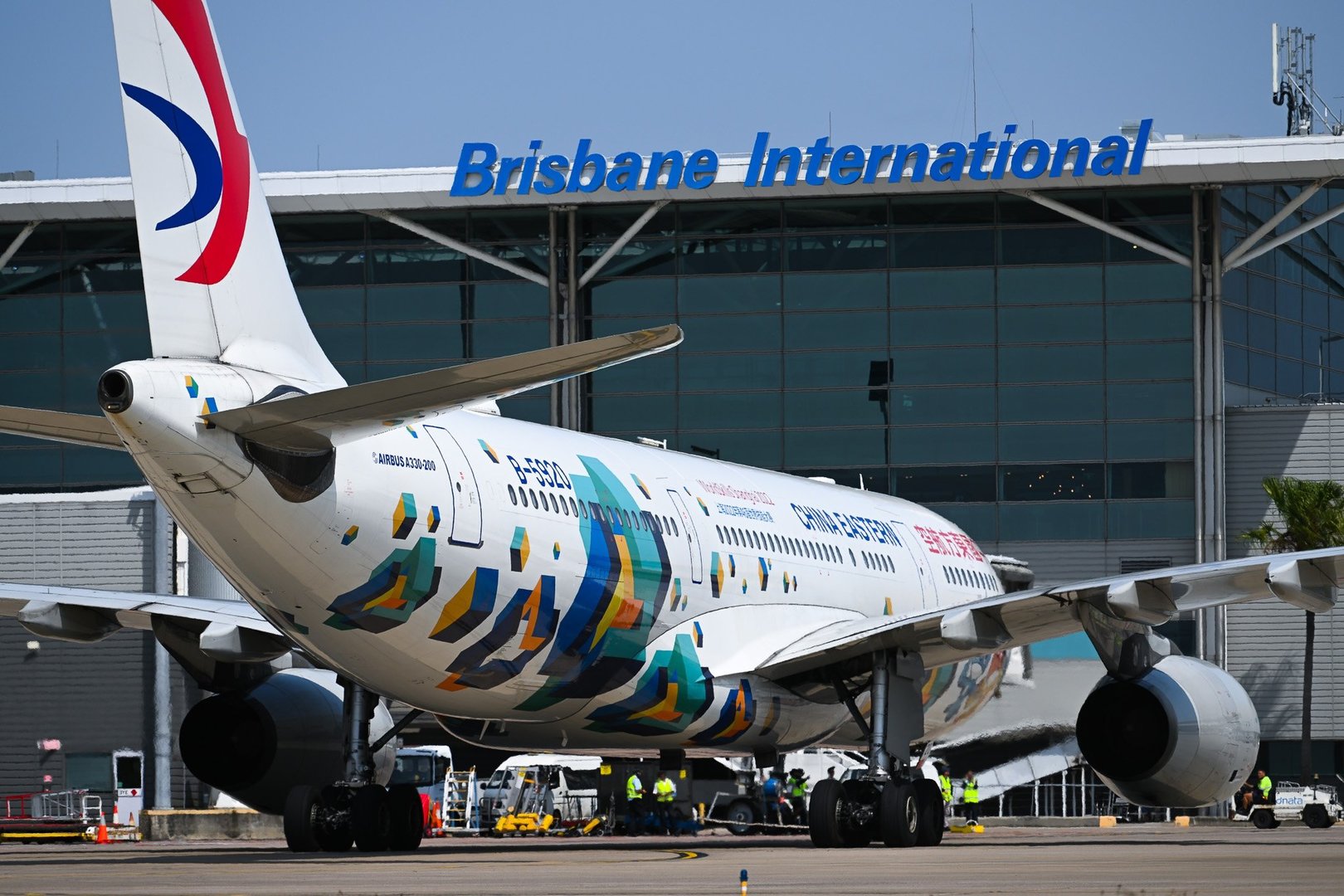
Airspace restrictions and security risks linked to the escalating Middle East conflict are forcing airlines to reroute long-haul flights, directly reshaping Australia’s travel patterns and exposing structural dependencies in its global connectivity.
The issue is system-driven: aviation networks rely on stable, predictable corridors, and the disruption of key transit regions is now cascading across routes linking Australia to Europe and beyond.
What is confirmed is that multiple airlines have altered or suspended routes that would normally pass through or near Middle Eastern airspace.
Carriers are diverting flights south over the Indian Ocean or north via Central Asia to avoid conflict zones and missile risk areas.
These changes are adding hours to flight times on some routes between Australia and Europe, increasing fuel consumption and reducing operational efficiency.
The mechanism is both operational and regulatory.
Aviation authorities and airlines continuously assess risk in controlled airspace, and when conflict intensifies, zones can become restricted or effectively unusable.
Even without formal closures, insurance costs rise sharply and airlines adopt precautionary rerouting.
The result is a rapid reconfiguration of global flight paths that were previously optimized for time and cost.
For Australia, the impact is amplified by geography.
The country sits at the end of long global supply chains and depends heavily on uninterrupted air and sea links for passenger travel, high-value freight, and time-sensitive goods.
When traditional transit hubs in the Middle East are disrupted, there are limited alternative corridors that do not significantly extend journey times.
Airlines are already adjusting schedules, consolidating services, or temporarily withdrawing capacity on certain routes.
Passengers are facing longer travel times, higher ticket prices, and reduced availability, particularly on routes to Europe.
Cargo operators are also affected, with delays and increased costs flowing through to sectors that rely on air freight, including pharmaceuticals, electronics, and perishable exports.
The financial implications for airlines are immediate.
Longer routes mean higher fuel burn and tighter crew scheduling constraints, while volatile fuel prices linked to regional instability add further pressure.
These costs are being passed on to consumers, reinforcing a broader inflationary effect tied to geopolitical risk.
There are also strategic implications.
The disruption highlights the extent to which global aviation depends on a relatively small number of safe and efficient corridors.
When one region becomes unstable, the entire network absorbs the shock.
For Australia, this reinforces concerns about resilience in both civilian and defence logistics, particularly in scenarios where multiple routes could be contested simultaneously.
Governments and aviation regulators are responding by increasing coordination and monitoring, but the options are limited in the short term.
Unlike maritime shipping, where routes can be adjusted more flexibly, aviation is constrained by range, fuel efficiency, and the availability of diversion airports.
This makes sudden, large-scale rerouting both complex and costly.
The broader consequence is a shift in how risk is priced into global travel.
Routes that were once routine are now contingent on geopolitical stability, and airlines are building greater flexibility into their operations.
For Australia, the current disruption serves as a practical demonstration of how distant conflicts can have immediate domestic effects through infrastructure systems that depend on global stability.
The changes are already embedded in airline schedules, with extended flight paths and higher operating costs becoming the new baseline for routes affected by Middle East instability.
The issue is system-driven: aviation networks rely on stable, predictable corridors, and the disruption of key transit regions is now cascading across routes linking Australia to Europe and beyond.
What is confirmed is that multiple airlines have altered or suspended routes that would normally pass through or near Middle Eastern airspace.
Carriers are diverting flights south over the Indian Ocean or north via Central Asia to avoid conflict zones and missile risk areas.
These changes are adding hours to flight times on some routes between Australia and Europe, increasing fuel consumption and reducing operational efficiency.
The mechanism is both operational and regulatory.
Aviation authorities and airlines continuously assess risk in controlled airspace, and when conflict intensifies, zones can become restricted or effectively unusable.
Even without formal closures, insurance costs rise sharply and airlines adopt precautionary rerouting.
The result is a rapid reconfiguration of global flight paths that were previously optimized for time and cost.
For Australia, the impact is amplified by geography.
The country sits at the end of long global supply chains and depends heavily on uninterrupted air and sea links for passenger travel, high-value freight, and time-sensitive goods.
When traditional transit hubs in the Middle East are disrupted, there are limited alternative corridors that do not significantly extend journey times.
Airlines are already adjusting schedules, consolidating services, or temporarily withdrawing capacity on certain routes.
Passengers are facing longer travel times, higher ticket prices, and reduced availability, particularly on routes to Europe.
Cargo operators are also affected, with delays and increased costs flowing through to sectors that rely on air freight, including pharmaceuticals, electronics, and perishable exports.
The financial implications for airlines are immediate.
Longer routes mean higher fuel burn and tighter crew scheduling constraints, while volatile fuel prices linked to regional instability add further pressure.
These costs are being passed on to consumers, reinforcing a broader inflationary effect tied to geopolitical risk.
There are also strategic implications.
The disruption highlights the extent to which global aviation depends on a relatively small number of safe and efficient corridors.
When one region becomes unstable, the entire network absorbs the shock.
For Australia, this reinforces concerns about resilience in both civilian and defence logistics, particularly in scenarios where multiple routes could be contested simultaneously.
Governments and aviation regulators are responding by increasing coordination and monitoring, but the options are limited in the short term.
Unlike maritime shipping, where routes can be adjusted more flexibly, aviation is constrained by range, fuel efficiency, and the availability of diversion airports.
This makes sudden, large-scale rerouting both complex and costly.
The broader consequence is a shift in how risk is priced into global travel.
Routes that were once routine are now contingent on geopolitical stability, and airlines are building greater flexibility into their operations.
For Australia, the current disruption serves as a practical demonstration of how distant conflicts can have immediate domestic effects through infrastructure systems that depend on global stability.
The changes are already embedded in airline schedules, with extended flight paths and higher operating costs becoming the new baseline for routes affected by Middle East instability.
AI Disclaimer: An advanced artificial intelligence (AI) system generated the content of this page on its own. This innovative technology conducts extensive research from a variety of reliable sources, performs rigorous fact-checking and verification, cleans up and balances biased or manipulated content, and presents a minimal factual summary that is just enough yet essential for you to function as an informed and educated citizen. Please keep in mind, however, that this system is an evolving technology, and as a result, the article may contain accidental inaccuracies or errors. We urge you to help us improve our site by reporting any inaccuracies you find using the "Contact Us" link at the bottom of this page. Your helpful feedback helps us improve our system and deliver more precise content. When you find an article of interest here, please look for the full and extensive coverage of this topic in traditional news sources, as they are written by professional journalists that we try to support, not replace. We appreciate your understanding and assistance.