
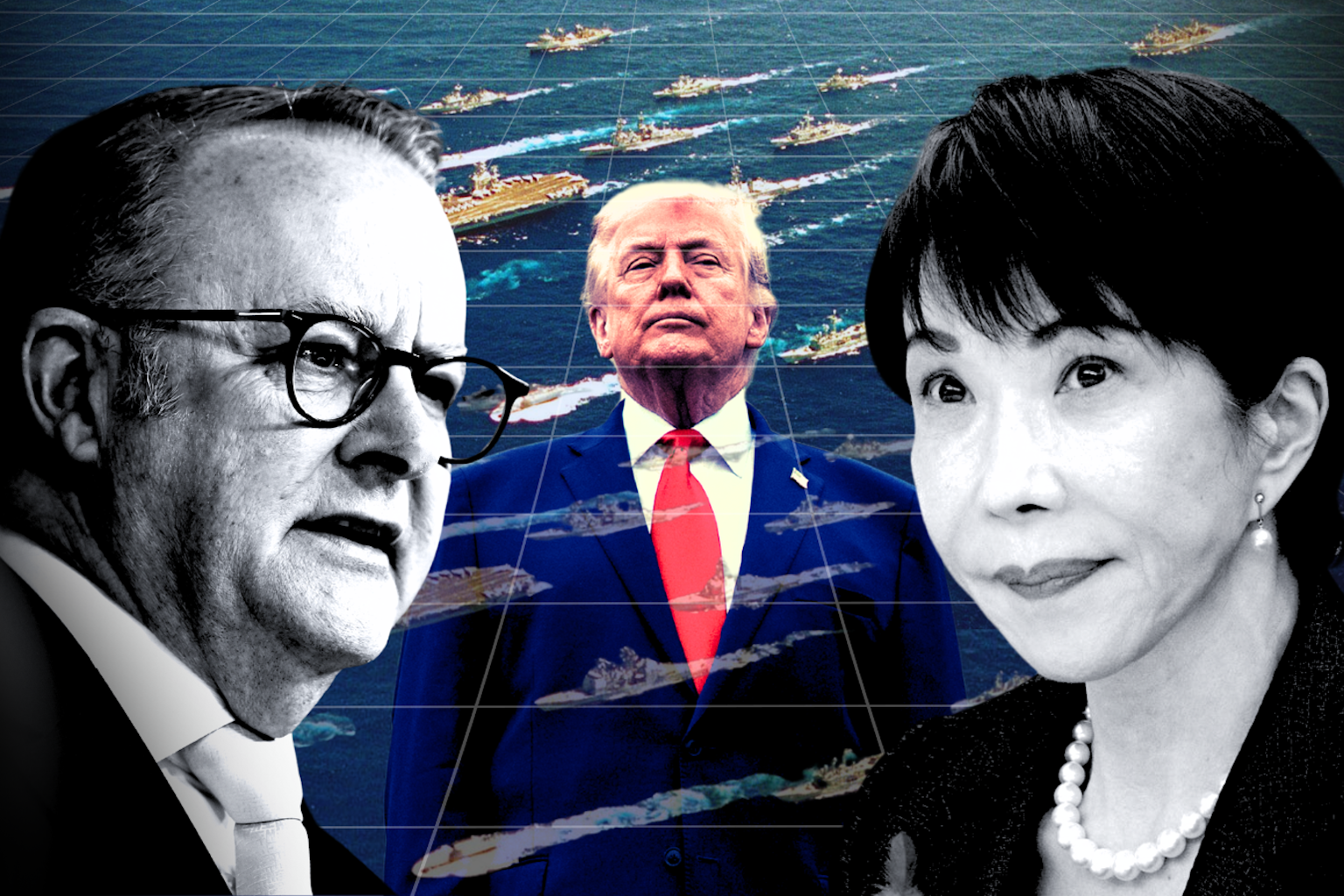
Australia and Japan Recast Alliances to Stay Vital to the U.S. While Reducing Dependence
Both countries deepen military and industrial capacity to remain indispensable partners without relying entirely on American power
Alliance structures anchored in the United States are forcing Australia and Japan to rethink how they maintain security guarantees while reducing strategic dependence on a single partner.
What is confirmed is that both countries are intensifying efforts to strengthen their own military, industrial, and technological capabilities even as they deepen cooperation with Washington.
The goal is not to replace the U.S. alliance, but to make themselves more capable contributors within it, reducing vulnerability if U.S. priorities shift or resources are stretched.
The dilemma is structural.
The United States remains the dominant security provider in the Indo-Pacific, offering deterrence through its military presence and extended nuclear umbrella.
At the same time, its allies face uncertainty over long-term reliability, driven by domestic political cycles, competing global commitments, and the scale of emerging challenges, particularly involving China.
Australia’s response has centered on capability expansion and integration.
Through initiatives such as long-range strike development, submarine programs, and deeper interoperability with allied forces, it is building the ability to operate more independently while still embedded in a U.S.-led system.
The strategy assumes that greater self-reliance increases credibility as a partner rather than weakening alliance ties.
Japan is pursuing a parallel shift, marked by significant increases in defense spending, revised security doctrines, and investments in counterstrike capabilities.
These moves represent a departure from decades of constrained military policy and are designed to allow Japan to take a more active role in regional deterrence while still relying on U.S. support for extended capabilities.
Both countries are also investing in defense industrial capacity and supply chain resilience.
This includes cooperation on advanced technologies, joint development projects, and efforts to secure critical materials.
The objective is to ensure that, in a prolonged crisis, they can sustain operations without being entirely dependent on external supply lines.
The balancing act extends beyond military policy.
Diplomatically, both governments are expanding regional partnerships to diversify their strategic options.
Australia is strengthening ties across Southeast Asia and the Pacific, while Japan is deepening engagement with countries in Europe and the Indo-Pacific.
These networks are intended to distribute risk and reduce overconcentration on a single alliance relationship.
The key issue is credibility.
To remain indispensable to the United States, both countries must demonstrate that they can contribute meaningfully to collective security, not just consume it.
At the same time, reducing reliance requires building capabilities that could function in scenarios where U.S. support is delayed, limited, or contested.
This dual approach creates tension.
Greater autonomy can raise concerns in Washington about coordination and control, while insufficient capability risks leaving both countries exposed.
Managing this balance requires constant alignment of strategy, planning, and expectations.
The practical consequence is a shift from dependency to interdependence.
Australia and Japan are positioning themselves as capable partners whose value lies in both their alignment with U.S. strategy and their ability to act with greater independence.
This evolution is reshaping alliance dynamics in the Indo-Pacific, with both countries committing to expanded defense roles while maintaining the U.S. alliance as the central pillar of their security framework.
What is confirmed is that both countries are intensifying efforts to strengthen their own military, industrial, and technological capabilities even as they deepen cooperation with Washington.
The goal is not to replace the U.S. alliance, but to make themselves more capable contributors within it, reducing vulnerability if U.S. priorities shift or resources are stretched.
The dilemma is structural.
The United States remains the dominant security provider in the Indo-Pacific, offering deterrence through its military presence and extended nuclear umbrella.
At the same time, its allies face uncertainty over long-term reliability, driven by domestic political cycles, competing global commitments, and the scale of emerging challenges, particularly involving China.
Australia’s response has centered on capability expansion and integration.
Through initiatives such as long-range strike development, submarine programs, and deeper interoperability with allied forces, it is building the ability to operate more independently while still embedded in a U.S.-led system.
The strategy assumes that greater self-reliance increases credibility as a partner rather than weakening alliance ties.
Japan is pursuing a parallel shift, marked by significant increases in defense spending, revised security doctrines, and investments in counterstrike capabilities.
These moves represent a departure from decades of constrained military policy and are designed to allow Japan to take a more active role in regional deterrence while still relying on U.S. support for extended capabilities.
Both countries are also investing in defense industrial capacity and supply chain resilience.
This includes cooperation on advanced technologies, joint development projects, and efforts to secure critical materials.
The objective is to ensure that, in a prolonged crisis, they can sustain operations without being entirely dependent on external supply lines.
The balancing act extends beyond military policy.
Diplomatically, both governments are expanding regional partnerships to diversify their strategic options.
Australia is strengthening ties across Southeast Asia and the Pacific, while Japan is deepening engagement with countries in Europe and the Indo-Pacific.
These networks are intended to distribute risk and reduce overconcentration on a single alliance relationship.
The key issue is credibility.
To remain indispensable to the United States, both countries must demonstrate that they can contribute meaningfully to collective security, not just consume it.
At the same time, reducing reliance requires building capabilities that could function in scenarios where U.S. support is delayed, limited, or contested.
This dual approach creates tension.
Greater autonomy can raise concerns in Washington about coordination and control, while insufficient capability risks leaving both countries exposed.
Managing this balance requires constant alignment of strategy, planning, and expectations.
The practical consequence is a shift from dependency to interdependence.
Australia and Japan are positioning themselves as capable partners whose value lies in both their alignment with U.S. strategy and their ability to act with greater independence.
This evolution is reshaping alliance dynamics in the Indo-Pacific, with both countries committing to expanded defense roles while maintaining the U.S. alliance as the central pillar of their security framework.
AI Disclaimer: An advanced artificial intelligence (AI) system generated the content of this page on its own. This innovative technology conducts extensive research from a variety of reliable sources, performs rigorous fact-checking and verification, cleans up and balances biased or manipulated content, and presents a minimal factual summary that is just enough yet essential for you to function as an informed and educated citizen. Please keep in mind, however, that this system is an evolving technology, and as a result, the article may contain accidental inaccuracies or errors. We urge you to help us improve our site by reporting any inaccuracies you find using the "Contact Us" link at the bottom of this page. Your helpful feedback helps us improve our system and deliver more precise content. When you find an article of interest here, please look for the full and extensive coverage of this topic in traditional news sources, as they are written by professional journalists that we try to support, not replace. We appreciate your understanding and assistance.