
Australia Maintains Ban on Repatriating Citizens Held in Syrian Camps
Government prioritizes security and legal risks as families remain in indefinite detention in Kurdish-run facilities
The Australian federal government has decided to block the return of a group of its citizens held in detention camps in northeast Syria, reinforcing a hardline policy that treats repatriation as a national security risk rather than a humanitarian obligation.
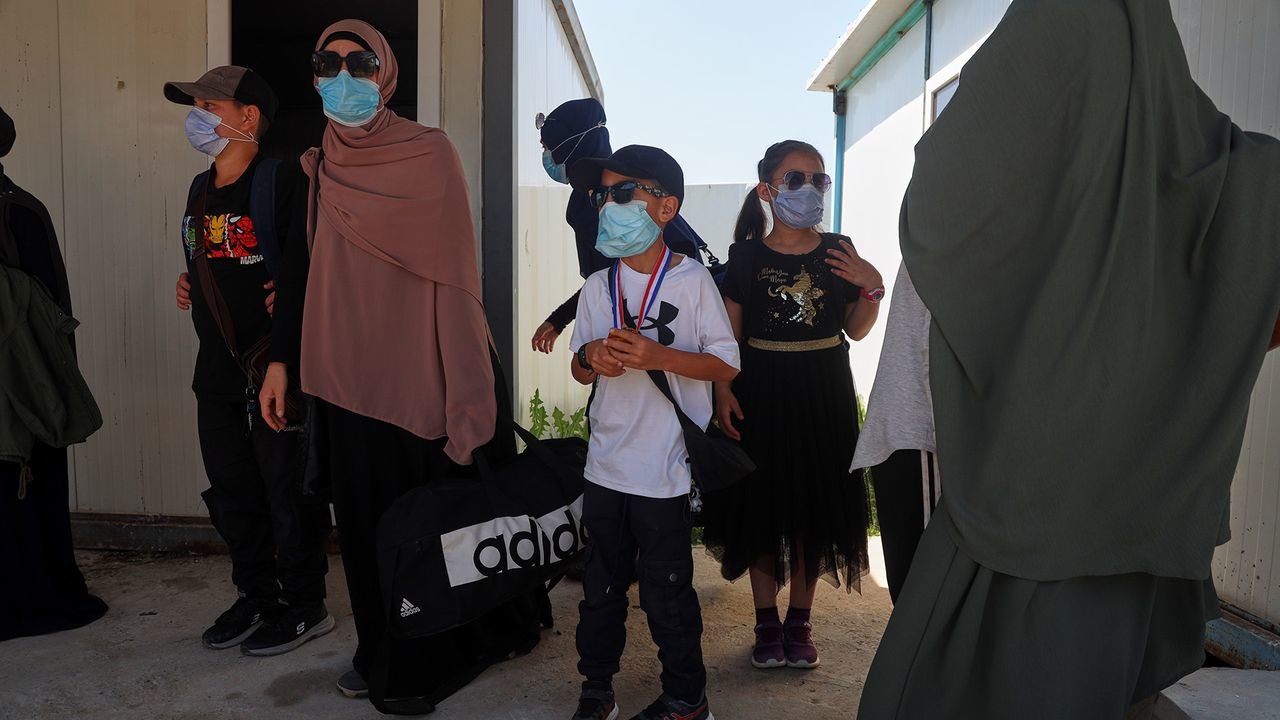
What is confirmed is that several dozen Australian women and children remain in Kurdish-administered camps and prisons following the collapse of Islamic State territorial control.
These facilities, including large camps such as al-Hol and Roj, hold tens of thousands of foreign nationals linked to the conflict.
Australia has conducted limited repatriation operations in recent years, focusing primarily on children and selected family groups, but has stopped short of a broader return program.
The current decision reflects a deliberate policy choice by the Labor government to restrict further repatriations.
Officials argue that bringing back adults who may have supported or been associated with Islamic State presents complex security challenges, including the risk of radicalization, the difficulty of gathering admissible evidence for prosecution, and the long-term burden on surveillance and deradicalization systems.
The mechanism behind the policy is legal and operational.
Australian law allows for prosecution of terrorism-related offenses committed overseas, but cases often rely on evidence gathered in conflict zones, which is difficult to verify and present in court.
Without viable prosecutions, authorities face the prospect of monitoring returnees indefinitely, a resource-intensive task for security agencies.
Human rights advocates and some legal experts challenge the government’s position, arguing that indefinite detention in unstable camps exposes Australian citizens—particularly children—to serious harm, including violence, disease, and lack of education.
They contend that repatriation combined with controlled legal processes and rehabilitation programs is a more sustainable approach than leaving citizens in extrajudicial detention.
The issue is further complicated by the status of the camps themselves.
They are operated by Kurdish-led authorities in northeast Syria, which lack formal international recognition and have repeatedly called on foreign governments to take responsibility for their nationals.
The continued presence of foreign detainees places strain on these facilities and raises concerns about security breaches, including the risk of escapes or renewed militant activity.
Australia’s approach places it among a group of countries that have adopted cautious or restrictive repatriation policies, in contrast to others that have carried out more extensive returns and prosecutions.
The divergence reflects differing assessments of risk, legal capacity, and political tolerance for reintegration of individuals linked to extremist groups.
The broader consequence is a prolonged legal and humanitarian limbo.
Australian citizens remain in camps with no clear pathway home, while the government maintains that domestic security considerations outweigh the risks of leaving them in place.
This position also shapes Australia’s international standing on counterterrorism and human rights cooperation.
The immediate outcome of the decision is the continuation of the current policy framework: limited, case-by-case repatriations at most, with no large-scale return of detainees planned, and ongoing reliance on offshore containment as the primary risk management strategy.
AI Disclaimer: An advanced artificial intelligence (AI) system generated the content of this page on its own. This innovative technology conducts extensive research from a variety of reliable sources, performs rigorous fact-checking and verification, cleans up and balances biased or manipulated content, and presents a minimal factual summary that is just enough yet essential for you to function as an informed and educated citizen. Please keep in mind, however, that this system is an evolving technology, and as a result, the article may contain accidental inaccuracies or errors. We urge you to help us improve our site by reporting any inaccuracies you find using the "Contact Us" link at the bottom of this page. Your helpful feedback helps us improve our system and deliver more precise content. When you find an article of interest here, please look for the full and extensive coverage of this topic in traditional news sources, as they are written by professional journalists that we try to support, not replace. We appreciate your understanding and assistance.