Australia Moves Deeper Into Hormuz Security Mission as Global Shipping Crisis Intensifies
Canberra will deploy a high-tech surveillance aircraft to support a British- and French-led operation aimed at restoring navigation through the Strait of Hormuz, signaling a wider strategic shift as energy disruption and Middle East conflict reshape allied military coordination.
The Australian government is expanding its military involvement in efforts to secure the Strait of Hormuz, the narrow waterway through which roughly one-fifth of the world’s oil supply normally passes, after months of disruption tied to the escalating conflict involving Iran, Israel, and the United States.
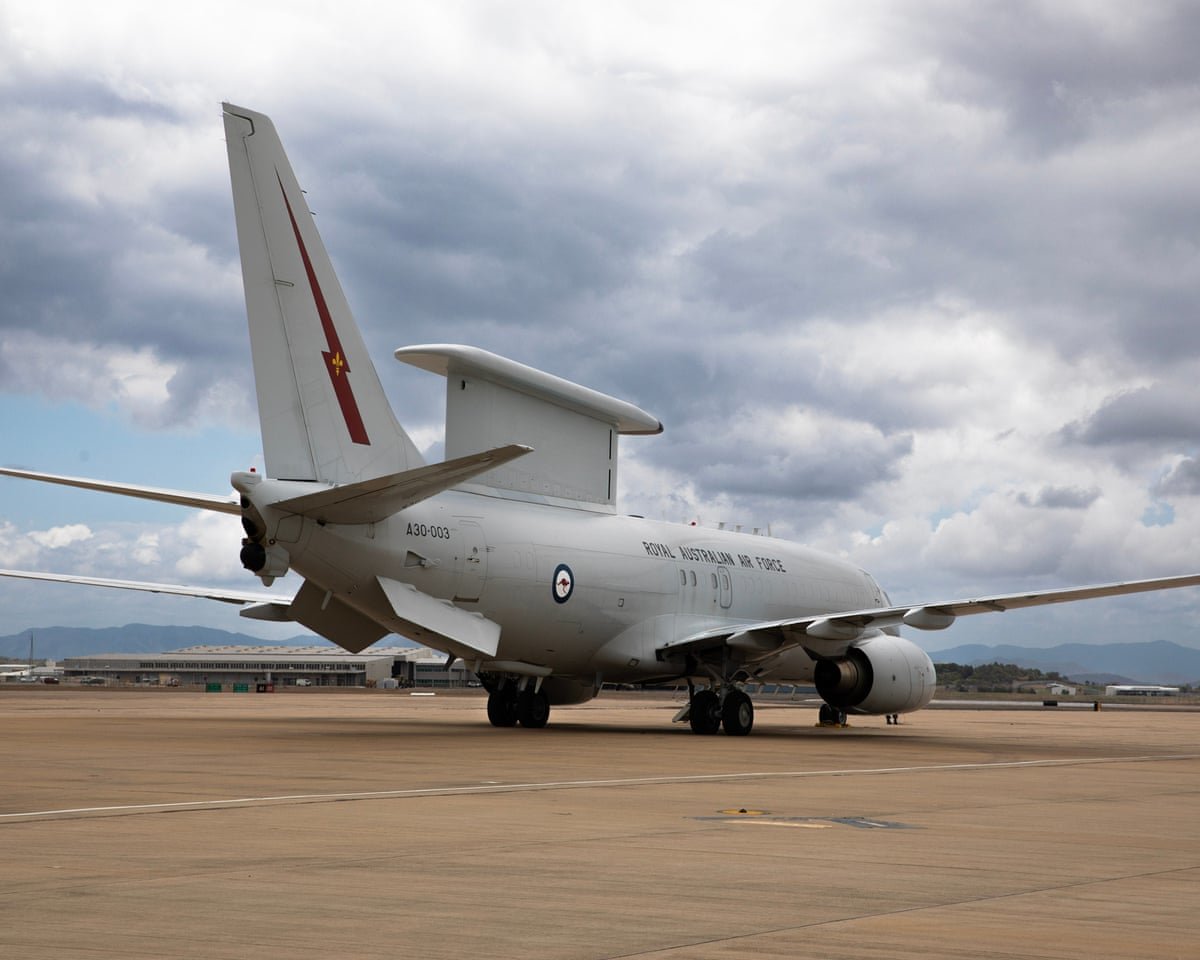
Defence Minister Richard Marles confirmed that Australia intends to contribute a Royal Australian Air Force E-7A Wedgetail surveillance aircraft to a multinational mission led by the United Kingdom and France.
The operation is being framed as a strictly defensive effort focused on restoring freedom of navigation and protecting commercial shipping.
The decision followed a meeting involving defence ministers from more than forty countries.
Australia stated that the mission is designed to support international trade and complement diplomatic de-escalation efforts rather than participate in offensive military operations.
The Strait of Hormuz is one of the most strategically important maritime choke points in the world.
The passage connects the Persian Gulf to global shipping routes and carries enormous volumes of crude oil, liquefied natural gas, refined fuels, and commercial cargo.
Disruption there immediately affects energy markets, insurance costs, shipping prices, and inflation pressure worldwide.
The current crisis emerged after the broader regional war sharply intensified earlier this year.
Iran imposed severe restrictions on traffic through the strait following military exchanges involving Israeli and American forces.
Commercial shipping slowed dramatically.
Some vessels rerouted entirely, while others paused operations because of missile threats, drone attacks, mines, and soaring insurance premiums.
The economic consequences spread quickly beyond the Middle East.
Oil prices surged above one hundred dollars per barrel during periods of peak disruption.
Fuel costs rose across Asia-Pacific markets, including Australia.
Governments became increasingly concerned that prolonged instability in Hormuz could trigger wider supply-chain shocks at a time when many economies were already dealing with inflation, weak growth, and fragile trade conditions.
Australia’s contribution centers on the E-7A Wedgetail, one of the country’s most advanced military aircraft.
The aircraft functions as an airborne early-warning and battle-management platform.
It uses sophisticated radar systems to monitor airspace, track ships and aircraft over long distances, coordinate allied operations, and provide surveillance intelligence in real time.
The Wedgetail had already been operating in the broader region after being deployed earlier this year to assist the United Arab Emirates following Iranian strikes.
Under the new multinational mission, its role would expand into coordinated maritime security operations tied directly to reopening and stabilizing the strait.
What makes the deployment politically significant is that Australia had previously resisted deeper military participation.
Earlier in the crisis, the Albanese government explicitly ruled out sending naval warships into the Strait of Hormuz.
Officials repeatedly emphasized that Australia was not seeking direct combat involvement and would focus primarily on defensive support and regional stability.
The current move therefore represents a calibrated escalation.
Canberra is now signaling greater willingness to integrate with allied operations while still trying to avoid being perceived as part of an offensive coalition against Iran.
Marles has repeatedly stressed that the mission is independent, multinational, and defensive in nature.
That distinction matters diplomatically.
Australia is attempting to balance several competing pressures simultaneously: alliance expectations from Western partners, domestic political caution about another Middle East military entanglement, economic dependence on stable energy markets, and broader regional relationships across the Gulf.
The mission also reflects growing European leadership inside the crisis.
Unlike earlier Gulf security operations dominated by the United States Navy, the emerging Hormuz framework is being led primarily by Britain and France.
European governments are positioning the operation as a maritime protection effort focused on commercial stability rather than regime confrontation.
Britain has already pledged a destroyer, fighter aircraft, autonomous mine-hunting systems, and unmanned surface vessels.
Other participating states are discussing intelligence sharing, aerial surveillance, logistics coordination, and naval support capabilities.
The military challenge is substantial even if active fighting decreases.
Security concerns extend beyond missile attacks.
Maritime analysts warn that sea mines, drone threats, electronic warfare, and sabotage risks could continue disrupting shipping for months.
Some defense assessments indicate that clearing mined waterways and restoring full commercial confidence may take extended operations long after any ceasefire arrangements stabilize.
That operational reality explains why surveillance assets like the Wedgetail are valuable.
Maintaining continuous situational awareness across crowded maritime corridors is critical for convoy protection, threat detection, and coordination between allied naval and air forces.
The crisis is also exposing Australia’s vulnerability to external energy shocks.
Despite being a major energy exporter, Australia imports large volumes of refined fuel and remains heavily exposed to disruptions in global shipping and oil pricing.
The government has openly acknowledged that prolonged instability in Hormuz could significantly affect domestic fuel costs, transport networks, inflation, and supply chains.
The political stakes inside Australia are therefore rising.
Opposition figures and some security analysts argue Canberra should contribute more forcefully alongside allies.
Others warn that even defensive deployments risk gradually pulling Australia into another prolonged Middle East security operation with uncertain boundaries.
Marles has indicated the government is actively considering “how else we can contribute,” a phrase that immediately intensified speculation about whether Australia may eventually expand its role beyond airborne surveillance.
At present, there is no confirmed commitment to deploy Australian naval combat vessels into the strait.
Government statements continue emphasizing defensive support, multilateral coordination, and protection of trade routes.
But the trajectory is clear.
Australia is moving from cautious observer to active operational participant in one of the world’s most consequential maritime security crises.
The deployment of the Wedgetail places Australian military assets directly inside an increasingly militarized corridor where commercial shipping, regional conflict, global energy markets, and great-power coordination are now tightly intertwined.
The immediate next phase will involve establishing the multinational command structure led by Britain and France and integrating Australian surveillance operations into coordinated efforts to restore secure commercial transit through the Strait of Hormuz.
Defence Minister Richard Marles confirmed that Australia intends to contribute a Royal Australian Air Force E-7A Wedgetail surveillance aircraft to a multinational mission led by the United Kingdom and France.
The operation is being framed as a strictly defensive effort focused on restoring freedom of navigation and protecting commercial shipping.
The decision followed a meeting involving defence ministers from more than forty countries.
Australia stated that the mission is designed to support international trade and complement diplomatic de-escalation efforts rather than participate in offensive military operations.
The Strait of Hormuz is one of the most strategically important maritime choke points in the world.
The passage connects the Persian Gulf to global shipping routes and carries enormous volumes of crude oil, liquefied natural gas, refined fuels, and commercial cargo.
Disruption there immediately affects energy markets, insurance costs, shipping prices, and inflation pressure worldwide.
The current crisis emerged after the broader regional war sharply intensified earlier this year.
Iran imposed severe restrictions on traffic through the strait following military exchanges involving Israeli and American forces.
Commercial shipping slowed dramatically.
Some vessels rerouted entirely, while others paused operations because of missile threats, drone attacks, mines, and soaring insurance premiums.
The economic consequences spread quickly beyond the Middle East.
Oil prices surged above one hundred dollars per barrel during periods of peak disruption.
Fuel costs rose across Asia-Pacific markets, including Australia.
Governments became increasingly concerned that prolonged instability in Hormuz could trigger wider supply-chain shocks at a time when many economies were already dealing with inflation, weak growth, and fragile trade conditions.
Australia’s contribution centers on the E-7A Wedgetail, one of the country’s most advanced military aircraft.
The aircraft functions as an airborne early-warning and battle-management platform.
It uses sophisticated radar systems to monitor airspace, track ships and aircraft over long distances, coordinate allied operations, and provide surveillance intelligence in real time.
The Wedgetail had already been operating in the broader region after being deployed earlier this year to assist the United Arab Emirates following Iranian strikes.
Under the new multinational mission, its role would expand into coordinated maritime security operations tied directly to reopening and stabilizing the strait.
What makes the deployment politically significant is that Australia had previously resisted deeper military participation.
Earlier in the crisis, the Albanese government explicitly ruled out sending naval warships into the Strait of Hormuz.
Officials repeatedly emphasized that Australia was not seeking direct combat involvement and would focus primarily on defensive support and regional stability.
The current move therefore represents a calibrated escalation.
Canberra is now signaling greater willingness to integrate with allied operations while still trying to avoid being perceived as part of an offensive coalition against Iran.
Marles has repeatedly stressed that the mission is independent, multinational, and defensive in nature.
That distinction matters diplomatically.
Australia is attempting to balance several competing pressures simultaneously: alliance expectations from Western partners, domestic political caution about another Middle East military entanglement, economic dependence on stable energy markets, and broader regional relationships across the Gulf.
The mission also reflects growing European leadership inside the crisis.
Unlike earlier Gulf security operations dominated by the United States Navy, the emerging Hormuz framework is being led primarily by Britain and France.
European governments are positioning the operation as a maritime protection effort focused on commercial stability rather than regime confrontation.
Britain has already pledged a destroyer, fighter aircraft, autonomous mine-hunting systems, and unmanned surface vessels.
Other participating states are discussing intelligence sharing, aerial surveillance, logistics coordination, and naval support capabilities.
The military challenge is substantial even if active fighting decreases.
Security concerns extend beyond missile attacks.
Maritime analysts warn that sea mines, drone threats, electronic warfare, and sabotage risks could continue disrupting shipping for months.
Some defense assessments indicate that clearing mined waterways and restoring full commercial confidence may take extended operations long after any ceasefire arrangements stabilize.
That operational reality explains why surveillance assets like the Wedgetail are valuable.
Maintaining continuous situational awareness across crowded maritime corridors is critical for convoy protection, threat detection, and coordination between allied naval and air forces.
The crisis is also exposing Australia’s vulnerability to external energy shocks.
Despite being a major energy exporter, Australia imports large volumes of refined fuel and remains heavily exposed to disruptions in global shipping and oil pricing.
The government has openly acknowledged that prolonged instability in Hormuz could significantly affect domestic fuel costs, transport networks, inflation, and supply chains.
The political stakes inside Australia are therefore rising.
Opposition figures and some security analysts argue Canberra should contribute more forcefully alongside allies.
Others warn that even defensive deployments risk gradually pulling Australia into another prolonged Middle East security operation with uncertain boundaries.
Marles has indicated the government is actively considering “how else we can contribute,” a phrase that immediately intensified speculation about whether Australia may eventually expand its role beyond airborne surveillance.
At present, there is no confirmed commitment to deploy Australian naval combat vessels into the strait.
Government statements continue emphasizing defensive support, multilateral coordination, and protection of trade routes.
But the trajectory is clear.
Australia is moving from cautious observer to active operational participant in one of the world’s most consequential maritime security crises.
The deployment of the Wedgetail places Australian military assets directly inside an increasingly militarized corridor where commercial shipping, regional conflict, global energy markets, and great-power coordination are now tightly intertwined.
The immediate next phase will involve establishing the multinational command structure led by Britain and France and integrating Australian surveillance operations into coordinated efforts to restore secure commercial transit through the Strait of Hormuz.
AI Disclaimer: An advanced artificial intelligence (AI) system generated the content of this page on its own. This innovative technology conducts extensive research from a variety of reliable sources, performs rigorous fact-checking and verification, cleans up and balances biased or manipulated content, and presents a minimal factual summary that is just enough yet essential for you to function as an informed and educated citizen. Please keep in mind, however, that this system is an evolving technology, and as a result, the article may contain accidental inaccuracies or errors. We urge you to help us improve our site by reporting any inaccuracies you find using the "Contact Us" link at the bottom of this page. Your helpful feedback helps us improve our system and deliver more precise content. When you find an article of interest here, please look for the full and extensive coverage of this topic in traditional news sources, as they are written by professional journalists that we try to support, not replace. We appreciate your understanding and assistance.