Governments Across Europe and Australia Are Rewriting the Rules of Childhood Online
A growing international crackdown on social media access for minors is reshaping internet regulation, forcing technology companies toward aggressive age verification systems and triggering a wider battle over privacy, enforcement, and state control online.
Governments are now driving a coordinated global shift toward restricting children’s access to social media, transforming what was once treated as a parental or platform responsibility into a direct regulatory intervention by the state.
Australia’s under-sixteen social media ban has become the clearest example of that shift, and European governments are rapidly moving in the same direction.
The core issue is no longer whether social media affects children negatively.
Policymakers across multiple democracies have largely concluded that it does.
The debate has moved to enforcement: how governments can prevent minors from accessing platforms designed to maximize engagement, data collection, and screen time.
Australia became the first major democracy to implement a nationwide legal restriction preventing children under sixteen from holding accounts on major social media services.
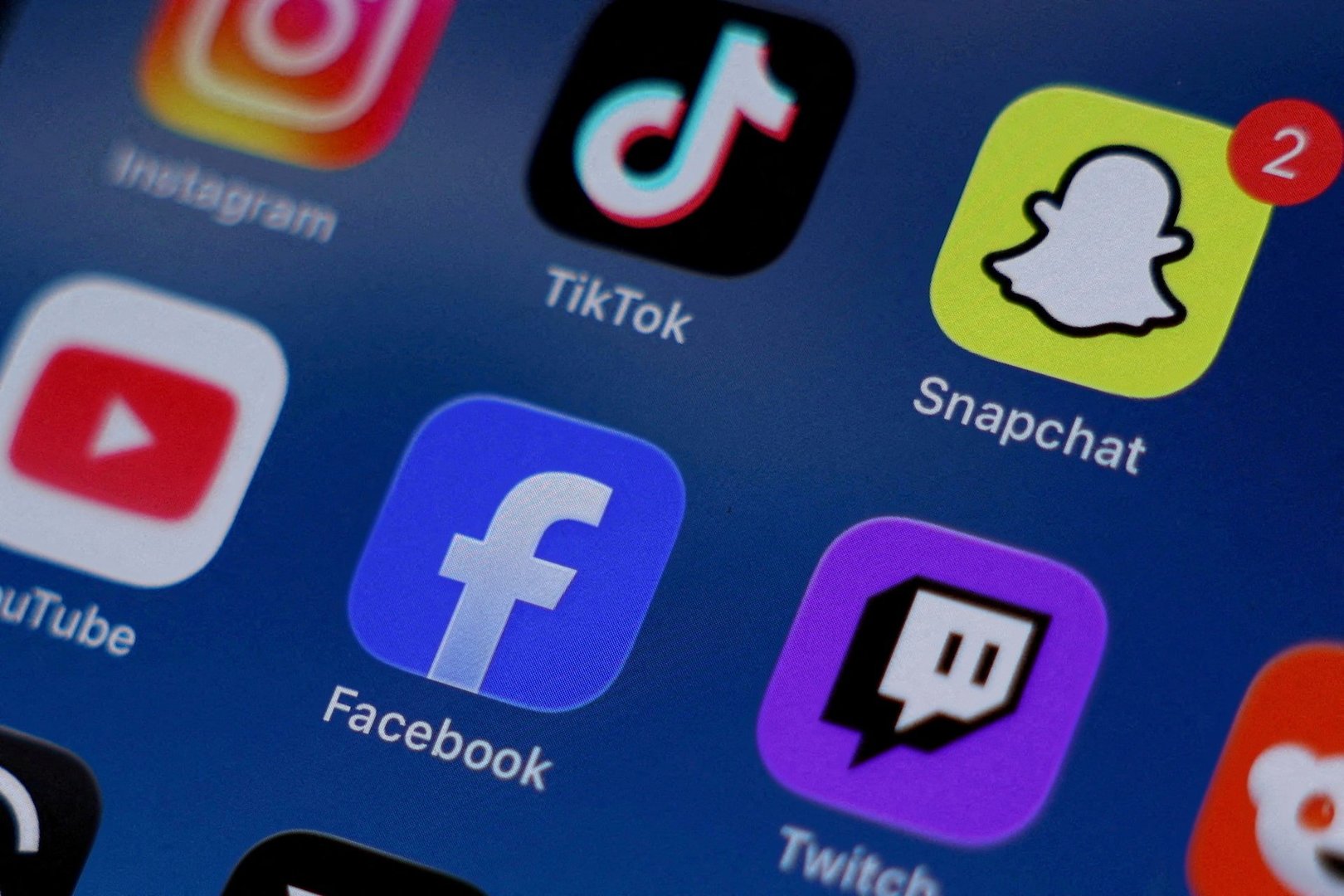
The law, which took effect in December two thousand twenty-five, requires platforms including TikTok, Instagram, Facebook, Snapchat, X, Reddit, Twitch, Threads, and YouTube to take what regulators describe as “reasonable steps” to block underage users.
The penalties are substantial.
Companies that fail to comply can face fines reaching nearly fifty million Australian dollars.
The mechanism is significant because the law places responsibility on the platforms rather than parents or children.
Australia’s eSafety regulator has made clear that companies are expected to actively identify likely underage users using a combination of age estimation tools, behavioral analysis, facial analysis technology, user reporting systems, and account monitoring.
That marks a major escalation in how governments regulate digital platforms.
Historically, social media companies relied largely on self-declared birth dates and weak moderation systems.
Regulators now argue those systems were knowingly ineffective.
The push is spreading rapidly through Europe.
France has already approved restrictions for younger users.
Denmark, Greece, Spain, and other European states are pressing for continent-wide rules limiting social media access for children under fifteen or sixteen.
The European Union is simultaneously preparing broader legislation targeting what officials describe as “addictive design” features aimed at minors.
That includes autoplay systems, algorithmic recommendation loops, endless scrolling mechanics, manipulative notifications, and engagement tools designed to maximize time spent on platforms.
The European Commission is also developing a centralized age-verification framework capable of confirming age without necessarily revealing identity directly to platforms.
Officials argue the technology could allow users to prove they are above a required age threshold while limiting the amount of personal information disclosed.
The technical and political implications are enormous.
Effective age verification has long been considered one of the internet’s hardest governance problems.
Governments want reliable age checks.
Privacy advocates warn that mandatory verification systems could normalize large-scale identity infrastructure tied to online activity.
That tension is now at the center of the debate.
Critics argue that requiring biometric scans, government identification, or behavioral tracking to access online services risks creating permanent surveillance architecture that could later expand far beyond child protection.
Supporters counter that modern platforms already collect vast quantities of personal data and that protecting minors now outweighs earlier assumptions about frictionless internet access.
The conflict is also exposing the limits of national internet regulation.
Children have already demonstrated how easily many restrictions can be bypassed through virtual private networks, shared accounts, manipulated facial recognition systems, false credentials, or migration toward smaller platforms with weaker enforcement.
Australian researchers studying the first months of the country’s ban found that many teenagers viewed the restrictions as unfair, technically weak, and relatively easy to evade.
What is confirmed is that enforcement pressure is nevertheless changing platform behavior.
Millions of accounts have reportedly been removed, flagged, or subjected to additional checks in Australia since the law took effect.
Platforms are investing heavily in machine-learning age estimation systems, facial analysis tools, and new moderation infrastructure because regulators are now threatening direct financial penalties instead of voluntary compliance requests.
The crackdown is also shifting market incentives inside the technology industry itself.
Large established companies may ultimately benefit from stricter regulation because they possess the engineering resources, legal teams, and compliance budgets necessary to build sophisticated age-verification systems.
Smaller competitors may struggle to absorb those costs.
The result could strengthen the dominance of the biggest platforms even as governments attempt to constrain them.
At the same time, policymakers are increasingly framing children’s online activity as a public-health issue rather than merely a content-moderation problem.
European officials have directly linked heavy social media use among minors to anxiety, sleep disruption, cyberbullying, compulsive behavior, self-harm exposure, and deteriorating mental health.
That framing matters politically because it expands the justification for intervention.
Once social media is treated similarly to gambling, tobacco, or alcohol regulation, governments gain broader authority to impose mandatory protections rather than relying on parental discretion alone.
The United States is moving more cautiously but along a similar trajectory.
Bipartisan support has grown around legislation designed to impose stricter duties on platforms toward minors, though federal measures remain fragmented compared with Australia and parts of Europe.
Meanwhile, the technology companies themselves are trying to shape the next phase of regulation.
Most publicly support child safety measures in principle while resisting systems that would expose them to broad legal liability or require highly intrusive identity verification.
The industry’s preferred approach generally involves device-level parental controls, app-store age ratings, and voluntary safeguards rather than government-enforced identity infrastructure.
But regulators increasingly appear unconvinced that voluntary systems are sufficient.
The larger transformation is now unmistakable.
For decades, internet access in democratic societies operated on the assumption that anonymity, open participation, and minimal identity checks were foundational principles.
The emerging child-protection framework reverses that logic.
Access itself is becoming conditional.
Australia’s law demonstrated that governments are willing to force the issue even at the risk of technical failures, privacy disputes, and public backlash.
Europe is now moving toward broader regional enforcement mechanisms with potentially global consequences because international platforms are unlikely to maintain entirely separate systems for every market.
The practical result is that age verification is rapidly becoming embedded into the architecture of the modern internet, pushing social media companies toward a future where proving who you are — and how old you are — becomes a standard condition of participation online.
Australia’s under-sixteen social media ban has become the clearest example of that shift, and European governments are rapidly moving in the same direction.
The core issue is no longer whether social media affects children negatively.
Policymakers across multiple democracies have largely concluded that it does.
The debate has moved to enforcement: how governments can prevent minors from accessing platforms designed to maximize engagement, data collection, and screen time.
Australia became the first major democracy to implement a nationwide legal restriction preventing children under sixteen from holding accounts on major social media services.
The law, which took effect in December two thousand twenty-five, requires platforms including TikTok, Instagram, Facebook, Snapchat, X, Reddit, Twitch, Threads, and YouTube to take what regulators describe as “reasonable steps” to block underage users.
The penalties are substantial.
Companies that fail to comply can face fines reaching nearly fifty million Australian dollars.
The mechanism is significant because the law places responsibility on the platforms rather than parents or children.
Australia’s eSafety regulator has made clear that companies are expected to actively identify likely underage users using a combination of age estimation tools, behavioral analysis, facial analysis technology, user reporting systems, and account monitoring.
That marks a major escalation in how governments regulate digital platforms.
Historically, social media companies relied largely on self-declared birth dates and weak moderation systems.
Regulators now argue those systems were knowingly ineffective.
The push is spreading rapidly through Europe.
France has already approved restrictions for younger users.
Denmark, Greece, Spain, and other European states are pressing for continent-wide rules limiting social media access for children under fifteen or sixteen.
The European Union is simultaneously preparing broader legislation targeting what officials describe as “addictive design” features aimed at minors.
That includes autoplay systems, algorithmic recommendation loops, endless scrolling mechanics, manipulative notifications, and engagement tools designed to maximize time spent on platforms.
The European Commission is also developing a centralized age-verification framework capable of confirming age without necessarily revealing identity directly to platforms.
Officials argue the technology could allow users to prove they are above a required age threshold while limiting the amount of personal information disclosed.
The technical and political implications are enormous.
Effective age verification has long been considered one of the internet’s hardest governance problems.
Governments want reliable age checks.
Privacy advocates warn that mandatory verification systems could normalize large-scale identity infrastructure tied to online activity.
That tension is now at the center of the debate.
Critics argue that requiring biometric scans, government identification, or behavioral tracking to access online services risks creating permanent surveillance architecture that could later expand far beyond child protection.
Supporters counter that modern platforms already collect vast quantities of personal data and that protecting minors now outweighs earlier assumptions about frictionless internet access.
The conflict is also exposing the limits of national internet regulation.
Children have already demonstrated how easily many restrictions can be bypassed through virtual private networks, shared accounts, manipulated facial recognition systems, false credentials, or migration toward smaller platforms with weaker enforcement.
Australian researchers studying the first months of the country’s ban found that many teenagers viewed the restrictions as unfair, technically weak, and relatively easy to evade.
What is confirmed is that enforcement pressure is nevertheless changing platform behavior.
Millions of accounts have reportedly been removed, flagged, or subjected to additional checks in Australia since the law took effect.
Platforms are investing heavily in machine-learning age estimation systems, facial analysis tools, and new moderation infrastructure because regulators are now threatening direct financial penalties instead of voluntary compliance requests.
The crackdown is also shifting market incentives inside the technology industry itself.
Large established companies may ultimately benefit from stricter regulation because they possess the engineering resources, legal teams, and compliance budgets necessary to build sophisticated age-verification systems.
Smaller competitors may struggle to absorb those costs.
The result could strengthen the dominance of the biggest platforms even as governments attempt to constrain them.
At the same time, policymakers are increasingly framing children’s online activity as a public-health issue rather than merely a content-moderation problem.
European officials have directly linked heavy social media use among minors to anxiety, sleep disruption, cyberbullying, compulsive behavior, self-harm exposure, and deteriorating mental health.
That framing matters politically because it expands the justification for intervention.
Once social media is treated similarly to gambling, tobacco, or alcohol regulation, governments gain broader authority to impose mandatory protections rather than relying on parental discretion alone.
The United States is moving more cautiously but along a similar trajectory.
Bipartisan support has grown around legislation designed to impose stricter duties on platforms toward minors, though federal measures remain fragmented compared with Australia and parts of Europe.
Meanwhile, the technology companies themselves are trying to shape the next phase of regulation.
Most publicly support child safety measures in principle while resisting systems that would expose them to broad legal liability or require highly intrusive identity verification.
The industry’s preferred approach generally involves device-level parental controls, app-store age ratings, and voluntary safeguards rather than government-enforced identity infrastructure.
But regulators increasingly appear unconvinced that voluntary systems are sufficient.
The larger transformation is now unmistakable.
For decades, internet access in democratic societies operated on the assumption that anonymity, open participation, and minimal identity checks were foundational principles.
The emerging child-protection framework reverses that logic.
Access itself is becoming conditional.
Australia’s law demonstrated that governments are willing to force the issue even at the risk of technical failures, privacy disputes, and public backlash.
Europe is now moving toward broader regional enforcement mechanisms with potentially global consequences because international platforms are unlikely to maintain entirely separate systems for every market.
The practical result is that age verification is rapidly becoming embedded into the architecture of the modern internet, pushing social media companies toward a future where proving who you are — and how old you are — becomes a standard condition of participation online.
AI Disclaimer: An advanced artificial intelligence (AI) system generated the content of this page on its own. This innovative technology conducts extensive research from a variety of reliable sources, performs rigorous fact-checking and verification, cleans up and balances biased or manipulated content, and presents a minimal factual summary that is just enough yet essential for you to function as an informed and educated citizen. Please keep in mind, however, that this system is an evolving technology, and as a result, the article may contain accidental inaccuracies or errors. We urge you to help us improve our site by reporting any inaccuracies you find using the "Contact Us" link at the bottom of this page. Your helpful feedback helps us improve our system and deliver more precise content. When you find an article of interest here, please look for the full and extensive coverage of this topic in traditional news sources, as they are written by professional journalists that we try to support, not replace. We appreciate your understanding and assistance.