
Australia’s Bureau of Meteorology Website Overhaul Costs $86 Million Amid Sharp Criticism
The website redesign forms part of an $866 million infrastructure upgrade yet has sparked backlash over functionality and cost-effectiveness
Australia’s national weather agency has revealed that its newly revamped website cost approximately A$86 million (US$57 million), amid intense public criticism of its rollout and usability.
The figure was disclosed after years of speculation and cost blow-outs.
The public-facing element of the project alone cost about A$4.1 million and was the final phase of a broader technology modernisation initiative, known as the “Robust” programme, which carried a total price tag of about A$866 million.
The agency stated that roughly 10 per cent of that sum was connected to the website and its supporting systems.
The website’s relaunch came earlier this month, just as severe storms struck multiple states.
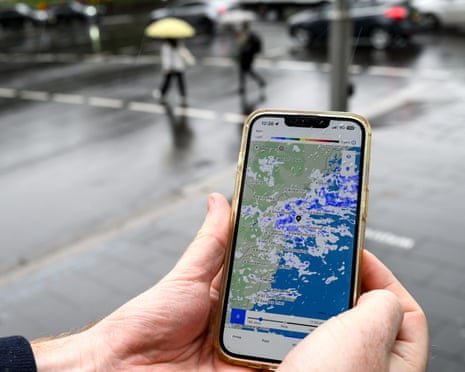
Users and regional stakeholders reported difficulty navigating the site, locating critical radar and observation tools, and adapting to a new interface that changed colour schemes and default settings ahead of storm-season.
One state government warned the move had “put lives at risk”.
Political scrutiny has intensified over contractor costs.
Consulting firm Accenture was awarded about A$78 million for the website element—initially budgeted at about A$31 million—while Deloitte received around A$35 million after an original quote of A$11 million.
The agency noted that extensions and additional interface work were made at its request, and that contractual penalty clauses were unenforceable under the terms in place.
Defending the investment, the agency said the overhaul was driven by a cyber intrusion in 2015 and subsequent systems vulnerabilities.
It added the new website platform is built on enhanced infrastructure, improved security and resilience, and is supported by thousands of observation assets that cover some 11 per cent of the globe.
Nevertheless, the timing and usability of the redesign have drawn significant backlash.
The federal Environment Minister has directed the agency to review feedback and make urgent improvements to navigation, presentation and radar-display settings.
The agency has since reverted to the previous radar colour scheme for familiarity.
Opposition figures and agricultural stakeholders have demanded transparency on what improvements were delivered for the expenditure, noting that Australia’s climate-resilient industries rely heavily on timely, accessible weather information.
As the overhaul continues to be refined, the agency faces renewed pressure to demonstrate value for government investment and user-centric performance in one of its most critical public services.
The figure was disclosed after years of speculation and cost blow-outs.
The public-facing element of the project alone cost about A$4.1 million and was the final phase of a broader technology modernisation initiative, known as the “Robust” programme, which carried a total price tag of about A$866 million.
The agency stated that roughly 10 per cent of that sum was connected to the website and its supporting systems.
The website’s relaunch came earlier this month, just as severe storms struck multiple states.
Users and regional stakeholders reported difficulty navigating the site, locating critical radar and observation tools, and adapting to a new interface that changed colour schemes and default settings ahead of storm-season.
One state government warned the move had “put lives at risk”.
Political scrutiny has intensified over contractor costs.
Consulting firm Accenture was awarded about A$78 million for the website element—initially budgeted at about A$31 million—while Deloitte received around A$35 million after an original quote of A$11 million.
The agency noted that extensions and additional interface work were made at its request, and that contractual penalty clauses were unenforceable under the terms in place.
Defending the investment, the agency said the overhaul was driven by a cyber intrusion in 2015 and subsequent systems vulnerabilities.
It added the new website platform is built on enhanced infrastructure, improved security and resilience, and is supported by thousands of observation assets that cover some 11 per cent of the globe.
Nevertheless, the timing and usability of the redesign have drawn significant backlash.
The federal Environment Minister has directed the agency to review feedback and make urgent improvements to navigation, presentation and radar-display settings.
The agency has since reverted to the previous radar colour scheme for familiarity.
Opposition figures and agricultural stakeholders have demanded transparency on what improvements were delivered for the expenditure, noting that Australia’s climate-resilient industries rely heavily on timely, accessible weather information.
As the overhaul continues to be refined, the agency faces renewed pressure to demonstrate value for government investment and user-centric performance in one of its most critical public services.
AI Disclaimer: An advanced artificial intelligence (AI) system generated the content of this page on its own. This innovative technology conducts extensive research from a variety of reliable sources, performs rigorous fact-checking and verification, cleans up and balances biased or manipulated content, and presents a minimal factual summary that is just enough yet essential for you to function as an informed and educated citizen. Please keep in mind, however, that this system is an evolving technology, and as a result, the article may contain accidental inaccuracies or errors. We urge you to help us improve our site by reporting any inaccuracies you find using the "Contact Us" link at the bottom of this page. Your helpful feedback helps us improve our system and deliver more precise content. When you find an article of interest here, please look for the full and extensive coverage of this topic in traditional news sources, as they are written by professional journalists that we try to support, not replace. We appreciate your understanding and assistance.