
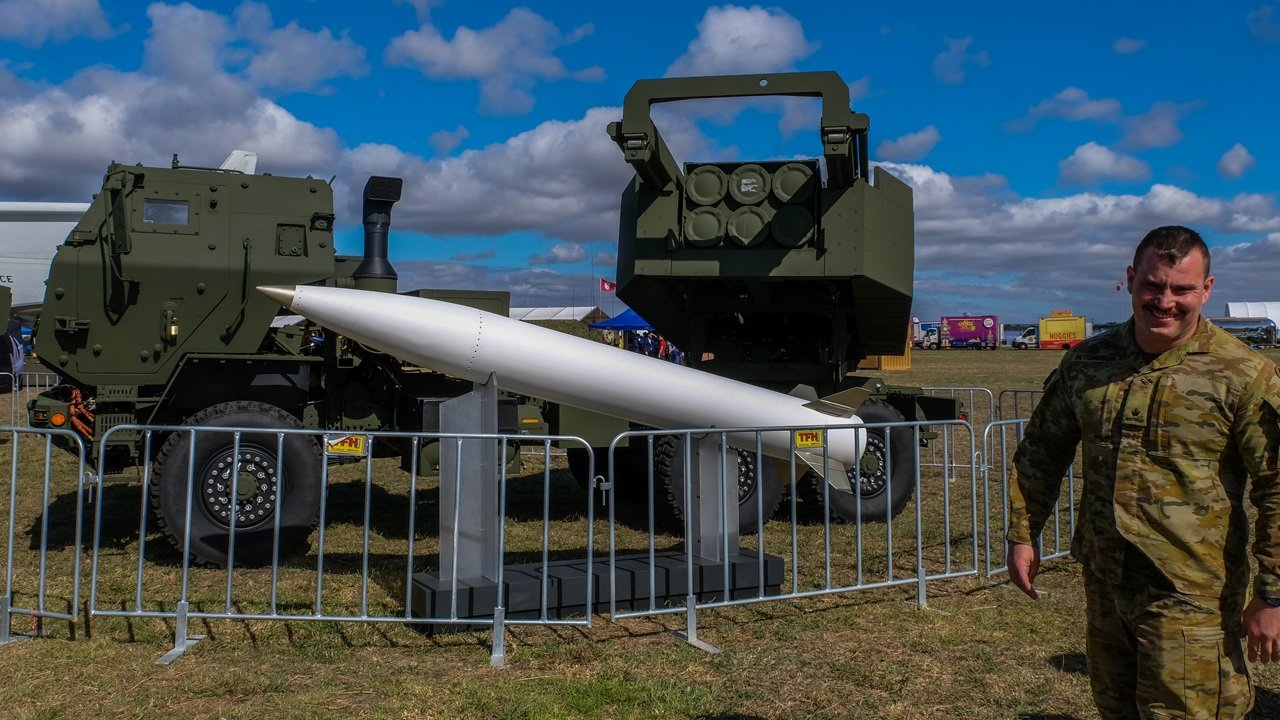
Australia’s Expansion of HIMARS Capabilities Alters Indo-Pacific Defence Calculus amid China’s Military Rise
Canberra’s rapid acquisition and integration of High Mobility Artillery Rocket Systems promise enhanced long-range strike power and regional deterrence, drawing fresh strategic debate on countering China’s influence across the Pacific
Australia is substantially enhancing its long-range strike capabilities with High Mobility Artillery Rocket Systems (HIMARS), reshaping the strategic military landscape of the Indo-Pacific amid mounting concerns about China’s expanding military presence.
Canberra has already taken delivery of the first HIMARS units under a broader acquisition program that will see up to ninety launchers in service, positioning Australia as one of the region’s most potent long-range rocket artillery operators outside the United States.
The expanded HIMARS inventory includes recent approvals for an additional forty-eight systems, part of a Foreign Military Sale valued at approximately seven hundred and five million dollars, reinforcing Canberra’s commitment to rapid precision fires and integrated deterrence with allied forces.
This military build-up aligns with Australia’s Defence Strategic Review, which emphasises deepening interoperability with allies and strengthening sovereign strike options across the Indian and Pacific oceans.
Australian forces have already demonstrated HIMARS’ capabilities in multinational settings, including the first joint launch on Australian soil during the Exercise Talisman Sabre series, which integrated U.S., Singaporean and Australian units to deliver precision long-range fires in a coordinated scenario.
Militaries from partner nations provided shared targeting data and fire support, underscoring not only the technical promise of HIMARS but also the operational value of allied cooperation in deterrence and defence planning.
HIMARS’ mobility, precision and extended reach — especially when equipped with Guided Multiple Launch Rocket System munitions and future Precision Strike Missiles — are seen as key to reinforcing denial strategies that complicate potential adversary planning and secure Australia’s northern approaches.
Beyond live-fire demonstrations, the Australian Army has integrated HIMARS into amphibious operations, successfully embarking launchers aboard Canberra-class ships for sea trials that validate flexible deployment across littoral and island environments.
This capability enhances the potential for rapid reaction across the vast geography of the Indo-Pacific, where dispersed fires and mobility are central to deterring coercive actions.
Canberra’s broader defence strategy also includes investment in local missile production and allied integration under partnerships such as AUKUS, expanding the nation’s role as both a deterrent and stabilising force in concert with the United States, the United Kingdom and other regional partners.
Chinese state responses to such armaments sales and fieldings have typically framed them as provocative, but Australian officials maintain these efforts are defensive, aimed at preserving regional peace through credible strike and interoperability.
Canberra has already taken delivery of the first HIMARS units under a broader acquisition program that will see up to ninety launchers in service, positioning Australia as one of the region’s most potent long-range rocket artillery operators outside the United States.
The expanded HIMARS inventory includes recent approvals for an additional forty-eight systems, part of a Foreign Military Sale valued at approximately seven hundred and five million dollars, reinforcing Canberra’s commitment to rapid precision fires and integrated deterrence with allied forces.
This military build-up aligns with Australia’s Defence Strategic Review, which emphasises deepening interoperability with allies and strengthening sovereign strike options across the Indian and Pacific oceans.
Australian forces have already demonstrated HIMARS’ capabilities in multinational settings, including the first joint launch on Australian soil during the Exercise Talisman Sabre series, which integrated U.S., Singaporean and Australian units to deliver precision long-range fires in a coordinated scenario.
Militaries from partner nations provided shared targeting data and fire support, underscoring not only the technical promise of HIMARS but also the operational value of allied cooperation in deterrence and defence planning.
HIMARS’ mobility, precision and extended reach — especially when equipped with Guided Multiple Launch Rocket System munitions and future Precision Strike Missiles — are seen as key to reinforcing denial strategies that complicate potential adversary planning and secure Australia’s northern approaches.
Beyond live-fire demonstrations, the Australian Army has integrated HIMARS into amphibious operations, successfully embarking launchers aboard Canberra-class ships for sea trials that validate flexible deployment across littoral and island environments.
This capability enhances the potential for rapid reaction across the vast geography of the Indo-Pacific, where dispersed fires and mobility are central to deterring coercive actions.
Canberra’s broader defence strategy also includes investment in local missile production and allied integration under partnerships such as AUKUS, expanding the nation’s role as both a deterrent and stabilising force in concert with the United States, the United Kingdom and other regional partners.
Chinese state responses to such armaments sales and fieldings have typically framed them as provocative, but Australian officials maintain these efforts are defensive, aimed at preserving regional peace through credible strike and interoperability.
AI Disclaimer: An advanced artificial intelligence (AI) system generated the content of this page on its own. This innovative technology conducts extensive research from a variety of reliable sources, performs rigorous fact-checking and verification, cleans up and balances biased or manipulated content, and presents a minimal factual summary that is just enough yet essential for you to function as an informed and educated citizen. Please keep in mind, however, that this system is an evolving technology, and as a result, the article may contain accidental inaccuracies or errors. We urge you to help us improve our site by reporting any inaccuracies you find using the "Contact Us" link at the bottom of this page. Your helpful feedback helps us improve our system and deliver more precise content. When you find an article of interest here, please look for the full and extensive coverage of this topic in traditional news sources, as they are written by professional journalists that we try to support, not replace. We appreciate your understanding and assistance.