
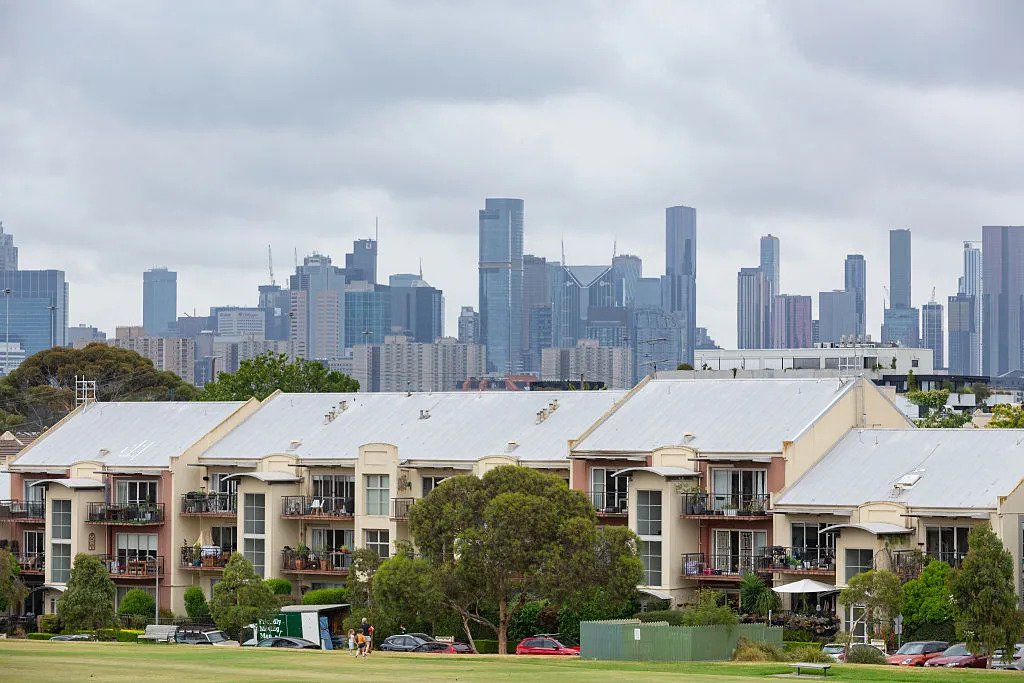
Australia’s Housing Market Loses Momentum as Price Growth Slows Sharply
Cooling demand, affordability constraints, and sustained high interest rates begin to curb a prolonged housing upswing
Market conditions in Australia’s housing sector are driving a clear slowdown in price growth, with the pace of increases easing to its weakest level since early 2025 after an extended period of rapid gains.
What is confirmed is that national home prices are still rising, but at a significantly reduced rate compared with previous months.
The deceleration reflects a shift in underlying demand dynamics rather than a sudden correction, marking a transition from strong expansion to a more constrained and selective market.
The mechanism behind the slowdown is primarily financial.
Interest rates remain elevated following aggressive tightening by the central bank, which has increased mortgage costs and reduced borrowing capacity for buyers.
Even small rate changes have a magnified impact on affordability in a market where property prices are already high relative to incomes.
This affordability pressure is now directly affecting buyer behavior.
First-time buyers are finding it harder to enter the market, while existing homeowners face tighter lending conditions when upgrading.
As a result, transaction volumes have softened, and competition among buyers has eased compared with earlier peaks.
Supply constraints continue to shape the overall trajectory.
Australia has a structural shortage of housing driven by population growth, limited new construction, and planning restrictions.
This underlying imbalance is preventing prices from falling broadly, even as demand weakens, and explains why the market is slowing rather than reversing.
Regional variation is becoming more pronounced.
Some cities and segments are still recording relatively strong growth, particularly where supply is most constrained or population inflows remain high.
Other areas are experiencing flat or marginally declining prices as local demand conditions weaken more sharply.
The rental market is a parallel pressure point.
Rising rents, driven by limited housing availability, are reinforcing demand for home ownership among those who can afford it.
However, high borrowing costs mean that many renters are unable to transition into buyers, trapping demand within the rental sector and sustaining upward pressure on rents.
Developers and construction activity are also affected.
Higher financing costs and weaker pre-sales are slowing new housing projects, which risks prolonging supply shortages in the medium term.
This creates a feedback loop in which reduced construction today contributes to tighter supply and price resilience in the future.
The broader economic context is critical.
Slowing price growth reduces the wealth effect that has historically supported consumer spending in Australia, where housing plays a central role in household balance sheets.
At the same time, a controlled slowdown may help reduce financial stability risks associated with rapid price increases and high household debt.
The immediate consequence is a more balanced but still constrained housing market.
Buyers face fewer bidding wars but continue to grapple with affordability limits, while sellers adjust expectations in a slower-moving environment.
The shift marks a transition phase rather than a downturn, with price growth now closely tied to interest rate trajectories and supply responses.
The deceleration confirms that monetary tightening is feeding through into housing, signaling a period of subdued price growth as the market adjusts to structurally higher borrowing costs and persistent supply limitations.
AI Disclaimer: An advanced artificial intelligence (AI) system generated the content of this page on its own. This innovative technology conducts extensive research from a variety of reliable sources, performs rigorous fact-checking and verification, cleans up and balances biased or manipulated content, and presents a minimal factual summary that is just enough yet essential for you to function as an informed and educated citizen. Please keep in mind, however, that this system is an evolving technology, and as a result, the article may contain accidental inaccuracies or errors. We urge you to help us improve our site by reporting any inaccuracies you find using the "Contact Us" link at the bottom of this page. Your helpful feedback helps us improve our system and deliver more precise content. When you find an article of interest here, please look for the full and extensive coverage of this topic in traditional news sources, as they are written by professional journalists that we try to support, not replace. We appreciate your understanding and assistance.