Australia Signals Support for U.S. Strike Against ISIS ‘Scum’ in Nigeria
Canberra backs joint action against terrorism while underscoring global security commitments and regional concerns
Australia’s government has publicly endorsed the United States’ targeted military strike against Islamic State group fighters in north-western Nigeria, lauding the action as part of an international effort to degrade extremist violence and protect vulnerable communities.
Former U.S. President Donald Trump announced the precision operation on Christmas Day, declaring that U.S. forces had struck militants he described as “ISIS terrorist scum” following repeated attacks on civilians, particularly Christians in the region.
Australia’s Foreign Affairs Minister Penny Wong conveyed Canberra’s support for the U.S.-Nigerian initiative, emphasising that terrorism in all its forms is abhorrent and that the violent ideology of the Islamic State group must be confronted globally.
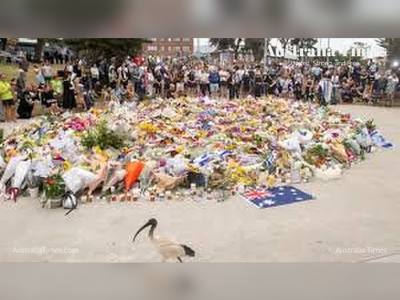
The Australian government’s backing aligns with its response to recent extremist-linked violence at home, including the Bondi Beach massacre, attributed by authorities to alleged extremist sympathisers.
Prime Minister Anthony Albanese said the attack on Australians underscored the rapidly evolving nature of violent extremism and the need for robust international cooperation.
In Nigeria, authorities confirmed that security and intelligence cooperation with U.S. forces contributed to the precision strikes against senior Islamic State West Africa Province (ISWAP) targets, reflecting shared objectives to improve regional stability in the Sahel and Lake Chad Basin.
The broader response from Canberra also reflects Australia’s commitment to multilateral counter-terrorism efforts, balancing support for partner actions with calls for sustained diplomatic engagement to prevent the spread of extremist ideologies.
While reaffirming the importance of safeguarding civilians and combating terrorism, Australian officials have stressed the need for careful coordination and long-term strategies to address underlying drivers of radicalisation and ensure enduring security outcomes across affected regions.
Former U.S. President Donald Trump announced the precision operation on Christmas Day, declaring that U.S. forces had struck militants he described as “ISIS terrorist scum” following repeated attacks on civilians, particularly Christians in the region.
Australia’s Foreign Affairs Minister Penny Wong conveyed Canberra’s support for the U.S.-Nigerian initiative, emphasising that terrorism in all its forms is abhorrent and that the violent ideology of the Islamic State group must be confronted globally.
The Australian government’s backing aligns with its response to recent extremist-linked violence at home, including the Bondi Beach massacre, attributed by authorities to alleged extremist sympathisers.
Prime Minister Anthony Albanese said the attack on Australians underscored the rapidly evolving nature of violent extremism and the need for robust international cooperation.
In Nigeria, authorities confirmed that security and intelligence cooperation with U.S. forces contributed to the precision strikes against senior Islamic State West Africa Province (ISWAP) targets, reflecting shared objectives to improve regional stability in the Sahel and Lake Chad Basin.
The broader response from Canberra also reflects Australia’s commitment to multilateral counter-terrorism efforts, balancing support for partner actions with calls for sustained diplomatic engagement to prevent the spread of extremist ideologies.
While reaffirming the importance of safeguarding civilians and combating terrorism, Australian officials have stressed the need for careful coordination and long-term strategies to address underlying drivers of radicalisation and ensure enduring security outcomes across affected regions.
AI Disclaimer: An advanced artificial intelligence (AI) system generated the content of this page on its own. This innovative technology conducts extensive research from a variety of reliable sources, performs rigorous fact-checking and verification, cleans up and balances biased or manipulated content, and presents a minimal factual summary that is just enough yet essential for you to function as an informed and educated citizen. Please keep in mind, however, that this system is an evolving technology, and as a result, the article may contain accidental inaccuracies or errors. We urge you to help us improve our site by reporting any inaccuracies you find using the "Contact Us" link at the bottom of this page. Your helpful feedback helps us improve our system and deliver more precise content. When you find an article of interest here, please look for the full and extensive coverage of this topic in traditional news sources, as they are written by professional journalists that we try to support, not replace. We appreciate your understanding and assistance.