Qantas Initiates Competitive Price War with Rivals Virgin Australia and Air New Zealand
The airline industry anticipates increased competition as Qantas expands capacity and prepares for a busy travel season.
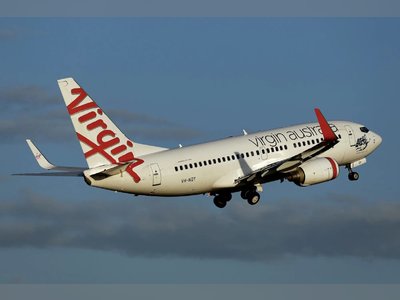
Qantas Airways is positioning itself for intensified competition with Virgin Australia and Air New Zealand as it seeks to attract travelers within domestic markets and the trans-Tasman region, as well as destinations in Asia.
Following a profitable period for Qantas investors in recent months, the airline has announced significant plans to enhance its flight capacity, particularly for the summer travel season.
In an effort to increase market share, Qantas revealed a 20% increase in trans-Tasman flights, equating to approximately 60,000 additional seats available in December and January.
Aviation expert Neil Hansford noted that this increase in capacity is not limited to trans-Tasman routes but also includes flights to key destinations such as Singapore, Bali, and popular locations along Australia’s east coast.
Qantas has recently begun operating direct flights from Hobart and Newcastle to Perth, as well as from Newcastle to Bali.
As Qantas ramps up its services, Virgin Australia is preparing to relist on the Australian Securities Exchange.
Virgin's management is under pressure to respond effectively to the newly available seats and competitive pricing strategies initiated by Qantas.
Last week, Qantas ended its operations of Jetstar Asia, reallocating 13 aircraft to its domestic market, thereby intensifying competition.
Some analysts predict that this strategic move will compel Virgin Australia to lower prices in order to maintain its market share.
The influx of additional seat capacity is expected to lead to more competitive pricing, influencing overall earnings for the involved airlines.
Mr. Hansford remarked that the changes may tip the balance in favor of consumers, enhancing opportunities for price competition.
However, the additional capacity could also constrain potential earnings growth for both Qantas and Virgin Australia.
Virgin Australia has seen a resurgence in recent years following its restructuring after financial difficulties.
This has coincided with a reduction in competitive pressure following the exit of smaller airlines like Rex and Bonza.
The airline has shifted its focus to key domestic routes and holiday destinations.
With American private equity group Bain Capital planning to offload a 35% stake in Virgin, concerns are mounting regarding the implications for market dynamics.
In particular, the involvement of Qatar Airways, which has purchased a 25% stake in Virgin, has raised alarms for Qantas management, especially after Qantas successfully advocated for limitations on Qatar's flights into Australia two years ago.
Qantas has recently enjoyed a significant uptick in its share price, which more than doubled over the past 18 months, and reached an all-time high of $10.87 per share in June.
Despite these gains, analysts highlight ongoing challenges, including an aging fleet that incurs substantial replacement costs.
Funds manager Roger Montgomery indicated that Qantas has accumulated losses totaling approximately $110 million over the last 15 years, despite government support that has bolstered the airline with $2 billion in assistance.
With the backdrop of a possible pricing war, observers note the precarious balance Qantas must maintain, having previously faced significant financial losses during intense market competition.
Former CEO Alan Joyce's push for a 65% share of the domestic market had led to drastic price cuts which were not sustainable.
Under new CEO Vanessa Hudson, Qantas’s strategy appears focused on managing capacity expansion cautiously while upgrading its fleet, which presents additional financial pressures.
The broader travel industry welcomes these developments, with expectations of an increase in passenger numbers as competition drives down prices and enhances flexibility for consumers.
Travel stakeholders in New Zealand have expressed optimism about Qantas's expanded route offerings, anticipating a boost to tourism and a recovery towards pre-COVID travel levels as new connectivity opens up opportunities for both countries’ tourism sectors.
Following a profitable period for Qantas investors in recent months, the airline has announced significant plans to enhance its flight capacity, particularly for the summer travel season.
In an effort to increase market share, Qantas revealed a 20% increase in trans-Tasman flights, equating to approximately 60,000 additional seats available in December and January.
Aviation expert Neil Hansford noted that this increase in capacity is not limited to trans-Tasman routes but also includes flights to key destinations such as Singapore, Bali, and popular locations along Australia’s east coast.
Qantas has recently begun operating direct flights from Hobart and Newcastle to Perth, as well as from Newcastle to Bali.
As Qantas ramps up its services, Virgin Australia is preparing to relist on the Australian Securities Exchange.
Virgin's management is under pressure to respond effectively to the newly available seats and competitive pricing strategies initiated by Qantas.
Last week, Qantas ended its operations of Jetstar Asia, reallocating 13 aircraft to its domestic market, thereby intensifying competition.
Some analysts predict that this strategic move will compel Virgin Australia to lower prices in order to maintain its market share.
The influx of additional seat capacity is expected to lead to more competitive pricing, influencing overall earnings for the involved airlines.
Mr. Hansford remarked that the changes may tip the balance in favor of consumers, enhancing opportunities for price competition.
However, the additional capacity could also constrain potential earnings growth for both Qantas and Virgin Australia.
Virgin Australia has seen a resurgence in recent years following its restructuring after financial difficulties.
This has coincided with a reduction in competitive pressure following the exit of smaller airlines like Rex and Bonza.
The airline has shifted its focus to key domestic routes and holiday destinations.
With American private equity group Bain Capital planning to offload a 35% stake in Virgin, concerns are mounting regarding the implications for market dynamics.
In particular, the involvement of Qatar Airways, which has purchased a 25% stake in Virgin, has raised alarms for Qantas management, especially after Qantas successfully advocated for limitations on Qatar's flights into Australia two years ago.
Qantas has recently enjoyed a significant uptick in its share price, which more than doubled over the past 18 months, and reached an all-time high of $10.87 per share in June.
Despite these gains, analysts highlight ongoing challenges, including an aging fleet that incurs substantial replacement costs.
Funds manager Roger Montgomery indicated that Qantas has accumulated losses totaling approximately $110 million over the last 15 years, despite government support that has bolstered the airline with $2 billion in assistance.
With the backdrop of a possible pricing war, observers note the precarious balance Qantas must maintain, having previously faced significant financial losses during intense market competition.
Former CEO Alan Joyce's push for a 65% share of the domestic market had led to drastic price cuts which were not sustainable.
Under new CEO Vanessa Hudson, Qantas’s strategy appears focused on managing capacity expansion cautiously while upgrading its fleet, which presents additional financial pressures.
The broader travel industry welcomes these developments, with expectations of an increase in passenger numbers as competition drives down prices and enhances flexibility for consumers.
Travel stakeholders in New Zealand have expressed optimism about Qantas's expanded route offerings, anticipating a boost to tourism and a recovery towards pre-COVID travel levels as new connectivity opens up opportunities for both countries’ tourism sectors.
AI Disclaimer: An advanced artificial intelligence (AI) system generated the content of this page on its own. This innovative technology conducts extensive research from a variety of reliable sources, performs rigorous fact-checking and verification, cleans up and balances biased or manipulated content, and presents a minimal factual summary that is just enough yet essential for you to function as an informed and educated citizen. Please keep in mind, however, that this system is an evolving technology, and as a result, the article may contain accidental inaccuracies or errors. We urge you to help us improve our site by reporting any inaccuracies you find using the "Contact Us" link at the bottom of this page. Your helpful feedback helps us improve our system and deliver more precise content. When you find an article of interest here, please look for the full and extensive coverage of this topic in traditional news sources, as they are written by professional journalists that we try to support, not replace. We appreciate your understanding and assistance.