Australia Prepares to Enforce World-First Social Media Ban for Under-16s
From December 10, 2025, major platforms must block account access for teens under 16 — prompting legal challenges, compliance rush and warnings of potential teenage ‘withdrawal’
Australia will implement a sweeping new law on December 10, 2025, that prohibits individuals under the age of 16 from holding accounts on major social media platforms.
The legislation, known as the Online Safety Amendment (Social Media Minimum Age) Act 2024, requires social media companies to take “reasonable steps” to block account creation or maintenance for under-16s, or face fines up to AUD 49.5 million.
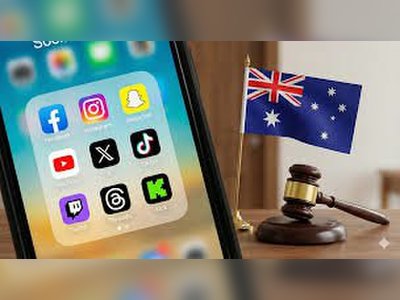
Under the new rules, globally popular platforms including Facebook, Instagram, TikTok, Snapchat, X (formerly Twitter), YouTube, Reddit, Twitch and Kick are listed as “age-restricted platforms.” Platforms primarily devoted to messaging or gaming — such as WhatsApp, educational services and child-friendly outlets like YouTube Kids — are exempt.
As of December 4, major tech firms have begun taking steps toward compliance.
Meta has already started notifying users between 13 and 15 years old to download their data and prepare for account deactivation, with final blocking of account access by December 10. Another platform, Snapchat, has also begun to notify under-16 users that their accounts will be locked.
The government, including Anika Wells, Minister for Communications, remains firm on the rollout, rejecting calls to delay enforcement despite a constitutional challenge filed by two 15-year-olds — Digital Freedom Project along with plaintiffs named Noah Jones and Macy Neyland.
The lawsuit argues the law violates an implied right to political communication enshrined in Australia’s constitution.
Supporters of the ban point to a growing body of research linking excessive social media exposure in adolescents to mental health concerns, disrupted sleep, and reduced academic focus.
The government frames the law as a proactive step to protect youth during a vulnerable developmental period and to ensure platforms are held accountable.
Yet critics — including psychologists, digital-rights advocates, and the teens themselves — warn the ban may drive young people toward less-regulated or underground platforms, undermine digital literacy and social development, and even foster withdrawal-like symptoms as habits shift.
As one teen plaintiff described it, the law risks making the internet less safe by pushing use into secretive and unsupervised corners.
As Australia embarks on this world-first regulatory experiment, its impact may resonate far beyond its borders — forcing societies everywhere to confront how to balance online safety with freedom and digital inclusion for the next generation.
The legislation, known as the Online Safety Amendment (Social Media Minimum Age) Act 2024, requires social media companies to take “reasonable steps” to block account creation or maintenance for under-16s, or face fines up to AUD 49.5 million.
Under the new rules, globally popular platforms including Facebook, Instagram, TikTok, Snapchat, X (formerly Twitter), YouTube, Reddit, Twitch and Kick are listed as “age-restricted platforms.” Platforms primarily devoted to messaging or gaming — such as WhatsApp, educational services and child-friendly outlets like YouTube Kids — are exempt.
As of December 4, major tech firms have begun taking steps toward compliance.
Meta has already started notifying users between 13 and 15 years old to download their data and prepare for account deactivation, with final blocking of account access by December 10. Another platform, Snapchat, has also begun to notify under-16 users that their accounts will be locked.
The government, including Anika Wells, Minister for Communications, remains firm on the rollout, rejecting calls to delay enforcement despite a constitutional challenge filed by two 15-year-olds — Digital Freedom Project along with plaintiffs named Noah Jones and Macy Neyland.
The lawsuit argues the law violates an implied right to political communication enshrined in Australia’s constitution.
Supporters of the ban point to a growing body of research linking excessive social media exposure in adolescents to mental health concerns, disrupted sleep, and reduced academic focus.
The government frames the law as a proactive step to protect youth during a vulnerable developmental period and to ensure platforms are held accountable.
Yet critics — including psychologists, digital-rights advocates, and the teens themselves — warn the ban may drive young people toward less-regulated or underground platforms, undermine digital literacy and social development, and even foster withdrawal-like symptoms as habits shift.
As one teen plaintiff described it, the law risks making the internet less safe by pushing use into secretive and unsupervised corners.
As Australia embarks on this world-first regulatory experiment, its impact may resonate far beyond its borders — forcing societies everywhere to confront how to balance online safety with freedom and digital inclusion for the next generation.
AI Disclaimer: An advanced artificial intelligence (AI) system generated the content of this page on its own. This innovative technology conducts extensive research from a variety of reliable sources, performs rigorous fact-checking and verification, cleans up and balances biased or manipulated content, and presents a minimal factual summary that is just enough yet essential for you to function as an informed and educated citizen. Please keep in mind, however, that this system is an evolving technology, and as a result, the article may contain accidental inaccuracies or errors. We urge you to help us improve our site by reporting any inaccuracies you find using the "Contact Us" link at the bottom of this page. Your helpful feedback helps us improve our system and deliver more precise content. When you find an article of interest here, please look for the full and extensive coverage of this topic in traditional news sources, as they are written by professional journalists that we try to support, not replace. We appreciate your understanding and assistance.