Australia Signals No Retreat as Teen Social Media Ban Faces Legal Challenge
Communications minister vows to enforce under-16 online restrictions despite mounting opposition from Big Tech and constitutional challenge
Australia is pressing ahead with the implementation of a landmark law that will ban individuals under the age of 16 from holding accounts on major social media platforms, despite legal challenges and threats from technology companies.
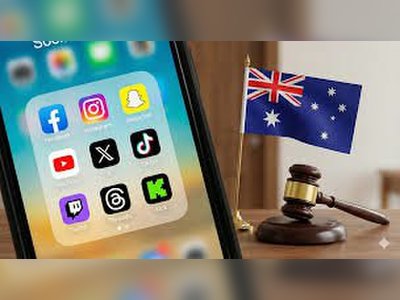
The legislation — passed as the Online Safety Amendment (Social Media Minimum Age) Act 2024 — takes effect on December 10, 2025. Platforms such as Facebook, Instagram, TikTok, Snapchat, X (formerly Twitter), YouTube, Reddit, Threads, Kick and Twitch are required to block account creation or maintenance for under-16s, or face fines up to AUD 49.5 million.
On November 26, the advocacy group Digital Freedom Project filed a High Court challenge on behalf of two 15-year-old Australians, arguing the ban violates the constitutionally implied right to political communication by limiting teens’ ability to engage and express opinions online.
The plaintiffs warn that the restriction may stifle civic participation and disproportionately hinder youth voices.
Responding firmly in Parliament, Anika Wells, the Communications Minister, rejected both the legal challenge and pressure from social media companies.
She said the government would not be “intimidated” and remained committed to “standing behind parents, not platforms.” She reiterated that the law is designed to protect children’s wellbeing and online safety, and that enforcement will proceed as scheduled.
Companies have already started to take initial steps: under-16 users on some platforms are being notified that their accounts will be deactivated ahead of the formal deadline.
The government and its regulator emphasise that the law may not yield perfect results immediately — but frame it as a necessary cultural shift to prioritise youth welfare over internet habits.
Supporters say the reform seeks to recalibrate childhood and online exposure in an age of constant connectivity, while government leaders downplay concerns over free-speech constraints by noting that the constitutional right to political communication is not absolute and can lawfully be subject to restrictions.
As Australia moves forward, it positions itself as a global pioneer in youth digital safety — for now, at least, undeterred by challenge or dissent.
The legislation — passed as the Online Safety Amendment (Social Media Minimum Age) Act 2024 — takes effect on December 10, 2025. Platforms such as Facebook, Instagram, TikTok, Snapchat, X (formerly Twitter), YouTube, Reddit, Threads, Kick and Twitch are required to block account creation or maintenance for under-16s, or face fines up to AUD 49.5 million.
On November 26, the advocacy group Digital Freedom Project filed a High Court challenge on behalf of two 15-year-old Australians, arguing the ban violates the constitutionally implied right to political communication by limiting teens’ ability to engage and express opinions online.
The plaintiffs warn that the restriction may stifle civic participation and disproportionately hinder youth voices.
Responding firmly in Parliament, Anika Wells, the Communications Minister, rejected both the legal challenge and pressure from social media companies.
She said the government would not be “intimidated” and remained committed to “standing behind parents, not platforms.” She reiterated that the law is designed to protect children’s wellbeing and online safety, and that enforcement will proceed as scheduled.
Companies have already started to take initial steps: under-16 users on some platforms are being notified that their accounts will be deactivated ahead of the formal deadline.
The government and its regulator emphasise that the law may not yield perfect results immediately — but frame it as a necessary cultural shift to prioritise youth welfare over internet habits.
Supporters say the reform seeks to recalibrate childhood and online exposure in an age of constant connectivity, while government leaders downplay concerns over free-speech constraints by noting that the constitutional right to political communication is not absolute and can lawfully be subject to restrictions.
As Australia moves forward, it positions itself as a global pioneer in youth digital safety — for now, at least, undeterred by challenge or dissent.
AI Disclaimer: An advanced artificial intelligence (AI) system generated the content of this page on its own. This innovative technology conducts extensive research from a variety of reliable sources, performs rigorous fact-checking and verification, cleans up and balances biased or manipulated content, and presents a minimal factual summary that is just enough yet essential for you to function as an informed and educated citizen. Please keep in mind, however, that this system is an evolving technology, and as a result, the article may contain accidental inaccuracies or errors. We urge you to help us improve our site by reporting any inaccuracies you find using the "Contact Us" link at the bottom of this page. Your helpful feedback helps us improve our system and deliver more precise content. When you find an article of interest here, please look for the full and extensive coverage of this topic in traditional news sources, as they are written by professional journalists that we try to support, not replace. We appreciate your understanding and assistance.