Australia’s Gas Reservation Gamble Reshapes the LNG Export Market
A new federal policy forcing LNG exporters to reserve part of their supply for domestic users has triggered a high-stakes fight over energy security, prices, infrastructure and investment risk.
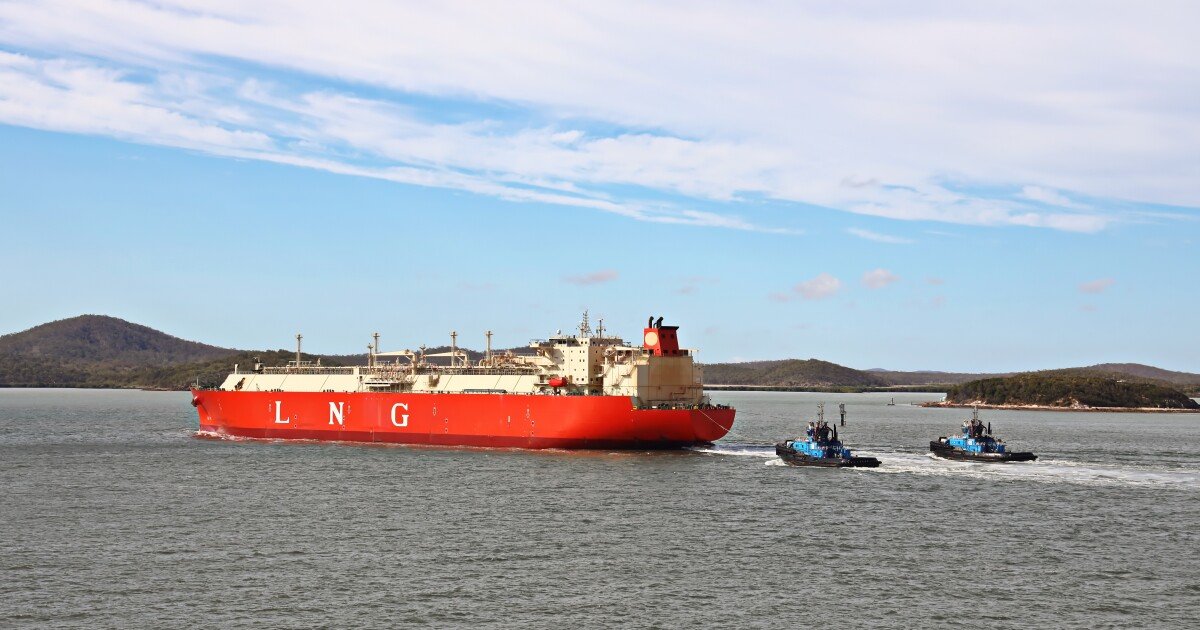
The Australian federal government’s new domestic gas reservation policy is fundamentally reshaping the country’s liquefied natural gas industry by forcing exporters to divert part of their production into the local market instead of overseas sales.
The reform marks one of the most aggressive interventions in Australia’s energy market in more than a decade and raises the stakes for producers, manufacturers, investors and major Asian trading partners.
What is confirmed is that the government will require east coast LNG exporters to reserve the equivalent of twenty per cent of export volumes for domestic Australian use from July two thousand twenty-seven.
The policy applies primarily to Queensland LNG operations supplying overseas buyers, including projects linked to Shell, Santos and Origin Energy.
Existing long-term export contracts signed before late December two thousand twenty-five are exempt.
The policy is designed to solve a structural contradiction that has defined Australia’s east coast gas market for years.
Australia is one of the world’s largest LNG exporters, yet domestic manufacturers and households have faced high gas and electricity prices alongside repeated warnings of future supply shortages.
Gas prices on the east coast surged after LNG export terminals in Queensland connected local supply to volatile international markets, particularly following the global energy shock triggered by Russia’s invasion of Ukraine.
The government argues the reservation mechanism will create a deliberate oversupply inside the domestic market.
The aim is to break the direct link between local prices and global LNG benchmarks by forcing exporters to compete for Australian buyers.
Officials have framed the policy as an energy sovereignty measure intended to protect manufacturers, stabilize power generation costs and reduce exposure to international disruptions.
The reform mirrors a long-running gas reservation system in Western Australia, where domestic gas prices have historically remained significantly lower than those on the east coast.
That comparison has become politically powerful in Canberra as manufacturers, unions and heavy industry groups intensified pressure on the government to intervene.
The mechanism itself is more complex than a simple export cap.
LNG exporters seeking approval to sell spot cargoes overseas will need to demonstrate they are genuinely supplying the domestic market.
The government is also dismantling older emergency-style intervention tools that were criticized as unpredictable and reactive.
Officials argue the new framework creates a permanent and more transparent system.
The key issue is that Australia’s LNG industry was built around long-term export commitments to Asian customers, especially Japan and South Korea.
Queensland LNG projects signed massive multi-decade supply agreements during the export boom of the two thousand tens.
Some projects later struggled to produce enough gas to meet those commitments and began drawing supply from the broader domestic market, tightening local availability and pushing up prices.
The reservation policy attempts to reverse part of that dynamic without directly breaking existing export contracts.
By exempting older agreements, the government is trying to avoid a full-scale sovereign risk confrontation with foreign buyers and investors.
However, critics inside the energy sector argue the policy still weakens Australia’s reputation as a stable supplier.
Industry opposition has focused on investment risk and market distortion.
Gas producers warn that mandatory domestic supply quotas could discourage future LNG developments, reduce returns on expensive upstream projects and complicate financing decisions.
Some executives argue the policy effectively forces exporters to subsidize domestic energy users while maintaining the enormous capital costs associated with LNG production and infrastructure.
The conflict is especially sensitive because Australia’s gas market is geographically fragmented.
Most major undeveloped gas resources are located in northern and western regions, while demand is concentrated in the southeastern states.
Analysts warn that reserving gas alone will not solve infrastructure bottlenecks.
Pipeline constraints and declining production from southern gas fields remain major risks for supply reliability during winter demand peaks.
The reform also arrives during a broader political struggle over Australia’s energy transition.
Gas remains central to electricity generation, industrial processing and export earnings even as the country attempts to expand renewable energy capacity and reduce emissions.
Western Australia’s powerful gas sector has simultaneously become a flashpoint in national climate policy debates because of the state’s continued support for LNG expansion.
Manufacturing groups broadly support the reservation policy because many energy-intensive industries have faced mounting pressure from high gas costs.
Aluminium processing, chemicals, fertilizer production and heavy manufacturing businesses argue Australia’s export-focused gas system has undermined domestic industrial competitiveness despite the country’s massive resource base.
Financial markets reacted cautiously after the policy announcement.
Investors are still assessing how broadly the reservation requirements will apply, how exemptions will operate and whether future governments could tighten the framework further.
Some uncertainty remains around how regulators will calculate compliance obligations for projects with mixed domestic and export supply arrangements.
The debate has also exposed a larger political shift.
For years, Australian governments resisted broad domestic reservation schemes outside Western Australia, warning they could damage investment and breach free-market principles.
That position weakened as energy prices became a major cost-of-living issue and public frustration grew over the perception that Australians were paying international prices for domestically produced gas.
What changes next is now becoming clearer.
LNG exporters are preparing for another round of consultations as the government finalizes the legal architecture of the scheme before implementation begins in two thousand twenty-seven.
Gas producers are reassessing long-term contracting strategies, manufacturers are pushing for lower domestic prices in the eight to ten dollar per gigajoule range, and pipeline operators are arguing that billions of dollars in transport infrastructure will be needed if the reservation policy is to achieve its stated goals.
The result is a profound rebalancing of Australia’s gas market.
After more than a decade in which LNG exports dominated policy settings, Canberra is now explicitly prioritizing domestic energy security and industrial supply over unrestricted access to global LNG profits.
The reform marks one of the most aggressive interventions in Australia’s energy market in more than a decade and raises the stakes for producers, manufacturers, investors and major Asian trading partners.
What is confirmed is that the government will require east coast LNG exporters to reserve the equivalent of twenty per cent of export volumes for domestic Australian use from July two thousand twenty-seven.
The policy applies primarily to Queensland LNG operations supplying overseas buyers, including projects linked to Shell, Santos and Origin Energy.
Existing long-term export contracts signed before late December two thousand twenty-five are exempt.
The policy is designed to solve a structural contradiction that has defined Australia’s east coast gas market for years.
Australia is one of the world’s largest LNG exporters, yet domestic manufacturers and households have faced high gas and electricity prices alongside repeated warnings of future supply shortages.
Gas prices on the east coast surged after LNG export terminals in Queensland connected local supply to volatile international markets, particularly following the global energy shock triggered by Russia’s invasion of Ukraine.
The government argues the reservation mechanism will create a deliberate oversupply inside the domestic market.
The aim is to break the direct link between local prices and global LNG benchmarks by forcing exporters to compete for Australian buyers.
Officials have framed the policy as an energy sovereignty measure intended to protect manufacturers, stabilize power generation costs and reduce exposure to international disruptions.
The reform mirrors a long-running gas reservation system in Western Australia, where domestic gas prices have historically remained significantly lower than those on the east coast.
That comparison has become politically powerful in Canberra as manufacturers, unions and heavy industry groups intensified pressure on the government to intervene.
The mechanism itself is more complex than a simple export cap.
LNG exporters seeking approval to sell spot cargoes overseas will need to demonstrate they are genuinely supplying the domestic market.
The government is also dismantling older emergency-style intervention tools that were criticized as unpredictable and reactive.
Officials argue the new framework creates a permanent and more transparent system.
The key issue is that Australia’s LNG industry was built around long-term export commitments to Asian customers, especially Japan and South Korea.
Queensland LNG projects signed massive multi-decade supply agreements during the export boom of the two thousand tens.
Some projects later struggled to produce enough gas to meet those commitments and began drawing supply from the broader domestic market, tightening local availability and pushing up prices.
The reservation policy attempts to reverse part of that dynamic without directly breaking existing export contracts.
By exempting older agreements, the government is trying to avoid a full-scale sovereign risk confrontation with foreign buyers and investors.
However, critics inside the energy sector argue the policy still weakens Australia’s reputation as a stable supplier.
Industry opposition has focused on investment risk and market distortion.
Gas producers warn that mandatory domestic supply quotas could discourage future LNG developments, reduce returns on expensive upstream projects and complicate financing decisions.
Some executives argue the policy effectively forces exporters to subsidize domestic energy users while maintaining the enormous capital costs associated with LNG production and infrastructure.
The conflict is especially sensitive because Australia’s gas market is geographically fragmented.
Most major undeveloped gas resources are located in northern and western regions, while demand is concentrated in the southeastern states.
Analysts warn that reserving gas alone will not solve infrastructure bottlenecks.
Pipeline constraints and declining production from southern gas fields remain major risks for supply reliability during winter demand peaks.
The reform also arrives during a broader political struggle over Australia’s energy transition.
Gas remains central to electricity generation, industrial processing and export earnings even as the country attempts to expand renewable energy capacity and reduce emissions.
Western Australia’s powerful gas sector has simultaneously become a flashpoint in national climate policy debates because of the state’s continued support for LNG expansion.
Manufacturing groups broadly support the reservation policy because many energy-intensive industries have faced mounting pressure from high gas costs.
Aluminium processing, chemicals, fertilizer production and heavy manufacturing businesses argue Australia’s export-focused gas system has undermined domestic industrial competitiveness despite the country’s massive resource base.
Financial markets reacted cautiously after the policy announcement.
Investors are still assessing how broadly the reservation requirements will apply, how exemptions will operate and whether future governments could tighten the framework further.
Some uncertainty remains around how regulators will calculate compliance obligations for projects with mixed domestic and export supply arrangements.
The debate has also exposed a larger political shift.
For years, Australian governments resisted broad domestic reservation schemes outside Western Australia, warning they could damage investment and breach free-market principles.
That position weakened as energy prices became a major cost-of-living issue and public frustration grew over the perception that Australians were paying international prices for domestically produced gas.
What changes next is now becoming clearer.
LNG exporters are preparing for another round of consultations as the government finalizes the legal architecture of the scheme before implementation begins in two thousand twenty-seven.
Gas producers are reassessing long-term contracting strategies, manufacturers are pushing for lower domestic prices in the eight to ten dollar per gigajoule range, and pipeline operators are arguing that billions of dollars in transport infrastructure will be needed if the reservation policy is to achieve its stated goals.
The result is a profound rebalancing of Australia’s gas market.
After more than a decade in which LNG exports dominated policy settings, Canberra is now explicitly prioritizing domestic energy security and industrial supply over unrestricted access to global LNG profits.
AI Disclaimer: An advanced artificial intelligence (AI) system generated the content of this page on its own. This innovative technology conducts extensive research from a variety of reliable sources, performs rigorous fact-checking and verification, cleans up and balances biased or manipulated content, and presents a minimal factual summary that is just enough yet essential for you to function as an informed and educated citizen. Please keep in mind, however, that this system is an evolving technology, and as a result, the article may contain accidental inaccuracies or errors. We urge you to help us improve our site by reporting any inaccuracies you find using the "Contact Us" link at the bottom of this page. Your helpful feedback helps us improve our system and deliver more precise content. When you find an article of interest here, please look for the full and extensive coverage of this topic in traditional news sources, as they are written by professional journalists that we try to support, not replace. We appreciate your understanding and assistance.