Australia’s Trade Strategy Pulls Ahead of Washington, Exposing a New Fault Line in Global Commerce
Canberra’s push for diversified trade agreements and critical supply chain control is reshaping its economic posture faster than the United States, raising questions about long-term alignment in a fragmented global trading system.
Australia’s trade strategy is increasingly defined by a deliberate effort to diversify markets, secure critical supply chains, and lock in bilateral agreements across Asia, Europe, and emerging economies at a pace that is outstripping the United States’ current trade posture.
This shift is not a single policy but a structural response to a more fragmented global trading environment shaped by geopolitical rivalry, resource competition, and the weakening of multilateral trade consensus.
What is confirmed is that Australia remains heavily exposed to global demand cycles, particularly through commodities such as iron ore, liquefied natural gas, and critical minerals.
China continues to dominate as Australia’s largest trading partner, accounting for a significant share of exports, especially in resources and energy.
At the same time, official policy has explicitly moved toward a ‘China and’ rather than ‘China or’ strategy, meaning Australia seeks to maintain deep commercial ties with China while expanding into alternative markets across Southeast Asia, India, Japan, South Korea, and Europe.
This approach has been formalised through a growing network of free trade agreements and regional frameworks.
Australia has pursued agreements with multiple partners in the Indo-Pacific and Europe, alongside participation in broader frameworks aimed at supply chain resilience and clean energy transition.
Government policy also prioritises critical minerals development, renewable energy exports, and strategic stockpiling of inputs like rare earths, gallium, and nickel to reduce dependency risks in politically sensitive sectors.
These initiatives are designed to reduce vulnerability to trade coercion while maintaining export scale.
The United States, by contrast, has adopted a more protectionist and domestically focused trade stance in recent years, with an emphasis on tariffs, industrial subsidies, and selective supply chain reshoring.
While Washington continues to maintain alliances that include economic components, its trade strategy is less centred on expanding free trade agreements and more focused on industrial policy and national security screening.
This divergence has created a perception gap: Australia is building outward-facing trade redundancy, while the United States is tightening inward-facing economic defences.
The key issue is not competition between the two countries, but structural misalignment.
Australia is attempting to reduce concentration risk in its export base by widening its commercial footprint, while the United States is prioritising strategic autonomy in manufacturing and technology supply chains.
These are compatible in principle but diverge in execution, particularly in sectors such as critical minerals, energy transition technologies, and digital trade governance.
Market implications are already visible.
Australian exporters are increasingly targeting multiple Asian markets for commodities and agricultural goods that were once heavily dependent on Chinese demand cycles.
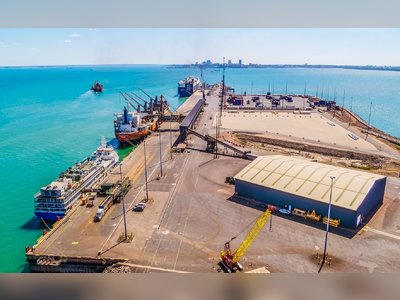
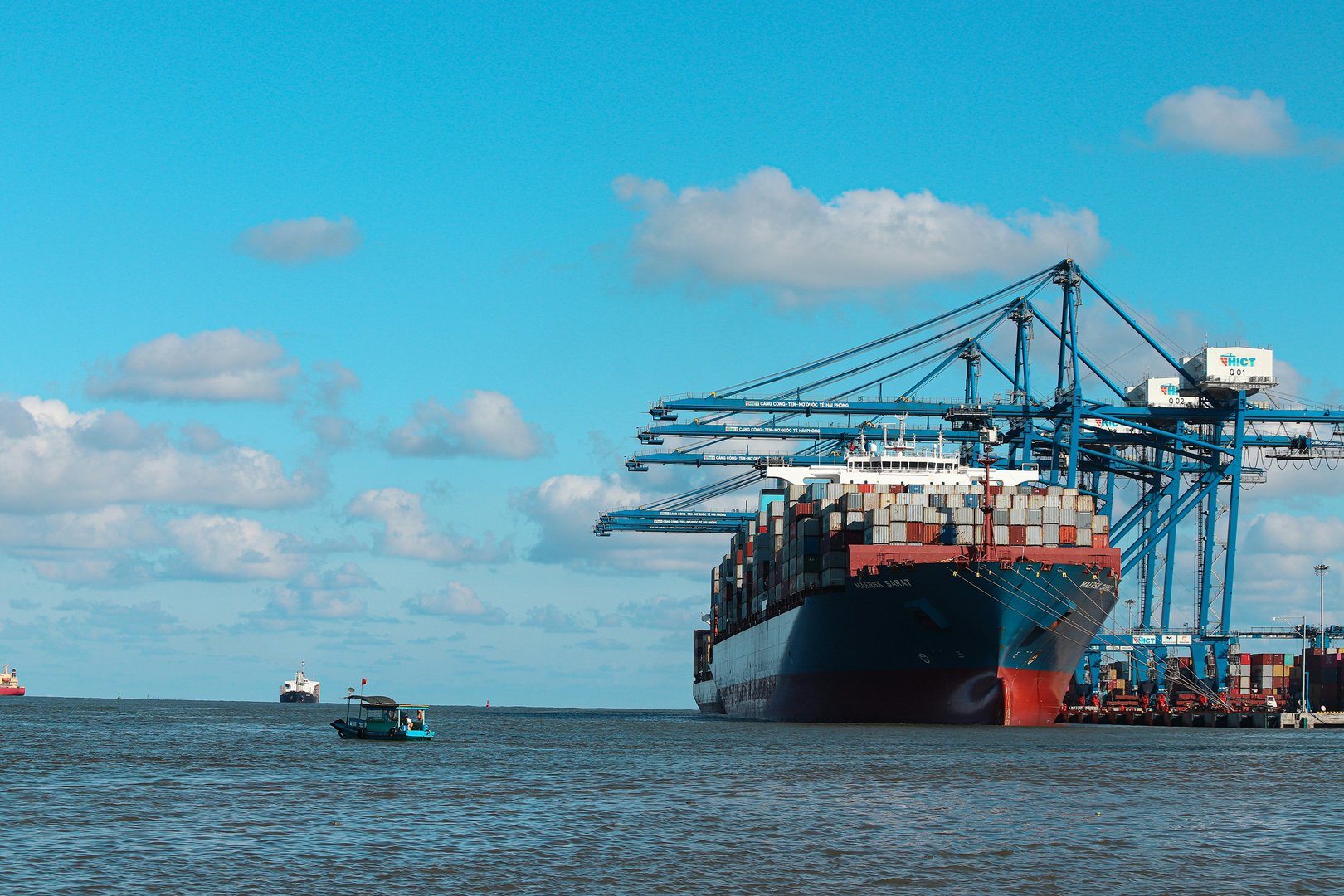
At the same time, investment flows are adjusting toward infrastructure that supports export diversification, including ports, processing facilities, and renewable energy hubs tied to cross-border supply chains.
This reduces single-market exposure but increases logistical complexity and capital requirements.
For global markets, the divergence signals a broader shift away from universal trade liberalisation toward a patchwork of overlapping bilateral and regional systems.
Australia’s model is pragmatic diversification within existing trade relationships, not decoupling.
The United States’ model is strategic segmentation of supply chains under security frameworks.
Together, they illustrate a world where trade policy is no longer converging on a single architecture but fragmenting into parallel systems shaped by geopolitical priorities.
The consequence is a more complex and less predictable global trading environment in which mid-sized economies like Australia are actively hedging between major powers while simultaneously building independent trade resilience.
Australia’s expanding network of agreements now functions as both an economic buffer and a geopolitical signal, reinforcing its role as a resource and energy hub embedded in multiple competing trade ecosystems.
This shift is not a single policy but a structural response to a more fragmented global trading environment shaped by geopolitical rivalry, resource competition, and the weakening of multilateral trade consensus.
What is confirmed is that Australia remains heavily exposed to global demand cycles, particularly through commodities such as iron ore, liquefied natural gas, and critical minerals.
China continues to dominate as Australia’s largest trading partner, accounting for a significant share of exports, especially in resources and energy.
At the same time, official policy has explicitly moved toward a ‘China and’ rather than ‘China or’ strategy, meaning Australia seeks to maintain deep commercial ties with China while expanding into alternative markets across Southeast Asia, India, Japan, South Korea, and Europe.
This approach has been formalised through a growing network of free trade agreements and regional frameworks.
Australia has pursued agreements with multiple partners in the Indo-Pacific and Europe, alongside participation in broader frameworks aimed at supply chain resilience and clean energy transition.
Government policy also prioritises critical minerals development, renewable energy exports, and strategic stockpiling of inputs like rare earths, gallium, and nickel to reduce dependency risks in politically sensitive sectors.
These initiatives are designed to reduce vulnerability to trade coercion while maintaining export scale.
The United States, by contrast, has adopted a more protectionist and domestically focused trade stance in recent years, with an emphasis on tariffs, industrial subsidies, and selective supply chain reshoring.
While Washington continues to maintain alliances that include economic components, its trade strategy is less centred on expanding free trade agreements and more focused on industrial policy and national security screening.
This divergence has created a perception gap: Australia is building outward-facing trade redundancy, while the United States is tightening inward-facing economic defences.
The key issue is not competition between the two countries, but structural misalignment.
Australia is attempting to reduce concentration risk in its export base by widening its commercial footprint, while the United States is prioritising strategic autonomy in manufacturing and technology supply chains.
These are compatible in principle but diverge in execution, particularly in sectors such as critical minerals, energy transition technologies, and digital trade governance.
Market implications are already visible.
Australian exporters are increasingly targeting multiple Asian markets for commodities and agricultural goods that were once heavily dependent on Chinese demand cycles.
At the same time, investment flows are adjusting toward infrastructure that supports export diversification, including ports, processing facilities, and renewable energy hubs tied to cross-border supply chains.
This reduces single-market exposure but increases logistical complexity and capital requirements.
For global markets, the divergence signals a broader shift away from universal trade liberalisation toward a patchwork of overlapping bilateral and regional systems.
Australia’s model is pragmatic diversification within existing trade relationships, not decoupling.
The United States’ model is strategic segmentation of supply chains under security frameworks.
Together, they illustrate a world where trade policy is no longer converging on a single architecture but fragmenting into parallel systems shaped by geopolitical priorities.
The consequence is a more complex and less predictable global trading environment in which mid-sized economies like Australia are actively hedging between major powers while simultaneously building independent trade resilience.
Australia’s expanding network of agreements now functions as both an economic buffer and a geopolitical signal, reinforcing its role as a resource and energy hub embedded in multiple competing trade ecosystems.
AI Disclaimer: An advanced artificial intelligence (AI) system generated the content of this page on its own. This innovative technology conducts extensive research from a variety of reliable sources, performs rigorous fact-checking and verification, cleans up and balances biased or manipulated content, and presents a minimal factual summary that is just enough yet essential for you to function as an informed and educated citizen. Please keep in mind, however, that this system is an evolving technology, and as a result, the article may contain accidental inaccuracies or errors. We urge you to help us improve our site by reporting any inaccuracies you find using the "Contact Us" link at the bottom of this page. Your helpful feedback helps us improve our system and deliver more precise content. When you find an article of interest here, please look for the full and extensive coverage of this topic in traditional news sources, as they are written by professional journalists that we try to support, not replace. We appreciate your understanding and assistance.