Australia’s Trucking Industry Faces a Hard Choice as Electric Freight Gains Ground Against Diesel
Rising fuel insecurity, falling battery costs and new freight trials are accelerating interest in electric trucks, but Australia’s long-distance transport economy still heavily favors diesel.
Australia’s freight system is confronting a structural transition driven by energy security, transport economics and industrial policy, not simply by climate targets.
Heavy trucking remains overwhelmingly dependent on diesel, but a surge in electric truck trials, government financing programs and rising fuel volatility is forcing transport operators to reconsider whether diesel can continue dominating Australia’s roads over the next two decades.
What is confirmed is that electric truck adoption in Australia is accelerating from a very small base.
Industry sales data from early 2026 showed record monthly sales for battery-electric heavy vehicles, with electric trucks exceeding one percent of new truck sales for the first time.
Several logistics operators, retailers and freight companies have expanded deployments for urban and regional deliveries, while manufacturers are increasing local production and financing options.
The central issue is not whether electric trucks work technically.
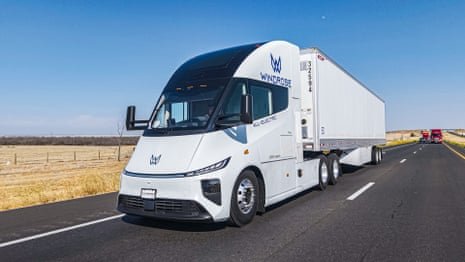
Multiple real-world freight demonstrations in 2026 proved that battery-electric prime movers can complete demanding commercial routes under Australian conditions.
One heavily publicized freight run transported cargo between Sydney and Canberra entirely on battery power while carrying commercial loads over steep highway terrain.
Operators involved in those trials reported lower operating energy costs and competitive delivery times compared with diesel trucks.
The deeper question is whether electric trucks can scale across Australia’s uniquely difficult freight geography.
Australia relies heavily on long-haul trucking because of its vast distances, sparse population distribution and dependence on road freight for mining, agriculture and retail supply chains.
Diesel trucks dominate because they can travel long distances quickly, refuel almost anywhere and haul extremely heavy loads with minimal downtime.
Electric trucks still face significant physical and economic constraints.
Battery systems add substantial vehicle weight, which reduces legal payload capacity under current heavy vehicle regulations.
Long-distance charging infrastructure remains limited outside major freight corridors.
Charging times, although improving rapidly, still create operational challenges for high-utilization fleets.
Upfront vehicle costs also remain higher in many categories despite falling battery prices.
The divide inside the industry is becoming clearer.
Urban and short-haul operators increasingly view electrification as commercially realistic, especially for predictable depot-to-depot routes.
Long-haul freight companies remain far more cautious.
Forestry, mining and interstate freight operators argue that today’s battery technology still struggles with extreme distances, heavy towing demands and remote-area operations.
Fuel security has become one of the strongest arguments in favor of electrification.
Australia imports most of its refined diesel fuel, leaving the freight sector vulnerable to global oil disruptions and geopolitical shocks.
Recent instability affecting Middle Eastern shipping routes and oil markets intensified concerns about diesel supply resilience and price spikes.
Freight companies reported renewed interest in electric vehicles as diesel costs climbed sharply during recent global energy disruptions.
This has shifted the political framing around electric freight.
The debate is no longer centered only on emissions reduction.
Policymakers increasingly describe truck electrification as part of national energy security strategy.
Government-backed financing packages introduced in late 2025 and expanded in 2026 aim to reduce the cost barrier for transport operators purchasing battery-electric trucks and installing charging infrastructure.
Large logistics and retail operators are emerging as early adopters because they can absorb initial infrastructure costs and operate fixed delivery networks.
Companies tied to supermarket distribution, parcel delivery and metropolitan freight are deploying electric fleets in cities including Sydney, Melbourne and Perth.
Several operators are pairing electric trucks with depot-based fast charging systems to reduce downtime.
Mining and heavy industry are also experimenting with electrification, though progress is uneven.
Battery-electric locomotives and mining haul trucks are undergoing trials in Western Australia and other industrial regions.
Some projects have encountered regulatory delays, infrastructure bottlenecks and operational skepticism from parts of the industry workforce.
Others have demonstrated substantial reductions in fuel use and maintenance costs.
China’s manufacturing dominance is another major factor shaping the market.
Lower-cost battery production and expanding Chinese electric truck exports are rapidly reducing vehicle prices worldwide.
Australian fleet operators increasingly source electric heavy vehicles and battery systems from Chinese manufacturers or rely on Chinese battery supply chains.
This is compressing the cost gap between diesel and electric trucks faster than many analysts predicted only a few years ago.
The economics remain highly route-dependent.
Battery-electric trucks already appear competitive in some urban delivery segments because electricity costs are lower and maintenance requirements are reduced.
Long-haul freight economics remain more contested.
Some operators argue that downtime, infrastructure gaps and reduced payloads still make diesel more profitable for interstate freight.
The environmental stakes are substantial.
Heavy road transport is projected to become one of Australia’s largest sources of transport emissions as other sectors decarbonize more quickly.
Freight electrification is therefore becoming central to national emissions strategy even though policymakers avoid presenting it solely as a climate issue.
Public sentiment inside the trucking sector itself remains divided.
Many veteran operators continue to distrust battery reliability, range limitations and charging infrastructure promises.
Others increasingly view diesel dependence as financially risky because of fuel price volatility and tightening international emissions standards affecting logistics contracts and supply chains.
What is emerging is not a sudden collapse of diesel dominance but the beginning of a long industrial transition.
Diesel trucks are expected to remain essential across remote and ultra-heavy freight operations for years.
But the market is no longer static.
Electric truck deployments are expanding, infrastructure investment is accelerating and major freight operators are beginning to plan around a mixed-energy transport system rather than permanent diesel dependence.
The practical consequence is that Australia’s freight industry is entering a decade in which energy policy, infrastructure investment and supply-chain resilience will shape transport economics as much as engine performance, with electric trucking now firmly established as part of the country’s commercial freight future.
Heavy trucking remains overwhelmingly dependent on diesel, but a surge in electric truck trials, government financing programs and rising fuel volatility is forcing transport operators to reconsider whether diesel can continue dominating Australia’s roads over the next two decades.
What is confirmed is that electric truck adoption in Australia is accelerating from a very small base.
Industry sales data from early 2026 showed record monthly sales for battery-electric heavy vehicles, with electric trucks exceeding one percent of new truck sales for the first time.
Several logistics operators, retailers and freight companies have expanded deployments for urban and regional deliveries, while manufacturers are increasing local production and financing options.
The central issue is not whether electric trucks work technically.
Multiple real-world freight demonstrations in 2026 proved that battery-electric prime movers can complete demanding commercial routes under Australian conditions.
One heavily publicized freight run transported cargo between Sydney and Canberra entirely on battery power while carrying commercial loads over steep highway terrain.
Operators involved in those trials reported lower operating energy costs and competitive delivery times compared with diesel trucks.
The deeper question is whether electric trucks can scale across Australia’s uniquely difficult freight geography.
Australia relies heavily on long-haul trucking because of its vast distances, sparse population distribution and dependence on road freight for mining, agriculture and retail supply chains.
Diesel trucks dominate because they can travel long distances quickly, refuel almost anywhere and haul extremely heavy loads with minimal downtime.
Electric trucks still face significant physical and economic constraints.
Battery systems add substantial vehicle weight, which reduces legal payload capacity under current heavy vehicle regulations.
Long-distance charging infrastructure remains limited outside major freight corridors.
Charging times, although improving rapidly, still create operational challenges for high-utilization fleets.
Upfront vehicle costs also remain higher in many categories despite falling battery prices.
The divide inside the industry is becoming clearer.
Urban and short-haul operators increasingly view electrification as commercially realistic, especially for predictable depot-to-depot routes.
Long-haul freight companies remain far more cautious.
Forestry, mining and interstate freight operators argue that today’s battery technology still struggles with extreme distances, heavy towing demands and remote-area operations.
Fuel security has become one of the strongest arguments in favor of electrification.
Australia imports most of its refined diesel fuel, leaving the freight sector vulnerable to global oil disruptions and geopolitical shocks.
Recent instability affecting Middle Eastern shipping routes and oil markets intensified concerns about diesel supply resilience and price spikes.
Freight companies reported renewed interest in electric vehicles as diesel costs climbed sharply during recent global energy disruptions.
This has shifted the political framing around electric freight.
The debate is no longer centered only on emissions reduction.
Policymakers increasingly describe truck electrification as part of national energy security strategy.
Government-backed financing packages introduced in late 2025 and expanded in 2026 aim to reduce the cost barrier for transport operators purchasing battery-electric trucks and installing charging infrastructure.
Large logistics and retail operators are emerging as early adopters because they can absorb initial infrastructure costs and operate fixed delivery networks.
Companies tied to supermarket distribution, parcel delivery and metropolitan freight are deploying electric fleets in cities including Sydney, Melbourne and Perth.
Several operators are pairing electric trucks with depot-based fast charging systems to reduce downtime.
Mining and heavy industry are also experimenting with electrification, though progress is uneven.
Battery-electric locomotives and mining haul trucks are undergoing trials in Western Australia and other industrial regions.
Some projects have encountered regulatory delays, infrastructure bottlenecks and operational skepticism from parts of the industry workforce.
Others have demonstrated substantial reductions in fuel use and maintenance costs.
China’s manufacturing dominance is another major factor shaping the market.
Lower-cost battery production and expanding Chinese electric truck exports are rapidly reducing vehicle prices worldwide.
Australian fleet operators increasingly source electric heavy vehicles and battery systems from Chinese manufacturers or rely on Chinese battery supply chains.
This is compressing the cost gap between diesel and electric trucks faster than many analysts predicted only a few years ago.
The economics remain highly route-dependent.
Battery-electric trucks already appear competitive in some urban delivery segments because electricity costs are lower and maintenance requirements are reduced.
Long-haul freight economics remain more contested.
Some operators argue that downtime, infrastructure gaps and reduced payloads still make diesel more profitable for interstate freight.
The environmental stakes are substantial.
Heavy road transport is projected to become one of Australia’s largest sources of transport emissions as other sectors decarbonize more quickly.
Freight electrification is therefore becoming central to national emissions strategy even though policymakers avoid presenting it solely as a climate issue.
Public sentiment inside the trucking sector itself remains divided.
Many veteran operators continue to distrust battery reliability, range limitations and charging infrastructure promises.
Others increasingly view diesel dependence as financially risky because of fuel price volatility and tightening international emissions standards affecting logistics contracts and supply chains.
What is emerging is not a sudden collapse of diesel dominance but the beginning of a long industrial transition.
Diesel trucks are expected to remain essential across remote and ultra-heavy freight operations for years.
But the market is no longer static.
Electric truck deployments are expanding, infrastructure investment is accelerating and major freight operators are beginning to plan around a mixed-energy transport system rather than permanent diesel dependence.
The practical consequence is that Australia’s freight industry is entering a decade in which energy policy, infrastructure investment and supply-chain resilience will shape transport economics as much as engine performance, with electric trucking now firmly established as part of the country’s commercial freight future.
AI Disclaimer: An advanced artificial intelligence (AI) system generated the content of this page on its own. This innovative technology conducts extensive research from a variety of reliable sources, performs rigorous fact-checking and verification, cleans up and balances biased or manipulated content, and presents a minimal factual summary that is just enough yet essential for you to function as an informed and educated citizen. Please keep in mind, however, that this system is an evolving technology, and as a result, the article may contain accidental inaccuracies or errors. We urge you to help us improve our site by reporting any inaccuracies you find using the "Contact Us" link at the bottom of this page. Your helpful feedback helps us improve our system and deliver more precise content. When you find an article of interest here, please look for the full and extensive coverage of this topic in traditional news sources, as they are written by professional journalists that we try to support, not replace. We appreciate your understanding and assistance.