Australian Banks Warned Deforestation Could Become a Financial Stability Threat
New scrutiny of lending tied to land clearing is pushing Australia’s banking sector into a wider global fight over climate risk, agricultural finance and systemic exposure.
Australia’s banking system is facing mounting pressure over its exposure to deforestation-linked industries, as environmental and financial risk analysts argue that land clearing is no longer just an ecological issue but a potential threat to long-term financial stability.
The debate centers on whether Australia’s largest lenders are materially exposed to businesses connected to forest destruction, biodiversity loss and degraded agricultural land, particularly through cattle, agribusiness and property-related financing.
Campaign groups, responsible investment firms and some shareholders are now pressing banks to disclose how much lending is tied to activities linked to deforestation and to adopt stricter lending standards.
The core issue is systemic risk.
The argument being advanced is that environmental degradation can trigger cascading financial consequences across insurance, agriculture, supply chains, exports and asset values.
If ecosystems deteriorate sharply, agricultural productivity can weaken, land values can fall, export markets can tighten and legal liabilities can increase.
Banks carrying concentrated exposure to affected sectors could then face higher credit losses and wider market instability.
This is not a fringe concern inside global finance anymore.
Financial regulators, central banks and institutional investors increasingly treat nature loss as an economic risk category alongside climate change.
Australia’s banking sector is now being drawn directly into that shift.
Recent shareholder activism has accelerated the pressure.
National Australia Bank, the country’s largest agribusiness lender, is facing what campaigners describe as Australia’s first major shareholder resolution focused specifically on deforestation risk.
Investors backing the motion want the bank to disclose its exposure to customers linked to land clearing and publish a strategy to reduce financing associated with deforestation.
Environmental groups argue that Australian banks have financed agricultural expansion linked to large-scale land clearing over several years.
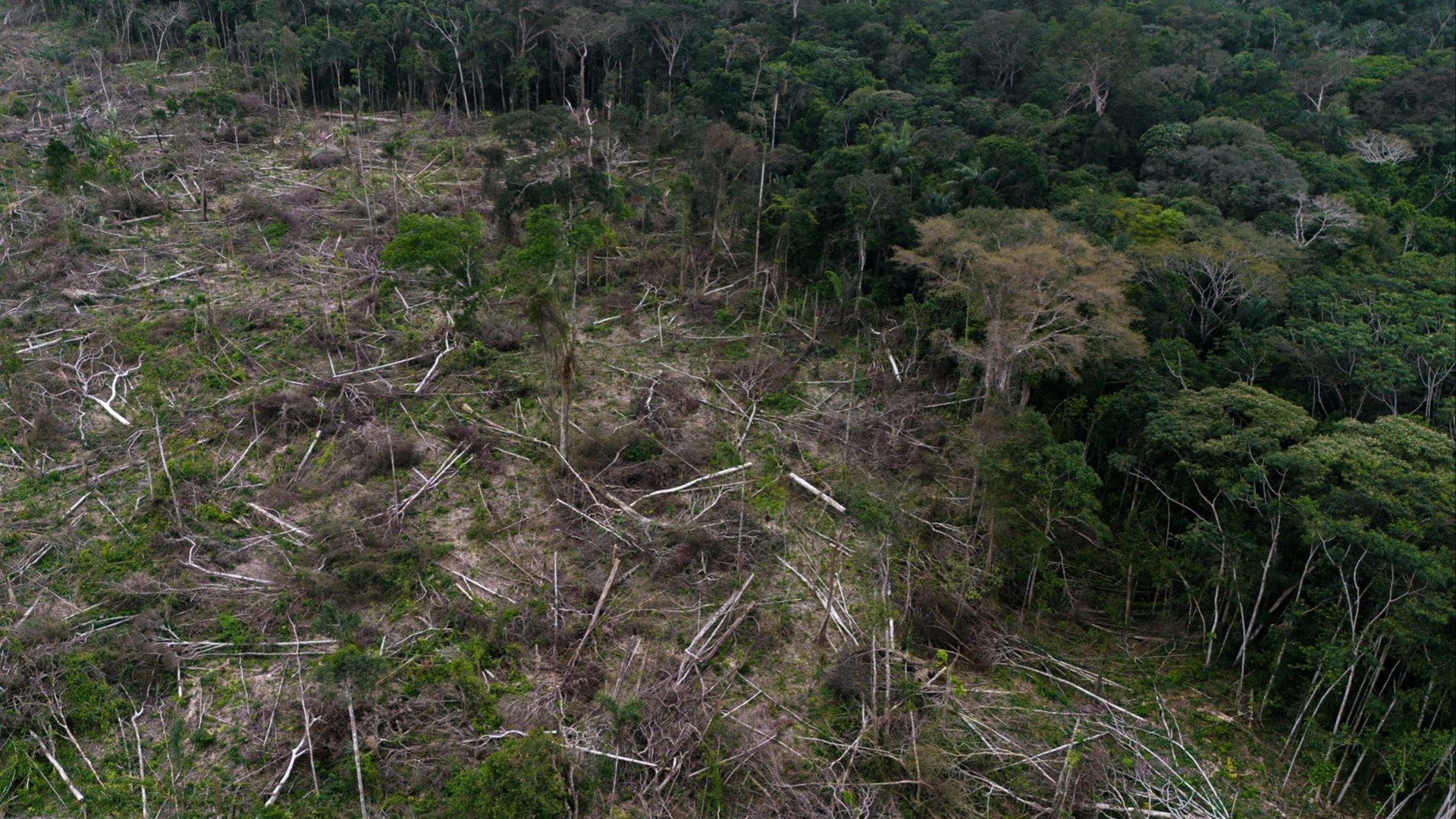
They point to Queensland and northern Australia, where extensive clearing for cattle grazing has continued despite tightening international scrutiny over supply chains tied to biodiversity destruction.
The broader concern is not limited to environmental ethics.
It is increasingly about economic resilience.
Australia is already experiencing rising pressure from climate volatility, including drought, floods and extreme weather events that directly affect agricultural production and insurance costs.
Analysts warn that deforestation can intensify those pressures by weakening soil quality, reducing water retention and accelerating biodiversity decline.
That matters financially because Australian banks are deeply concentrated in property and land-backed lending.
A deterioration in environmental conditions affecting agricultural output or regional land values could ripple through loan books, insurance pricing and investment markets.
At the same time, global trade rules are changing.
The European Union is rolling out tougher anti-deforestation import regulations that require companies to prove commodities such as beef, soy and timber are not linked to recent forest destruction.
Australian exporters that fail to meet those standards could face barriers to major overseas markets.
That creates secondary exposure for banks financing export-dependent industries.
If access to premium foreign markets narrows, borrowers could face lower revenues, weaker asset values and higher refinancing risks.
Australia’s regulators have not formally declared deforestation a systemic financial threat, but the regulatory direction is becoming clearer.
The Australian Prudential Regulation Authority and the Reserve Bank of Australia have both intensified focus on broader systemic vulnerabilities, including climate-related financial shocks, geopolitical instability and interconnected risks across the financial system.
Recent stress-testing exercises have examined how prolonged economic disruptions and external shocks could affect bank capital, liquidity and loan performance.
Nature-related risk is increasingly being discussed alongside those scenarios internationally.
The banking industry itself remains cautious about adopting aggressive lending exclusions.
Large lenders argue that engagement with clients can often produce better environmental outcomes than blanket financing bans.
Banks also warn that abrupt withdrawal of capital from agricultural sectors could create unintended economic disruption in regional communities.
Agribusiness groups have pushed back against claims that Australian agriculture is uniquely destructive, arguing that producers have improved land management practices and that the sector is already adapting to stricter sustainability standards demanded by global customers.
The political dimension is also growing sharper.
Australia’s economy remains heavily tied to resource extraction, agriculture and land-intensive industries.
Any attempt to tighten environmental financing rules quickly collides with concerns over jobs, export revenue and rural development.
At the same time, institutional investors are increasingly treating biodiversity destruction as a material financial variable rather than a public relations issue.
Superannuation funds, asset managers and insurers face rising pressure to assess nature-related exposure across portfolios.
The emerging reality for Australian banks is that deforestation risk is becoming harder to isolate as a niche environmental problem.
It is now intersecting with trade policy, insurance markets, agricultural productivity, sovereign reputation and financial regulation.
The immediate consequence is not a banking crisis.
Australia’s major lenders remain well-capitalized and regulators continue to describe the financial system as resilient.
But the direction of travel is unmistakable: environmental degradation is being absorbed into mainstream financial risk analysis, and banks that finance land-intensive industries are moving closer to the center of that reassessment.
The debate centers on whether Australia’s largest lenders are materially exposed to businesses connected to forest destruction, biodiversity loss and degraded agricultural land, particularly through cattle, agribusiness and property-related financing.
Campaign groups, responsible investment firms and some shareholders are now pressing banks to disclose how much lending is tied to activities linked to deforestation and to adopt stricter lending standards.
The core issue is systemic risk.
The argument being advanced is that environmental degradation can trigger cascading financial consequences across insurance, agriculture, supply chains, exports and asset values.
If ecosystems deteriorate sharply, agricultural productivity can weaken, land values can fall, export markets can tighten and legal liabilities can increase.
Banks carrying concentrated exposure to affected sectors could then face higher credit losses and wider market instability.
This is not a fringe concern inside global finance anymore.
Financial regulators, central banks and institutional investors increasingly treat nature loss as an economic risk category alongside climate change.
Australia’s banking sector is now being drawn directly into that shift.
Recent shareholder activism has accelerated the pressure.
National Australia Bank, the country’s largest agribusiness lender, is facing what campaigners describe as Australia’s first major shareholder resolution focused specifically on deforestation risk.
Investors backing the motion want the bank to disclose its exposure to customers linked to land clearing and publish a strategy to reduce financing associated with deforestation.
Environmental groups argue that Australian banks have financed agricultural expansion linked to large-scale land clearing over several years.
They point to Queensland and northern Australia, where extensive clearing for cattle grazing has continued despite tightening international scrutiny over supply chains tied to biodiversity destruction.
The broader concern is not limited to environmental ethics.
It is increasingly about economic resilience.
Australia is already experiencing rising pressure from climate volatility, including drought, floods and extreme weather events that directly affect agricultural production and insurance costs.
Analysts warn that deforestation can intensify those pressures by weakening soil quality, reducing water retention and accelerating biodiversity decline.
That matters financially because Australian banks are deeply concentrated in property and land-backed lending.
A deterioration in environmental conditions affecting agricultural output or regional land values could ripple through loan books, insurance pricing and investment markets.
At the same time, global trade rules are changing.
The European Union is rolling out tougher anti-deforestation import regulations that require companies to prove commodities such as beef, soy and timber are not linked to recent forest destruction.
Australian exporters that fail to meet those standards could face barriers to major overseas markets.
That creates secondary exposure for banks financing export-dependent industries.
If access to premium foreign markets narrows, borrowers could face lower revenues, weaker asset values and higher refinancing risks.
Australia’s regulators have not formally declared deforestation a systemic financial threat, but the regulatory direction is becoming clearer.
The Australian Prudential Regulation Authority and the Reserve Bank of Australia have both intensified focus on broader systemic vulnerabilities, including climate-related financial shocks, geopolitical instability and interconnected risks across the financial system.
Recent stress-testing exercises have examined how prolonged economic disruptions and external shocks could affect bank capital, liquidity and loan performance.
Nature-related risk is increasingly being discussed alongside those scenarios internationally.
The banking industry itself remains cautious about adopting aggressive lending exclusions.
Large lenders argue that engagement with clients can often produce better environmental outcomes than blanket financing bans.
Banks also warn that abrupt withdrawal of capital from agricultural sectors could create unintended economic disruption in regional communities.
Agribusiness groups have pushed back against claims that Australian agriculture is uniquely destructive, arguing that producers have improved land management practices and that the sector is already adapting to stricter sustainability standards demanded by global customers.
The political dimension is also growing sharper.
Australia’s economy remains heavily tied to resource extraction, agriculture and land-intensive industries.
Any attempt to tighten environmental financing rules quickly collides with concerns over jobs, export revenue and rural development.
At the same time, institutional investors are increasingly treating biodiversity destruction as a material financial variable rather than a public relations issue.
Superannuation funds, asset managers and insurers face rising pressure to assess nature-related exposure across portfolios.
The emerging reality for Australian banks is that deforestation risk is becoming harder to isolate as a niche environmental problem.
It is now intersecting with trade policy, insurance markets, agricultural productivity, sovereign reputation and financial regulation.
The immediate consequence is not a banking crisis.
Australia’s major lenders remain well-capitalized and regulators continue to describe the financial system as resilient.
But the direction of travel is unmistakable: environmental degradation is being absorbed into mainstream financial risk analysis, and banks that finance land-intensive industries are moving closer to the center of that reassessment.
AI Disclaimer: An advanced artificial intelligence (AI) system generated the content of this page on its own. This innovative technology conducts extensive research from a variety of reliable sources, performs rigorous fact-checking and verification, cleans up and balances biased or manipulated content, and presents a minimal factual summary that is just enough yet essential for you to function as an informed and educated citizen. Please keep in mind, however, that this system is an evolving technology, and as a result, the article may contain accidental inaccuracies or errors. We urge you to help us improve our site by reporting any inaccuracies you find using the "Contact Us" link at the bottom of this page. Your helpful feedback helps us improve our system and deliver more precise content. When you find an article of interest here, please look for the full and extensive coverage of this topic in traditional news sources, as they are written by professional journalists that we try to support, not replace. We appreciate your understanding and assistance.