
U.S. Congressional Report Raises Doubts Over Sale of Nuclear Submarines to Australia Under AUKUS
Analysis suggests Washington may retain Virginia-class submarines instead of selling them to Canberra amid strategic and industrial pressures
A newly released United States congressional report has cast emerging doubt on the likelihood of the United States ever selling nuclear-powered attack submarines to Australia under the Australia-United Kingdom-United States (AUKUS) security partnership, prompting fresh debate in Canberra and Washington about the future of a cornerstone of regional defence cooperation.
The analysis by the Congressional Research Service, which advises the U.S. Congress, examined the current AUKUS framework and proposed an alternative “military division of labour” in which submarines earmarked for transfer to Australia would instead remain under U.S. command and operate from Australian bases in the event of a crisis, particularly involving China and Taiwan.
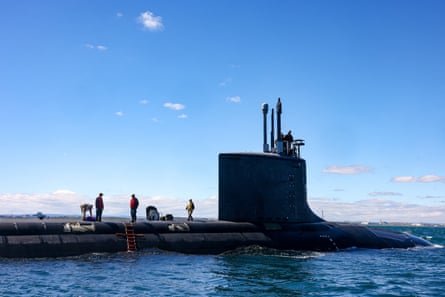
Australia’s AUKUS agreement envisages Canberra purchasing between three and five Virginia-class nuclear-powered submarines from the United States beginning in the early two thousand thirtys, before progressing to jointly developed SSN-AUKUS class submarines to be built in Australia and the United Kingdom by the early two thousand forties.
However, the report notes that Australia, as a non-nuclear-weapon state, cannot guarantee participation in a U.S. conflict, meaning submarines under Australian command might be unable to deploy in certain contingencies, weakening deterrence from the U.S. perspective.
The report highlights persistent challenges facing the U.S. submarine industrial base, which has struggled to meet construction targets required both to sustain America’s own undersea fleet and provide vessels for Australia.
Low production rates and workforce constraints have limited Virginia-class output, raising questions about whether additional boats can be allocated for Canberra without diminishing U.S. capabilities.
The analysis also touches on cybersecurity and non-proliferation concerns associated with sharing sensitive submarine technology.
In Canberra, critics of the pact seized on the report as evidence that the submarine pillar of AUKUS may be less certain than government officials maintain.
Former prime minister Malcolm Turnbull accused the Australian government of being in “an exercise of denial” over the deal’s trajectory, while others described the pact as skewed in America’s favour.
Australian defence officials have dismissed the report as commentary and reiterated that AUKUS remains on track.
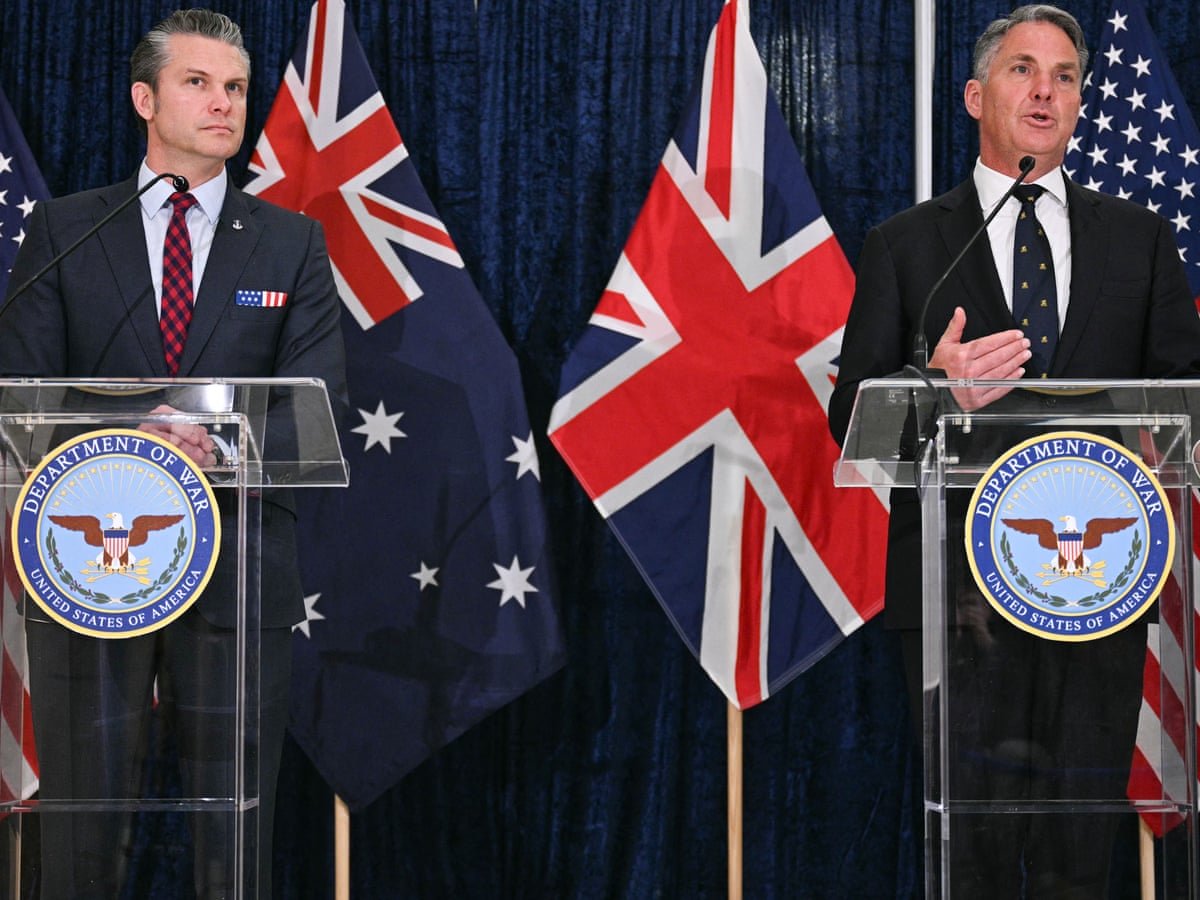
Defence minister Richard Marles said that officials would hear “a whole lot of commentary” from the U.S. Congress on defence matters, but that the pact, including the submarine transfers, was proceeding as planned.
Both governments continue to emphasise the broader strategic importance of AUKUS in bolstering Indo-Pacific security and deterrence, but the congressional report has underscored enduring political and industrial hurdles to fulfilling the submarine transfer component of the agreement.
As discussions unfold in Washington and Canberra, the question of how, and whether, Australia will ultimately receive nuclear-powered submarines remains a subject of intense scrutiny and debate.
AI Disclaimer: An advanced artificial intelligence (AI) system generated the content of this page on its own. This innovative technology conducts extensive research from a variety of reliable sources, performs rigorous fact-checking and verification, cleans up and balances biased or manipulated content, and presents a minimal factual summary that is just enough yet essential for you to function as an informed and educated citizen. Please keep in mind, however, that this system is an evolving technology, and as a result, the article may contain accidental inaccuracies or errors. We urge you to help us improve our site by reporting any inaccuracies you find using the "Contact Us" link at the bottom of this page. Your helpful feedback helps us improve our system and deliver more precise content. When you find an article of interest here, please look for the full and extensive coverage of this topic in traditional news sources, as they are written by professional journalists that we try to support, not replace. We appreciate your understanding and assistance.