Australia’s Albanese Condemns Trump’s NATO Comments as ‘Completely Unacceptable’
Australian prime minister rebukes remarks that appeared to diminish allied troops’ contributions in Afghanistan, underscoring respect for service and alliance ties
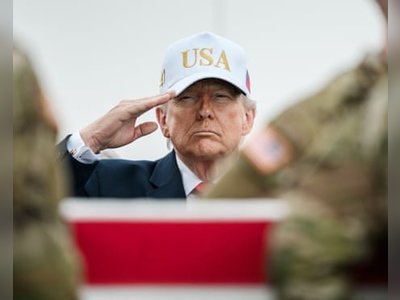
Australia’s prime minister, Anthony Albanese, has firmly rejected comments made by former United States President Donald Trump about the role of allied troops in the war in Afghanistan, describing them as "completely unacceptable" and deeply hurtful to the families of Australian service members.
The debate stems from an interview in which Mr Trump suggested that NATO allies’ forces, including Australian soldiers, had remained ‘‘a little off the frontlines’’ in Afghanistan after the September 11 attacks.
Mr Albanese, speaking on national television, said that characterisation did not reflect the reality of Australia’s military engagement and the sacrifices made by its personnel.
"Those comments are completely unacceptable," he said, emphasising the bravery shown by more than forty thousand Australians who served in Afghanistan and the forty-seven who lost their lives.
The prime minister noted that Mr Trump had issued a subsequent statement acknowledging the contribution of British troops, but maintained that diminishing the role of allied soldiers was offensive and dismissive of their service.
The remarks have sparked strong reactions from veteran groups in Australia, with many describing the former president’s comments as deeply disrespectful and lacking understanding of the historical record of coalition operations.
Australian veterans and public figures highlighted that Australian forces operated on the frontlines and undertook perilous missions alongside American and other allied troops.
The controversy has reverberated beyond Australia, with leaders in the United Kingdom also responding critically to Mr Trump’s comments and underlining the importance of honouring the sacrifices made by NATO members during the Afghanistan campaign.
Mr Albanese reiterated that Australia values its alliance with the United States while defending the honour and reputation of its service members.
His comments reflect broader concerns about how allied contributions are portrayed in public discourse and the potential impact on the mutual respect that underpins long-standing defence partnerships in the Indo-Pacific and beyond.
The debate stems from an interview in which Mr Trump suggested that NATO allies’ forces, including Australian soldiers, had remained ‘‘a little off the frontlines’’ in Afghanistan after the September 11 attacks.
Mr Albanese, speaking on national television, said that characterisation did not reflect the reality of Australia’s military engagement and the sacrifices made by its personnel.
"Those comments are completely unacceptable," he said, emphasising the bravery shown by more than forty thousand Australians who served in Afghanistan and the forty-seven who lost their lives.
The prime minister noted that Mr Trump had issued a subsequent statement acknowledging the contribution of British troops, but maintained that diminishing the role of allied soldiers was offensive and dismissive of their service.
The remarks have sparked strong reactions from veteran groups in Australia, with many describing the former president’s comments as deeply disrespectful and lacking understanding of the historical record of coalition operations.
Australian veterans and public figures highlighted that Australian forces operated on the frontlines and undertook perilous missions alongside American and other allied troops.
The controversy has reverberated beyond Australia, with leaders in the United Kingdom also responding critically to Mr Trump’s comments and underlining the importance of honouring the sacrifices made by NATO members during the Afghanistan campaign.
Mr Albanese reiterated that Australia values its alliance with the United States while defending the honour and reputation of its service members.
His comments reflect broader concerns about how allied contributions are portrayed in public discourse and the potential impact on the mutual respect that underpins long-standing defence partnerships in the Indo-Pacific and beyond.
AI Disclaimer: An advanced artificial intelligence (AI) system generated the content of this page on its own. This innovative technology conducts extensive research from a variety of reliable sources, performs rigorous fact-checking and verification, cleans up and balances biased or manipulated content, and presents a minimal factual summary that is just enough yet essential for you to function as an informed and educated citizen. Please keep in mind, however, that this system is an evolving technology, and as a result, the article may contain accidental inaccuracies or errors. We urge you to help us improve our site by reporting any inaccuracies you find using the "Contact Us" link at the bottom of this page. Your helpful feedback helps us improve our system and deliver more precise content. When you find an article of interest here, please look for the full and extensive coverage of this topic in traditional news sources, as they are written by professional journalists that we try to support, not replace. We appreciate your understanding and assistance.