Australia Considers Invitation to Join Trump’s ‘Board of Peace’ as Parliament Reconvenes on Hate Speech and Gun Control
Deputy Prime Minister welcomes US proposal amid Canberra’s cautious review, while Canberra prepares urgent debate on legislative reforms after Bondi terror attack
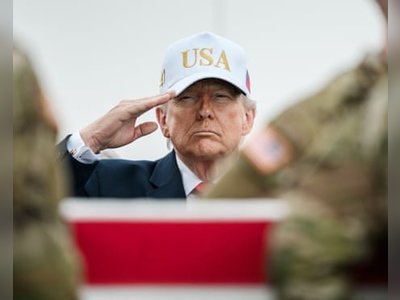
Australia has acknowledged a formal invitation from US President Donald Trump to join a newly proposed international advisory body dubbed a “Board of Peace,” part of an initiative aimed at addressing the conflict in Gaza and other global crises.
Deputy Prime Minister Richard Marles said Canberra “welcomes” the invitation as a gesture toward peace efforts and will consult closely with Washington to understand its implications and commitments.
The proposal, reportedly championed by the Trump administration as a forum for senior world leaders to address major conflicts, has so far secured unequivocal support from only a limited number of countries and includes lifetime chairmanship for President Trump alongside three-year membership terms for participating states unless a substantial financial contribution is made.
As this diplomatic dialogue unfolds, Australia’s federal parliament has reconvened in Canberra for an urgent sitting called by Prime Minister Anthony Albanese in the wake of the devastating Bondi Beach terror attack.
The government is pressing ahead with split legislative packages that encompass tightened gun control measures, including a national firearms buyback plan, and strengthened hate speech and anti-vilification laws designed to counter extremist activity and protect social cohesion.
The omnibus reforms, initially bundled together, have been restructured in response to political feedback, with the government seeking cross-party support from Coalition and Greens members.
The return to parliament will also include a formal condolence motion for the victims and first responders of the Bondi tragedy, reflecting the national imperative to respond to both public safety and community harmony.
The legislative debate comes amid broader discussion about how best to combat hate crimes and violent extremism, with stakeholders from civil society and security agencies engaging on proposed reforms that expand powers to designate prohibited organisations and address incitement.
As Canberra balances its foreign policy deliberations with urgent domestic legislative priorities, political leaders emphasise the importance of both international cooperation and cohesive national responses to violence and hatred in all its forms.
Deputy Prime Minister Richard Marles said Canberra “welcomes” the invitation as a gesture toward peace efforts and will consult closely with Washington to understand its implications and commitments.
The proposal, reportedly championed by the Trump administration as a forum for senior world leaders to address major conflicts, has so far secured unequivocal support from only a limited number of countries and includes lifetime chairmanship for President Trump alongside three-year membership terms for participating states unless a substantial financial contribution is made.
As this diplomatic dialogue unfolds, Australia’s federal parliament has reconvened in Canberra for an urgent sitting called by Prime Minister Anthony Albanese in the wake of the devastating Bondi Beach terror attack.
The government is pressing ahead with split legislative packages that encompass tightened gun control measures, including a national firearms buyback plan, and strengthened hate speech and anti-vilification laws designed to counter extremist activity and protect social cohesion.
The omnibus reforms, initially bundled together, have been restructured in response to political feedback, with the government seeking cross-party support from Coalition and Greens members.
The return to parliament will also include a formal condolence motion for the victims and first responders of the Bondi tragedy, reflecting the national imperative to respond to both public safety and community harmony.
The legislative debate comes amid broader discussion about how best to combat hate crimes and violent extremism, with stakeholders from civil society and security agencies engaging on proposed reforms that expand powers to designate prohibited organisations and address incitement.
As Canberra balances its foreign policy deliberations with urgent domestic legislative priorities, political leaders emphasise the importance of both international cooperation and cohesive national responses to violence and hatred in all its forms.
AI Disclaimer: An advanced artificial intelligence (AI) system generated the content of this page on its own. This innovative technology conducts extensive research from a variety of reliable sources, performs rigorous fact-checking and verification, cleans up and balances biased or manipulated content, and presents a minimal factual summary that is just enough yet essential for you to function as an informed and educated citizen. Please keep in mind, however, that this system is an evolving technology, and as a result, the article may contain accidental inaccuracies or errors. We urge you to help us improve our site by reporting any inaccuracies you find using the "Contact Us" link at the bottom of this page. Your helpful feedback helps us improve our system and deliver more precise content. When you find an article of interest here, please look for the full and extensive coverage of this topic in traditional news sources, as they are written by professional journalists that we try to support, not replace. We appreciate your understanding and assistance.