0:00
0:00
Australia and New Zealand Confront Deepening Fuel Crisis Exposing Strategic Vulnerabilities
Global supply shocks and domestic policy choices leave both nations facing tightening fuel reserves and rising economic strain
Australia and New Zealand are grappling with a rapidly intensifying fuel crisis that is exposing structural weaknesses in their energy systems, as global disruptions collide with long-standing domestic vulnerabilities.
The immediate trigger has been a severe shock to global oil supply, driven by escalating conflict in the Middle East and disruptions to shipping through critical routes such as the Strait of Hormuz.
These developments have sharply reduced fuel availability across international markets, pushing up prices and straining import-dependent economies in the Asia-Pacific region.
Both Australia and New Zealand rely heavily on imported refined fuel, a dependence that has grown over years of declining domestic refining capacity and a shift toward lean, “just-in-time” supply chains.
This model, designed for efficiency under stable conditions, has left limited buffer when global flows are disrupted.
As a result, even short-term interruptions have translated into widespread shortages and price spikes.
In Australia, the consequences have been immediate and visible.
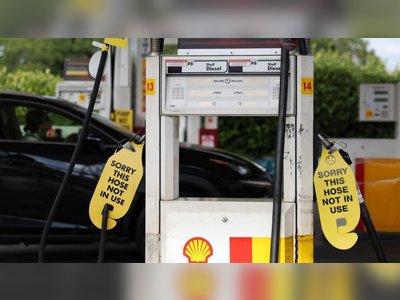
Fuel stations across several states have reported running out of petrol and diesel, while supply constraints have begun to ripple through key industries including agriculture, freight and food production.
Diesel shortages in particular have raised concerns about the continuity of essential services and supply chains, especially in regional areas where fuel is critical to daily operations.
Authorities have responded with a national fuel security plan that outlines a staged approach to managing the crisis, ranging from public conservation efforts to the potential prioritisation of fuel for critical sectors in more severe scenarios.
Temporary tax reductions on fuel have also been introduced to ease cost pressures, though concerns remain about whether these measures address underlying supply risks.
New Zealand faces a parallel challenge, with its fuel system similarly exposed to external shocks.
The country maintains minimum stockholding requirements—typically measured in weeks rather than months—and relies on a steady flow of imported fuel to sustain its economy.
Recent assessments indicate that in-country reserves alone could cover only a limited period without incoming shipments, underscoring the fragility of supply continuity.
The crisis has prompted the establishment of high-level coordination mechanisms within government to monitor supply chains and plan contingencies.
Officials have introduced phased alert systems to guide responses, encouraging reduced consumption and preparing for potential escalation if conditions worsen.
Beyond the immediate disruption, the situation has reignited debate over energy security in both countries.
Analysts and industry groups argue that decades of policy decisions—such as refinery closures, limited strategic reserves and reliance on global supply networks—have left the region exposed to external shocks.
As fuel prices surge and supply tightens, the economic impact is spreading.
Transport costs are rising, agricultural production is under pressure, and consumer prices for essential goods are beginning to climb.
The crisis is also accelerating discussions about long-term solutions, including greater domestic capacity, diversified supply chains and a faster transition toward alternative energy sources.
For now, both nations remain heavily dependent on the stability of global energy markets.
With geopolitical tensions continuing to disrupt supply routes, the coming weeks are likely to test the resilience of their fuel systems and the effectiveness of emergency measures already in place.
The immediate trigger has been a severe shock to global oil supply, driven by escalating conflict in the Middle East and disruptions to shipping through critical routes such as the Strait of Hormuz.
These developments have sharply reduced fuel availability across international markets, pushing up prices and straining import-dependent economies in the Asia-Pacific region.
Both Australia and New Zealand rely heavily on imported refined fuel, a dependence that has grown over years of declining domestic refining capacity and a shift toward lean, “just-in-time” supply chains.
This model, designed for efficiency under stable conditions, has left limited buffer when global flows are disrupted.
As a result, even short-term interruptions have translated into widespread shortages and price spikes.
In Australia, the consequences have been immediate and visible.
Fuel stations across several states have reported running out of petrol and diesel, while supply constraints have begun to ripple through key industries including agriculture, freight and food production.
Diesel shortages in particular have raised concerns about the continuity of essential services and supply chains, especially in regional areas where fuel is critical to daily operations.
Authorities have responded with a national fuel security plan that outlines a staged approach to managing the crisis, ranging from public conservation efforts to the potential prioritisation of fuel for critical sectors in more severe scenarios.
Temporary tax reductions on fuel have also been introduced to ease cost pressures, though concerns remain about whether these measures address underlying supply risks.
New Zealand faces a parallel challenge, with its fuel system similarly exposed to external shocks.
The country maintains minimum stockholding requirements—typically measured in weeks rather than months—and relies on a steady flow of imported fuel to sustain its economy.
Recent assessments indicate that in-country reserves alone could cover only a limited period without incoming shipments, underscoring the fragility of supply continuity.
The crisis has prompted the establishment of high-level coordination mechanisms within government to monitor supply chains and plan contingencies.
Officials have introduced phased alert systems to guide responses, encouraging reduced consumption and preparing for potential escalation if conditions worsen.
Beyond the immediate disruption, the situation has reignited debate over energy security in both countries.
Analysts and industry groups argue that decades of policy decisions—such as refinery closures, limited strategic reserves and reliance on global supply networks—have left the region exposed to external shocks.
As fuel prices surge and supply tightens, the economic impact is spreading.
Transport costs are rising, agricultural production is under pressure, and consumer prices for essential goods are beginning to climb.
The crisis is also accelerating discussions about long-term solutions, including greater domestic capacity, diversified supply chains and a faster transition toward alternative energy sources.
For now, both nations remain heavily dependent on the stability of global energy markets.
With geopolitical tensions continuing to disrupt supply routes, the coming weeks are likely to test the resilience of their fuel systems and the effectiveness of emergency measures already in place.
AI Disclaimer: An advanced artificial intelligence (AI) system generated the content of this page on its own. This innovative technology conducts extensive research from a variety of reliable sources, performs rigorous fact-checking and verification, cleans up and balances biased or manipulated content, and presents a minimal factual summary that is just enough yet essential for you to function as an informed and educated citizen. Please keep in mind, however, that this system is an evolving technology, and as a result, the article may contain accidental inaccuracies or errors. We urge you to help us improve our site by reporting any inaccuracies you find using the "Contact Us" link at the bottom of this page. Your helpful feedback helps us improve our system and deliver more precise content. When you find an article of interest here, please look for the full and extensive coverage of this topic in traditional news sources, as they are written by professional journalists that we try to support, not replace. We appreciate your understanding and assistance.