
Australia Enforces Strict Quarantine After Deadly Hantavirus Outbreak on Antarctic Cruise Ship
Six passengers from the MV Hondius have been isolated near Perth after a rare Andes hantavirus outbreak linked to three deaths and growing international health monitoring efforts.
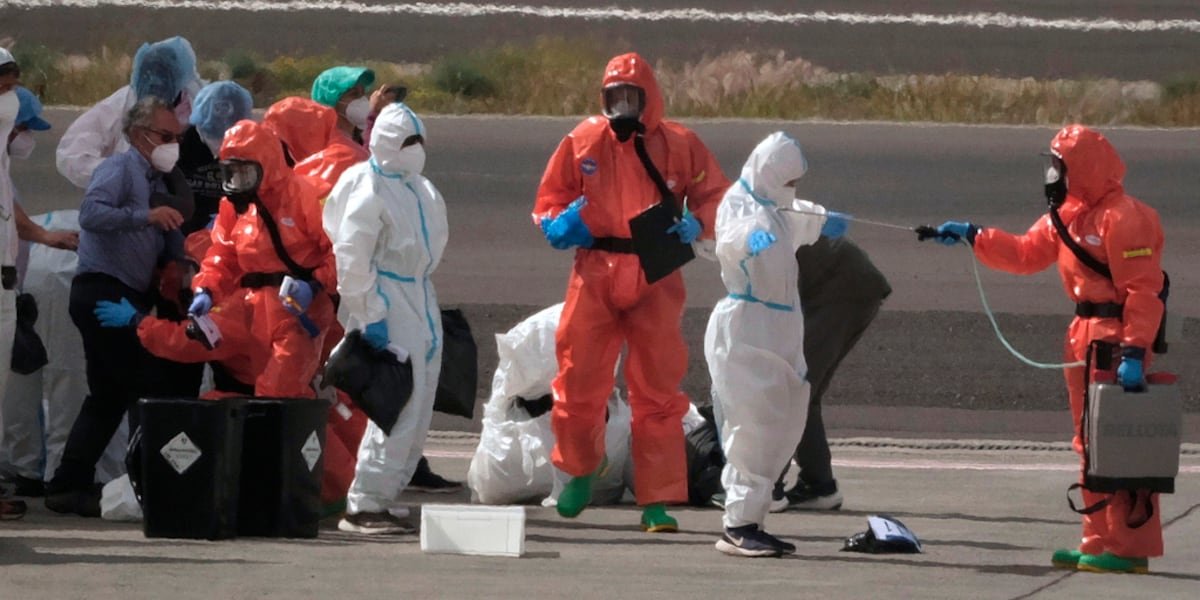
The Australian government has launched one of its most aggressive quarantine operations since the COVID-19 pandemic after six passengers exposed to a hantavirus outbreak aboard the cruise ship MV Hondius arrived in Western Australia for mandatory isolation.
The group, made up of five Australians and one New Zealand resident, landed at a Royal Australian Air Force base near Perth on a government-organized repatriation flight before being transferred to the Centre for National Resilience at Bullsbrook for at least three weeks of quarantine.
Health authorities confirmed the passengers had repeatedly tested negative before departure from Europe and showed no symptoms during the flight, but officials imposed strict containment measures because the virus involved is believed to be the Andes strain of hantavirus, one of the few known hantaviruses capable of limited person-to-person transmission.
The outbreak aboard the Dutch-flagged expedition vessel has become a significant international public health incident because of the unusual setting, the severity of infections, and the complex cross-border response it triggered.
The ship had been operating a South Atlantic and Antarctic itinerary after departing from Argentina.
During the voyage, multiple passengers developed symptoms consistent with hantavirus infection.
At least eleven infections have now been confirmed, and three passengers have died.
What is confirmed is that health agencies in several countries moved quickly after evidence emerged that the outbreak may involve Andes virus, a strain primarily associated with parts of South America.
Unlike most hantaviruses, which spread mainly through exposure to rodent urine, droppings, or saliva, Andes virus has documented cases of human-to-human transmission through close contact.
That distinction radically changed the risk assessment.
Australian authorities responded by activating national quarantine arrangements usually reserved for major biosecurity threats.
The Bullsbrook quarantine facility, built during the COVID-19 era but largely unused afterward, has now become the centerpiece of the country’s containment strategy.
Medical personnel, transport crews, and support staff were also subjected to infection-control procedures during the repatriation operation.
The logistical challenge was unusually complicated.
Officials struggled to secure aircraft and crews willing to operate a long-haul biosecure flight from Europe under strict isolation protocols.
Passengers were first evacuated from the ship to the Netherlands after the vessel docked in the Canary Islands.
Protective equipment, controlled movement, and medical supervision were maintained throughout the transfer process.
The quarantine period imposed by Australia covers part of the virus’s potential incubation window, which health agencies say can extend to forty-two days.
Australian officials have indicated further isolation measures remain possible depending on test results and evolving medical guidance.
The broader international response has exposed major differences in how governments are handling exposed passengers.
The United States has opted for extensive monitoring and voluntary isolation measures for dozens of potentially exposed travelers rather than imposing centralized federal quarantine on all of them.
European authorities have also relied more heavily on monitoring and testing than compulsory detention.
Australia instead chose a visibly harder line.
Health Minister Mark Butler described the measures as precautionary but necessary to eliminate the risk of local transmission.
The decision reflects both the country’s post-pandemic biosecurity posture and the scientific uncertainty surrounding rare person-to-person hantavirus transmission events.
The outbreak has also reignited scrutiny of expedition cruise operations in remote regions.
Antarctic and South Atlantic voyages have expanded rapidly over the past decade, often involving long periods at sea, confined indoor conditions, and limited onboard medical capability.
Infectious disease specialists say those factors can complicate early detection and isolation when rare pathogens emerge.
Scientists are still assessing how transmission occurred aboard the MV Hondius.
One leading theory is that some passengers were exposed during earlier land excursions in South America before boarding.
Another possibility is limited onboard human transmission after the initial infections developed.
The allegation that the virus spread extensively through the ship has not been proven.
The ship itself is being returned to Europe for cleaning and disinfection while remaining crew members continue under monitoring procedures.
Several infected passengers have required intensive hospital treatment, including advanced respiratory support.
The episode has become one of the most closely watched infectious disease incidents involving cruise travel since the coronavirus era because it combines three destabilizing elements at once: an unfamiliar pathogen for most travelers, evidence of possible human transmission, and international passenger dispersal across multiple continents before the outbreak was fully understood.
For Australia, the operation marks the first real-world activation of quarantine infrastructure built after COVID-19 and a direct test of whether the country can rapidly isolate potentially exposed travelers before community spread occurs.
The passengers are now under continuous medical observation at the Perth-area facility as authorities complete the next phase of testing and containment.
The group, made up of five Australians and one New Zealand resident, landed at a Royal Australian Air Force base near Perth on a government-organized repatriation flight before being transferred to the Centre for National Resilience at Bullsbrook for at least three weeks of quarantine.
Health authorities confirmed the passengers had repeatedly tested negative before departure from Europe and showed no symptoms during the flight, but officials imposed strict containment measures because the virus involved is believed to be the Andes strain of hantavirus, one of the few known hantaviruses capable of limited person-to-person transmission.
The outbreak aboard the Dutch-flagged expedition vessel has become a significant international public health incident because of the unusual setting, the severity of infections, and the complex cross-border response it triggered.
The ship had been operating a South Atlantic and Antarctic itinerary after departing from Argentina.
During the voyage, multiple passengers developed symptoms consistent with hantavirus infection.
At least eleven infections have now been confirmed, and three passengers have died.
What is confirmed is that health agencies in several countries moved quickly after evidence emerged that the outbreak may involve Andes virus, a strain primarily associated with parts of South America.
Unlike most hantaviruses, which spread mainly through exposure to rodent urine, droppings, or saliva, Andes virus has documented cases of human-to-human transmission through close contact.
That distinction radically changed the risk assessment.
Australian authorities responded by activating national quarantine arrangements usually reserved for major biosecurity threats.
The Bullsbrook quarantine facility, built during the COVID-19 era but largely unused afterward, has now become the centerpiece of the country’s containment strategy.
Medical personnel, transport crews, and support staff were also subjected to infection-control procedures during the repatriation operation.
The logistical challenge was unusually complicated.
Officials struggled to secure aircraft and crews willing to operate a long-haul biosecure flight from Europe under strict isolation protocols.
Passengers were first evacuated from the ship to the Netherlands after the vessel docked in the Canary Islands.
Protective equipment, controlled movement, and medical supervision were maintained throughout the transfer process.
The quarantine period imposed by Australia covers part of the virus’s potential incubation window, which health agencies say can extend to forty-two days.
Australian officials have indicated further isolation measures remain possible depending on test results and evolving medical guidance.
The broader international response has exposed major differences in how governments are handling exposed passengers.
The United States has opted for extensive monitoring and voluntary isolation measures for dozens of potentially exposed travelers rather than imposing centralized federal quarantine on all of them.
European authorities have also relied more heavily on monitoring and testing than compulsory detention.
Australia instead chose a visibly harder line.
Health Minister Mark Butler described the measures as precautionary but necessary to eliminate the risk of local transmission.
The decision reflects both the country’s post-pandemic biosecurity posture and the scientific uncertainty surrounding rare person-to-person hantavirus transmission events.
The outbreak has also reignited scrutiny of expedition cruise operations in remote regions.
Antarctic and South Atlantic voyages have expanded rapidly over the past decade, often involving long periods at sea, confined indoor conditions, and limited onboard medical capability.
Infectious disease specialists say those factors can complicate early detection and isolation when rare pathogens emerge.
Scientists are still assessing how transmission occurred aboard the MV Hondius.
One leading theory is that some passengers were exposed during earlier land excursions in South America before boarding.
Another possibility is limited onboard human transmission after the initial infections developed.
The allegation that the virus spread extensively through the ship has not been proven.
The ship itself is being returned to Europe for cleaning and disinfection while remaining crew members continue under monitoring procedures.
Several infected passengers have required intensive hospital treatment, including advanced respiratory support.
The episode has become one of the most closely watched infectious disease incidents involving cruise travel since the coronavirus era because it combines three destabilizing elements at once: an unfamiliar pathogen for most travelers, evidence of possible human transmission, and international passenger dispersal across multiple continents before the outbreak was fully understood.
For Australia, the operation marks the first real-world activation of quarantine infrastructure built after COVID-19 and a direct test of whether the country can rapidly isolate potentially exposed travelers before community spread occurs.
The passengers are now under continuous medical observation at the Perth-area facility as authorities complete the next phase of testing and containment.
AI Disclaimer: An advanced artificial intelligence (AI) system generated the content of this page on its own. This innovative technology conducts extensive research from a variety of reliable sources, performs rigorous fact-checking and verification, cleans up and balances biased or manipulated content, and presents a minimal factual summary that is just enough yet essential for you to function as an informed and educated citizen. Please keep in mind, however, that this system is an evolving technology, and as a result, the article may contain accidental inaccuracies or errors. We urge you to help us improve our site by reporting any inaccuracies you find using the "Contact Us" link at the bottom of this page. Your helpful feedback helps us improve our system and deliver more precise content. When you find an article of interest here, please look for the full and extensive coverage of this topic in traditional news sources, as they are written by professional journalists that we try to support, not replace. We appreciate your understanding and assistance.