Australia Faces Billions in Infrastructure Overruns as Experts Call for Systemic Reform
Roads, rail and renewable projects are increasingly over budget, prompting calls for planning overhaul, procurement reform and stronger accountability mechanisms
Australia’s infrastructure pipeline is confronting a SYSTEM-DRIVEN challenge rooted in how major public works are planned, costed and delivered, with repeated budget blowouts across roads, rail and renewable energy projects now raising concerns about long-term fiscal sustainability and delivery efficiency.
Large-scale infrastructure development in Australia depends on coordination between federal, state and local governments, private contractors and planning authorities, creating a complex system where delays and cost escalation can accumulate quickly.
The immediate concern is not isolated project failure but a pattern of systemic overruns.
Major transport corridors, urban rail expansions and renewable energy transmission projects have frequently exceeded initial budgets, in some cases by substantial margins.
These overruns are often linked to early-stage underestimation of costs, changes in project scope, inflation in construction inputs, labour shortages and delays caused by planning approvals or community consultation processes.
What is confirmed is that infrastructure cost escalation has become a recurring feature of Australia’s major project pipeline, particularly in high-complexity transport and energy transitions.
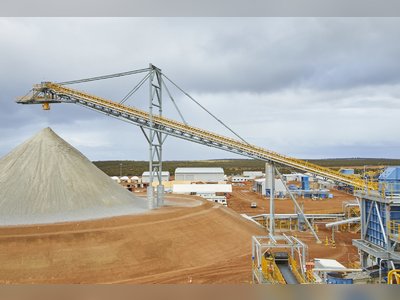
These pressures are amplified by simultaneous national investment in decarbonisation infrastructure, including large-scale renewable generation and transmission upgrades that require rapid construction across vast geographic areas.
One key structural issue is the gap between early project estimates and final delivery costs.
Initial business cases are often developed years before construction begins, based on assumptions that can change significantly due to market conditions, regulatory requirements or engineering revisions.
When projects move from planning to execution, revised designs and procurement changes frequently increase total costs.
Procurement practices also play a central role.
Competitive tendering processes can incentivise low initial bids, which may not fully reflect long-term delivery risks.
Once contracts are awarded, adjustments for unforeseen technical challenges, materials pricing or scheduling delays can push final costs higher.
This creates a cycle where initial projections appear optimistic but final outcomes diverge significantly from early forecasts.
At the same time, Australia’s infrastructure demands are rising due to population growth, urban expansion and the energy transition.
Renewable energy projects in particular require new transmission lines and supporting infrastructure, often in remote or environmentally sensitive regions, adding logistical and regulatory complexity.
These factors increase the likelihood of delays and cost revisions as projects progress.
The fiscal implications are significant.
Infrastructure spending is a major component of public investment at both federal and state levels, and sustained cost overruns can reduce the number of projects that can be delivered within fixed budget envelopes.
This can lead to prioritisation pressures, where governments must choose between competing transport, housing and energy infrastructure needs.
Proposed reforms typically focus on three areas: improving early-stage cost estimation and project selection, strengthening procurement frameworks to better account for risk, and enhancing accountability mechanisms so that cost overruns are more transparently tracked and managed.
Together, these measures aim to reduce the gap between projected and actual delivery costs.
The broader implication is that Australia’s infrastructure system is entering a phase where efficiency and governance quality are as important as capital allocation.
Without structural improvements, continued reliance on large-scale infrastructure investment to support population growth and energy transition risks compounding fiscal pressure and reducing overall delivery capacity.
Large-scale infrastructure development in Australia depends on coordination between federal, state and local governments, private contractors and planning authorities, creating a complex system where delays and cost escalation can accumulate quickly.
The immediate concern is not isolated project failure but a pattern of systemic overruns.
Major transport corridors, urban rail expansions and renewable energy transmission projects have frequently exceeded initial budgets, in some cases by substantial margins.
These overruns are often linked to early-stage underestimation of costs, changes in project scope, inflation in construction inputs, labour shortages and delays caused by planning approvals or community consultation processes.
What is confirmed is that infrastructure cost escalation has become a recurring feature of Australia’s major project pipeline, particularly in high-complexity transport and energy transitions.
These pressures are amplified by simultaneous national investment in decarbonisation infrastructure, including large-scale renewable generation and transmission upgrades that require rapid construction across vast geographic areas.
One key structural issue is the gap between early project estimates and final delivery costs.
Initial business cases are often developed years before construction begins, based on assumptions that can change significantly due to market conditions, regulatory requirements or engineering revisions.
When projects move from planning to execution, revised designs and procurement changes frequently increase total costs.
Procurement practices also play a central role.
Competitive tendering processes can incentivise low initial bids, which may not fully reflect long-term delivery risks.
Once contracts are awarded, adjustments for unforeseen technical challenges, materials pricing or scheduling delays can push final costs higher.
This creates a cycle where initial projections appear optimistic but final outcomes diverge significantly from early forecasts.
At the same time, Australia’s infrastructure demands are rising due to population growth, urban expansion and the energy transition.
Renewable energy projects in particular require new transmission lines and supporting infrastructure, often in remote or environmentally sensitive regions, adding logistical and regulatory complexity.
These factors increase the likelihood of delays and cost revisions as projects progress.
The fiscal implications are significant.
Infrastructure spending is a major component of public investment at both federal and state levels, and sustained cost overruns can reduce the number of projects that can be delivered within fixed budget envelopes.
This can lead to prioritisation pressures, where governments must choose between competing transport, housing and energy infrastructure needs.
Proposed reforms typically focus on three areas: improving early-stage cost estimation and project selection, strengthening procurement frameworks to better account for risk, and enhancing accountability mechanisms so that cost overruns are more transparently tracked and managed.
Together, these measures aim to reduce the gap between projected and actual delivery costs.
The broader implication is that Australia’s infrastructure system is entering a phase where efficiency and governance quality are as important as capital allocation.
Without structural improvements, continued reliance on large-scale infrastructure investment to support population growth and energy transition risks compounding fiscal pressure and reducing overall delivery capacity.
AI Disclaimer: An advanced artificial intelligence (AI) system generated the content of this page on its own. This innovative technology conducts extensive research from a variety of reliable sources, performs rigorous fact-checking and verification, cleans up and balances biased or manipulated content, and presents a minimal factual summary that is just enough yet essential for you to function as an informed and educated citizen. Please keep in mind, however, that this system is an evolving technology, and as a result, the article may contain accidental inaccuracies or errors. We urge you to help us improve our site by reporting any inaccuracies you find using the "Contact Us" link at the bottom of this page. Your helpful feedback helps us improve our system and deliver more precise content. When you find an article of interest here, please look for the full and extensive coverage of this topic in traditional news sources, as they are written by professional journalists that we try to support, not replace. We appreciate your understanding and assistance.