
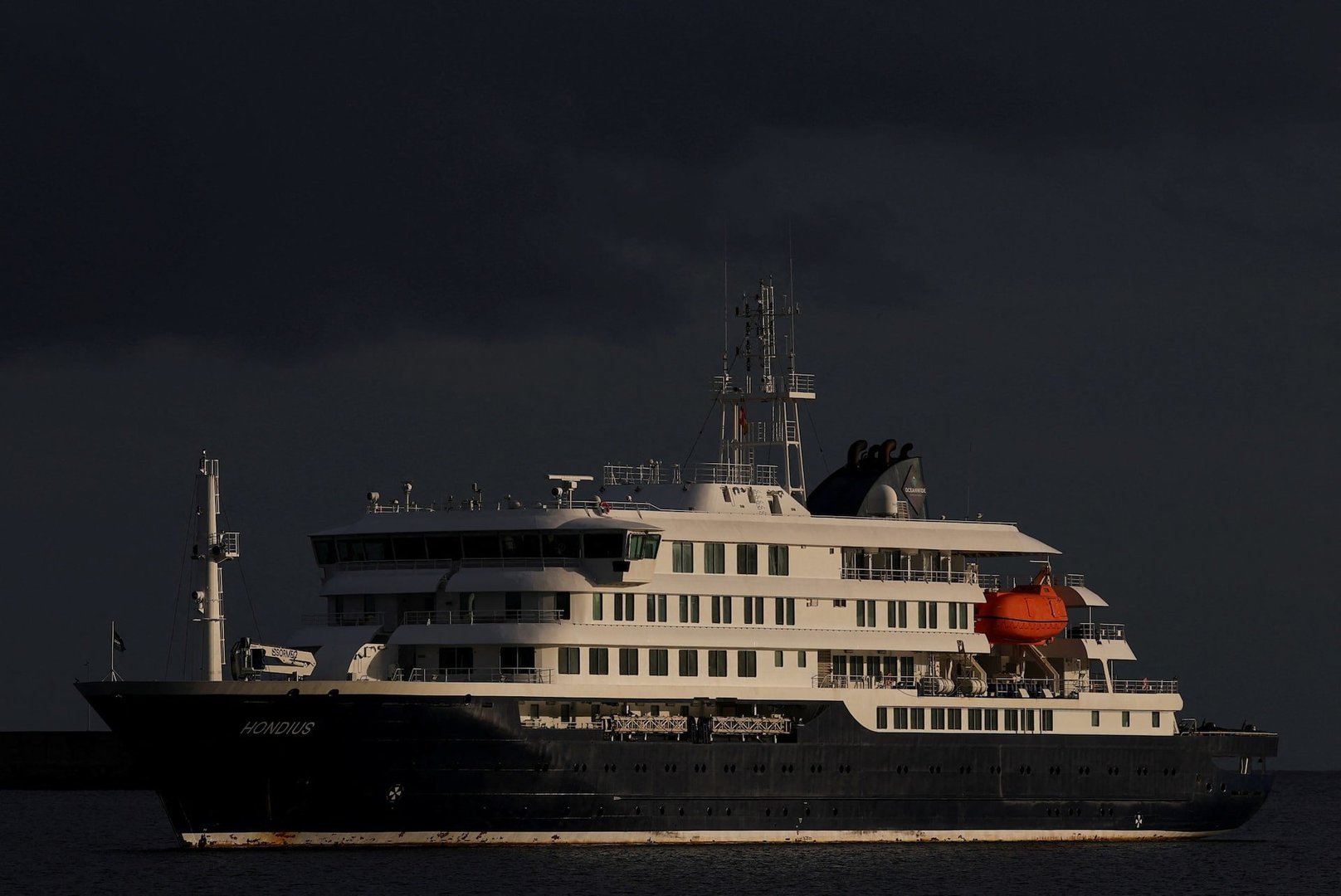
Australia Revives Quarantine Infrastructure After Deadly Virus Outbreak on Cruise Ship
Canberra will repatriate citizens from the MV Hondius and place them in mandatory isolation as authorities respond to a hantavirus outbreak that has killed three passengers and triggered an international health operation.
Australia’s public health and biosecurity system is driving the government’s response to the deadly hantavirus outbreak aboard the expedition cruise ship MV Hondius, with authorities moving to evacuate citizens and impose strict quarantine measures designed to prevent even a low-probability transmission event.
What is confirmed is that the Australian government will charter a repatriation flight for citizens stranded aboard the Dutch-flagged vessel after multiple passengers contracted hantavirus during the voyage.
Returning passengers will be transferred directly into quarantine in Western Australia for at least three weeks under medical supervision.
The outbreak has already produced serious consequences.
Three passengers — a Dutch couple and a German national — have died.
International health authorities have identified multiple confirmed and suspected infections linked to the ship.
The vessel had been operating near South America before the outbreak emerged and later anchored near Tenerife in Spain’s Canary Islands as governments coordinated evacuation efforts.
The virus at the center of the crisis is the Andes strain of hantavirus, a rare but highly dangerous pathogen normally associated with rodents in parts of South America.
Unlike most hantavirus strains, the Andes variant has demonstrated limited human-to-human transmission in documented cases.
That distinction fundamentally changed the risk assessment for governments involved in the response.
Authorities have emphasized that the virus is far less transmissible than COVID-19 and does not pose a broad population threat under normal conditions.
But the mortality rate associated with severe hantavirus infection is high, and the incubation period can stretch for weeks.
That combination — long incubation and potentially lethal outcomes — has forced governments into aggressive containment planning.
Australia’s response reflects lessons learned during the COVID-19 pandemic and the political fallout from earlier quarantine failures, especially the Ruby Princess disaster in 2020, when infected cruise passengers were allowed into the community and helped accelerate the spread of coronavirus across Australia.
This time, Canberra has chosen a far more centralized and restrictive approach.
Passengers returning from the MV Hondius will be isolated at the Centre for National Resilience in Bullsbrook, north of Perth.
The facility was constructed during the pandemic at significant public expense but was never fully utilized after Australia abandoned large-scale quarantine programs.
The hantavirus operation marks one of the first major uses of the site for an international infectious disease response.
Officials say the returning group includes Australian citizens, an Australian permanent resident, and a New Zealand national traveling under Australian arrangements.
Medical personnel are expected to accompany the repatriation process, and passengers will undergo repeated monitoring and testing during isolation.
The broader international response has become increasingly coordinated as more countries retrieve citizens from the ship.
Spain, France, the United States and other governments have already conducted evacuations under strict infection-control procedures involving protective equipment, controlled transfers and medical screening.
Some countries have opted for home monitoring systems, while others imposed institutional quarantine.
The World Health Organization has recommended a quarantine period of up to forty-two days for exposed passengers because of the virus’s incubation profile.
Australia’s planned three-week isolation period is expected to involve ongoing reassessment and testing protocols rather than simple confinement.
The outbreak also exposed the operational vulnerability of expedition cruise tourism, especially voyages operating in remote regions with limited medical infrastructure.
The MV Hondius had carried passengers and crew from more than twenty countries, turning a localized outbreak into a multinational biosecurity problem requiring diplomatic coordination, aviation support, infectious disease management and cross-border surveillance.
Investigators believe the virus exposure likely originated during the ship’s South American itinerary, potentially involving contact with environments contaminated by infected rodents.
Health officials have not identified evidence of uncontrolled community transmission beyond close-contact exposure scenarios linked to passengers.
The ship itself is now expected to undergo extensive decontamination procedures in Europe after the final passengers and many crew members disembarked.
Health authorities continue to track former passengers internationally as governments monitor symptoms and test results over the coming weeks.
For Australia, the episode has become an early real-world test of whether the country’s post-pandemic biosecurity infrastructure can function quickly, centrally and politically decisively when confronted with a new cross-border infectious disease threat.
The government’s decision to react aggressively despite the relatively low transmission risk signals that Australian authorities are prioritizing containment speed over minimal intervention in any outbreak involving uncertain human-to-human spread and high fatality potential.
What is confirmed is that the Australian government will charter a repatriation flight for citizens stranded aboard the Dutch-flagged vessel after multiple passengers contracted hantavirus during the voyage.
Returning passengers will be transferred directly into quarantine in Western Australia for at least three weeks under medical supervision.
The outbreak has already produced serious consequences.
Three passengers — a Dutch couple and a German national — have died.
International health authorities have identified multiple confirmed and suspected infections linked to the ship.
The vessel had been operating near South America before the outbreak emerged and later anchored near Tenerife in Spain’s Canary Islands as governments coordinated evacuation efforts.
The virus at the center of the crisis is the Andes strain of hantavirus, a rare but highly dangerous pathogen normally associated with rodents in parts of South America.
Unlike most hantavirus strains, the Andes variant has demonstrated limited human-to-human transmission in documented cases.
That distinction fundamentally changed the risk assessment for governments involved in the response.
Authorities have emphasized that the virus is far less transmissible than COVID-19 and does not pose a broad population threat under normal conditions.
But the mortality rate associated with severe hantavirus infection is high, and the incubation period can stretch for weeks.
That combination — long incubation and potentially lethal outcomes — has forced governments into aggressive containment planning.
Australia’s response reflects lessons learned during the COVID-19 pandemic and the political fallout from earlier quarantine failures, especially the Ruby Princess disaster in 2020, when infected cruise passengers were allowed into the community and helped accelerate the spread of coronavirus across Australia.
This time, Canberra has chosen a far more centralized and restrictive approach.
Passengers returning from the MV Hondius will be isolated at the Centre for National Resilience in Bullsbrook, north of Perth.
The facility was constructed during the pandemic at significant public expense but was never fully utilized after Australia abandoned large-scale quarantine programs.
The hantavirus operation marks one of the first major uses of the site for an international infectious disease response.
Officials say the returning group includes Australian citizens, an Australian permanent resident, and a New Zealand national traveling under Australian arrangements.
Medical personnel are expected to accompany the repatriation process, and passengers will undergo repeated monitoring and testing during isolation.
The broader international response has become increasingly coordinated as more countries retrieve citizens from the ship.
Spain, France, the United States and other governments have already conducted evacuations under strict infection-control procedures involving protective equipment, controlled transfers and medical screening.
Some countries have opted for home monitoring systems, while others imposed institutional quarantine.
The World Health Organization has recommended a quarantine period of up to forty-two days for exposed passengers because of the virus’s incubation profile.
Australia’s planned three-week isolation period is expected to involve ongoing reassessment and testing protocols rather than simple confinement.
The outbreak also exposed the operational vulnerability of expedition cruise tourism, especially voyages operating in remote regions with limited medical infrastructure.
The MV Hondius had carried passengers and crew from more than twenty countries, turning a localized outbreak into a multinational biosecurity problem requiring diplomatic coordination, aviation support, infectious disease management and cross-border surveillance.
Investigators believe the virus exposure likely originated during the ship’s South American itinerary, potentially involving contact with environments contaminated by infected rodents.
Health officials have not identified evidence of uncontrolled community transmission beyond close-contact exposure scenarios linked to passengers.
The ship itself is now expected to undergo extensive decontamination procedures in Europe after the final passengers and many crew members disembarked.
Health authorities continue to track former passengers internationally as governments monitor symptoms and test results over the coming weeks.
For Australia, the episode has become an early real-world test of whether the country’s post-pandemic biosecurity infrastructure can function quickly, centrally and politically decisively when confronted with a new cross-border infectious disease threat.
The government’s decision to react aggressively despite the relatively low transmission risk signals that Australian authorities are prioritizing containment speed over minimal intervention in any outbreak involving uncertain human-to-human spread and high fatality potential.
AI Disclaimer: An advanced artificial intelligence (AI) system generated the content of this page on its own. This innovative technology conducts extensive research from a variety of reliable sources, performs rigorous fact-checking and verification, cleans up and balances biased or manipulated content, and presents a minimal factual summary that is just enough yet essential for you to function as an informed and educated citizen. Please keep in mind, however, that this system is an evolving technology, and as a result, the article may contain accidental inaccuracies or errors. We urge you to help us improve our site by reporting any inaccuracies you find using the "Contact Us" link at the bottom of this page. Your helpful feedback helps us improve our system and deliver more precise content. When you find an article of interest here, please look for the full and extensive coverage of this topic in traditional news sources, as they are written by professional journalists that we try to support, not replace. We appreciate your understanding and assistance.