Australia’s Debate Over Repatriating ISIS Families Reignites After Muslim Leader Defends Returnees
A prominent Muslim community figure’s defense of bringing back women linked to Islamic State has revived a long-running national argument over security, citizenship, rehabilitation and the legal limits of abandoning citizens abroad.
Australia’s handling of citizens linked to the Islamic State group has re-emerged as a politically explosive issue after a Muslim community leader publicly defended the return of women and children from Syrian detention camps, arguing that humanitarian obligations and the protection of children outweigh public anger and political symbolism.
The dispute is fundamentally driven by state policy on citizenship, national security and counterterrorism law.
For years, Australia faced pressure over whether it should repatriate citizens stranded in camps in northeastern Syria following the collapse of the Islamic State’s territorial caliphate.
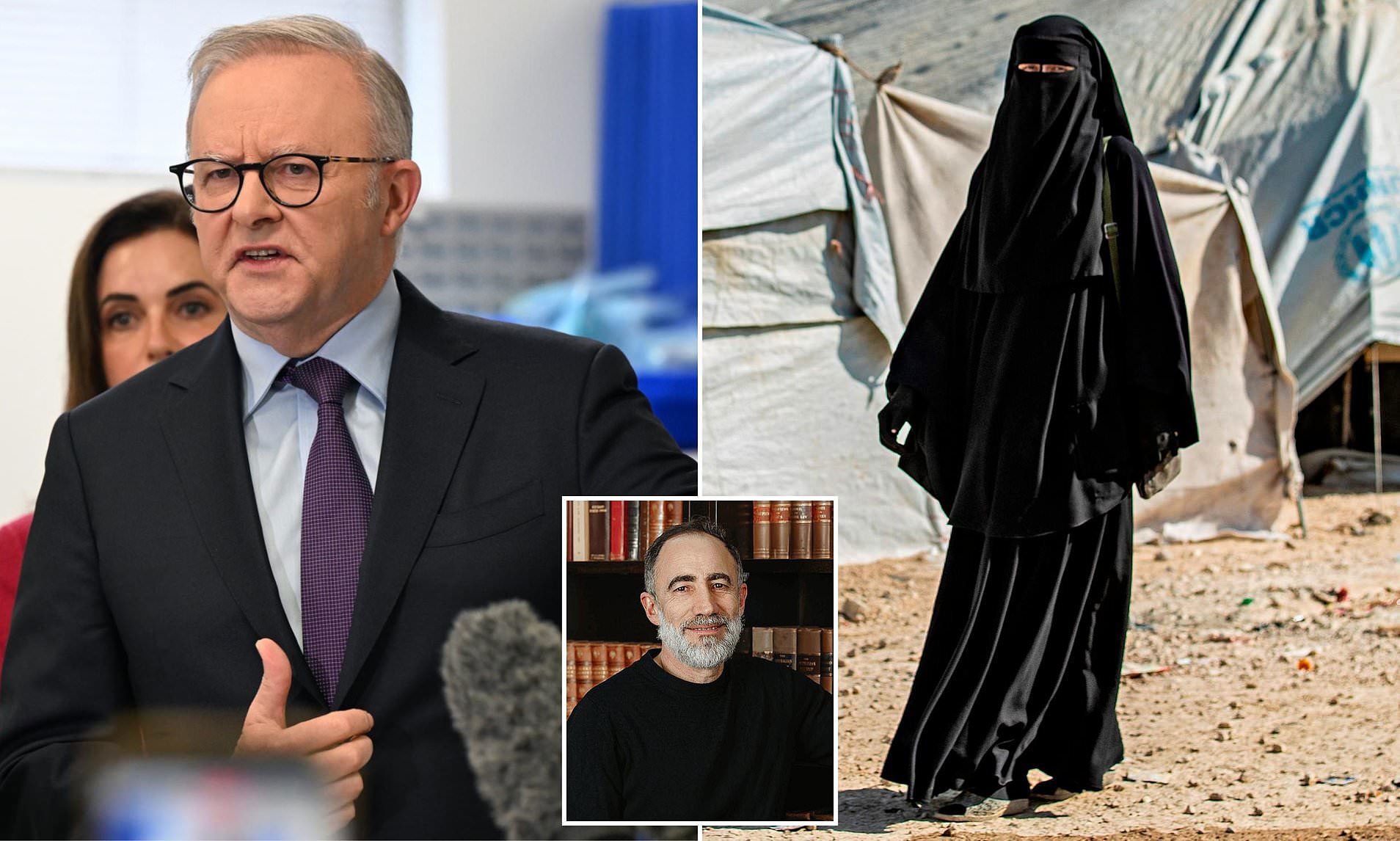
The camps, controlled largely by Kurdish-led authorities, hold thousands of foreign women and children connected to ISIS fighters.
Successive Australian governments treated the issue as both a security risk and a political hazard.
The women commonly described in public debate as “ISIS brides” include individuals accused of traveling voluntarily to territory controlled by Islamic State, marrying fighters, supporting extremist networks or participating in the group’s social structure.
In many cases, the precise level of involvement varies significantly from person to person.
Some women deny active participation in terrorism.
Others acknowledge supporting ISIS ideology at the time they traveled but claim they later became disillusioned.
Several allegations surrounding specific individuals remain contested or legally untested.
What is confirmed is that Australia has already repatriated multiple women and children from Syrian camps in carefully managed operations.
The Albanese government continued a gradual repatriation policy begun in limited form under the previous Coalition government.
Security agencies, police and child-protection authorities developed monitoring and reintegration arrangements for returnees, particularly minors.
The debate intensified again after remarks by a Muslim leader defending the principle of returning Australian citizens and emphasizing that children should not remain indefinitely in unstable detention camps because of the actions of their parents.
His comments triggered immediate backlash from critics who argue that women associated with ISIS made deliberate choices to join one of the world’s most brutal extremist organizations.
Islamic State was responsible for mass killings, sexual slavery, torture, executions and terrorist attacks across the Middle East, Europe and elsewhere.
Australian authorities estimate that dozens of Australians traveled to Syria and Iraq during the height of ISIS recruitment.
Several died in conflict zones.
Others were imprisoned, stripped of citizenship or prevented from returning.
The emotional intensity surrounding the issue reflects the scale of ISIS atrocities and enduring fears about extremism.
Families of terrorism victims, security commentators and some opposition politicians argue that returning adults connected to ISIS introduces long-term risks that cannot be fully eliminated through surveillance or rehabilitation programs.
Supporters of repatriation counter that abandoning citizens in unstable camps creates different security dangers.
The detention facilities in Syria are widely regarded as volatile and overcrowded.
International organizations and counterterrorism specialists have repeatedly warned that prolonged detention without legal resolution can contribute to further radicalization, recruitment and instability.
Children are central to the policy debate.
Many of the minors in Syrian camps were either born there or taken into the region at a young age.
Australian authorities have generally distinguished between adults who may have chosen to join ISIS and children viewed primarily as victims of parental decisions and wartime conditions.
The legal dimension is equally significant.
Australia possesses some of the world’s strongest counterterrorism laws, including powers allowing citizenship cancellation in certain terrorism-related cases involving dual nationals.
But the government cannot easily revoke citizenship from individuals who would become stateless.
That legal reality narrowed Canberra’s options.
Security agencies also concluded that monitored repatriation may be more manageable than leaving Australians in poorly controlled foreign camps beyond long-term oversight.
Returned adults can face terrorism investigations, control orders, restrictions on movement and extensive intelligence monitoring inside Australia.
Authorities have not publicly alleged that every repatriated woman committed prosecutable offenses, and evidentiary challenges remain substantial because conduct occurred inside conflict zones.
The controversy also reflects broader tensions inside Australian multicultural politics.
Muslim community organizations have often argued that public debate surrounding ISIS returnees risks collective suspicion toward Australian Muslims more broadly.
Critics reject that argument and insist the focus remains specifically on individuals linked to violent extremism.
Australian governments have attempted to frame the issue narrowly around security management rather than ideology or religion.
Officials repeatedly stress that each case is individually assessed involving intelligence reviews, citizenship status, age of children, health conditions and potential criminal exposure.
Internationally, Australia is not alone.
Western governments adopted sharply different approaches to ISIS-linked citizens.
Some countries aggressively repatriated families.
Others resisted returns for years or pursued citizenship revocations.
The absence of a unified international approach created legal and humanitarian disputes across Europe, North America and the Asia-Pacific region.
The political risk remains high because public sympathy for adult returnees is extremely limited.
For many Australians, the phrase “ISIS bride” implies voluntary alignment with a terrorist organization responsible for extraordinary violence.
Human-rights advocates argue the term itself can oversimplify individual circumstances and erase coercion, abuse or trafficking dynamics present in some cases.
But governments also face pressure not to appear weak on extremism.
The Albanese government has therefore tried to balance humanitarian obligations with visibly strict security enforcement.
Repatriation operations have been conducted quietly, with limited disclosure and extensive coordination between intelligence agencies, federal police and social services.
The larger policy question extends beyond a single controversy.
Australia must determine whether democratic states can permanently externalize responsibility for citizens linked to extremist movements or whether long-term security is better served through prosecution, monitoring and rehabilitation within domestic legal systems.
What is confirmed is that Australia continues to manage returned women and children under intensive security oversight while maintaining some of the toughest counterterrorism powers in the democratic world.
The practical consequence is that the country’s debate over ISIS returnees has shifted from whether repatriation should happen at all to how Australia handles the legal, social and security burden after citizens come home.
The dispute is fundamentally driven by state policy on citizenship, national security and counterterrorism law.
For years, Australia faced pressure over whether it should repatriate citizens stranded in camps in northeastern Syria following the collapse of the Islamic State’s territorial caliphate.
The camps, controlled largely by Kurdish-led authorities, hold thousands of foreign women and children connected to ISIS fighters.
Successive Australian governments treated the issue as both a security risk and a political hazard.
The women commonly described in public debate as “ISIS brides” include individuals accused of traveling voluntarily to territory controlled by Islamic State, marrying fighters, supporting extremist networks or participating in the group’s social structure.
In many cases, the precise level of involvement varies significantly from person to person.
Some women deny active participation in terrorism.
Others acknowledge supporting ISIS ideology at the time they traveled but claim they later became disillusioned.
Several allegations surrounding specific individuals remain contested or legally untested.
What is confirmed is that Australia has already repatriated multiple women and children from Syrian camps in carefully managed operations.
The Albanese government continued a gradual repatriation policy begun in limited form under the previous Coalition government.
Security agencies, police and child-protection authorities developed monitoring and reintegration arrangements for returnees, particularly minors.
The debate intensified again after remarks by a Muslim leader defending the principle of returning Australian citizens and emphasizing that children should not remain indefinitely in unstable detention camps because of the actions of their parents.
His comments triggered immediate backlash from critics who argue that women associated with ISIS made deliberate choices to join one of the world’s most brutal extremist organizations.
Islamic State was responsible for mass killings, sexual slavery, torture, executions and terrorist attacks across the Middle East, Europe and elsewhere.
Australian authorities estimate that dozens of Australians traveled to Syria and Iraq during the height of ISIS recruitment.
Several died in conflict zones.
Others were imprisoned, stripped of citizenship or prevented from returning.
The emotional intensity surrounding the issue reflects the scale of ISIS atrocities and enduring fears about extremism.
Families of terrorism victims, security commentators and some opposition politicians argue that returning adults connected to ISIS introduces long-term risks that cannot be fully eliminated through surveillance or rehabilitation programs.
Supporters of repatriation counter that abandoning citizens in unstable camps creates different security dangers.
The detention facilities in Syria are widely regarded as volatile and overcrowded.
International organizations and counterterrorism specialists have repeatedly warned that prolonged detention without legal resolution can contribute to further radicalization, recruitment and instability.
Children are central to the policy debate.
Many of the minors in Syrian camps were either born there or taken into the region at a young age.
Australian authorities have generally distinguished between adults who may have chosen to join ISIS and children viewed primarily as victims of parental decisions and wartime conditions.
The legal dimension is equally significant.
Australia possesses some of the world’s strongest counterterrorism laws, including powers allowing citizenship cancellation in certain terrorism-related cases involving dual nationals.
But the government cannot easily revoke citizenship from individuals who would become stateless.
That legal reality narrowed Canberra’s options.
Security agencies also concluded that monitored repatriation may be more manageable than leaving Australians in poorly controlled foreign camps beyond long-term oversight.
Returned adults can face terrorism investigations, control orders, restrictions on movement and extensive intelligence monitoring inside Australia.
Authorities have not publicly alleged that every repatriated woman committed prosecutable offenses, and evidentiary challenges remain substantial because conduct occurred inside conflict zones.
The controversy also reflects broader tensions inside Australian multicultural politics.
Muslim community organizations have often argued that public debate surrounding ISIS returnees risks collective suspicion toward Australian Muslims more broadly.
Critics reject that argument and insist the focus remains specifically on individuals linked to violent extremism.
Australian governments have attempted to frame the issue narrowly around security management rather than ideology or religion.
Officials repeatedly stress that each case is individually assessed involving intelligence reviews, citizenship status, age of children, health conditions and potential criminal exposure.
Internationally, Australia is not alone.
Western governments adopted sharply different approaches to ISIS-linked citizens.
Some countries aggressively repatriated families.
Others resisted returns for years or pursued citizenship revocations.
The absence of a unified international approach created legal and humanitarian disputes across Europe, North America and the Asia-Pacific region.
The political risk remains high because public sympathy for adult returnees is extremely limited.
For many Australians, the phrase “ISIS bride” implies voluntary alignment with a terrorist organization responsible for extraordinary violence.
Human-rights advocates argue the term itself can oversimplify individual circumstances and erase coercion, abuse or trafficking dynamics present in some cases.
But governments also face pressure not to appear weak on extremism.
The Albanese government has therefore tried to balance humanitarian obligations with visibly strict security enforcement.
Repatriation operations have been conducted quietly, with limited disclosure and extensive coordination between intelligence agencies, federal police and social services.
The larger policy question extends beyond a single controversy.
Australia must determine whether democratic states can permanently externalize responsibility for citizens linked to extremist movements or whether long-term security is better served through prosecution, monitoring and rehabilitation within domestic legal systems.
What is confirmed is that Australia continues to manage returned women and children under intensive security oversight while maintaining some of the toughest counterterrorism powers in the democratic world.
The practical consequence is that the country’s debate over ISIS returnees has shifted from whether repatriation should happen at all to how Australia handles the legal, social and security burden after citizens come home.
AI Disclaimer: An advanced artificial intelligence (AI) system generated the content of this page on its own. This innovative technology conducts extensive research from a variety of reliable sources, performs rigorous fact-checking and verification, cleans up and balances biased or manipulated content, and presents a minimal factual summary that is just enough yet essential for you to function as an informed and educated citizen. Please keep in mind, however, that this system is an evolving technology, and as a result, the article may contain accidental inaccuracies or errors. We urge you to help us improve our site by reporting any inaccuracies you find using the "Contact Us" link at the bottom of this page. Your helpful feedback helps us improve our system and deliver more precise content. When you find an article of interest here, please look for the full and extensive coverage of this topic in traditional news sources, as they are written by professional journalists that we try to support, not replace. We appreciate your understanding and assistance.