Tesla Expands Grip on Home Energy Market with Nationwide Powerwall Deal in Australia
New distribution agreement targets surging demand for residential battery storage in one of the world’s most solar-heavy markets
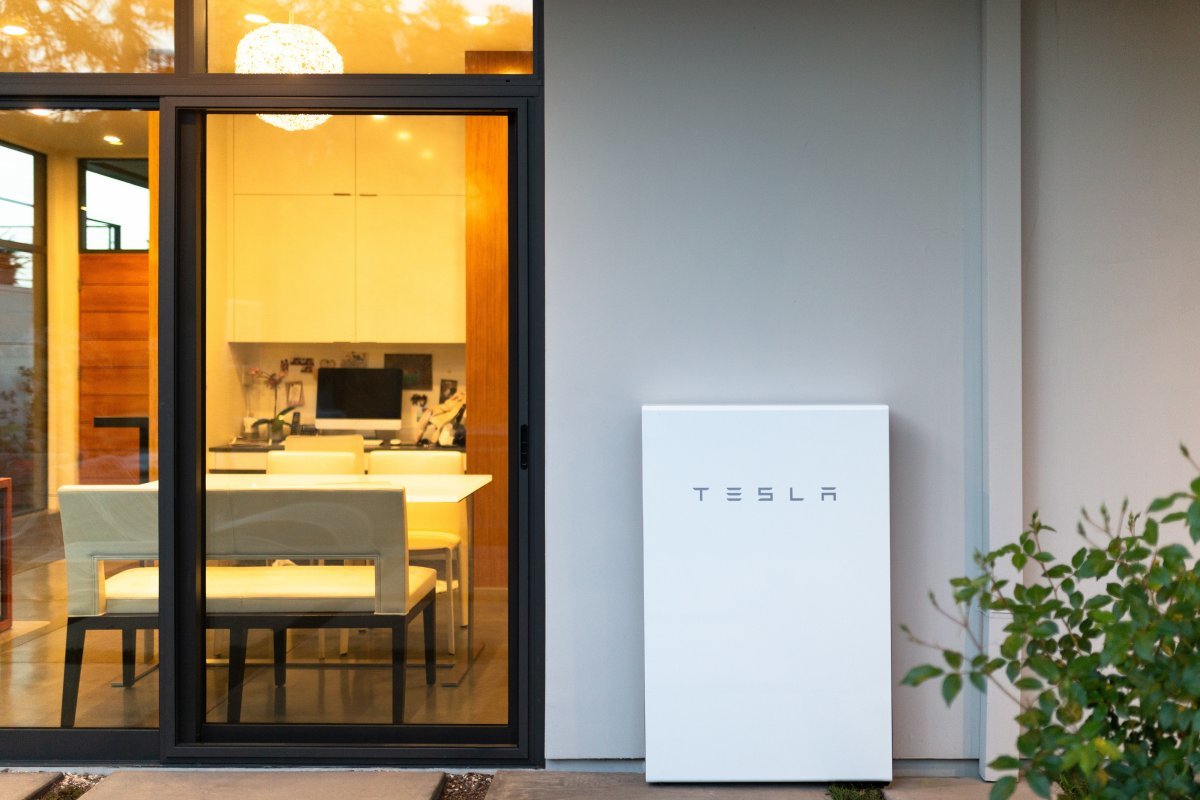
Tesla’s energy division is deepening its push into residential power storage through a new nationwide distribution agreement in Australia, a market where rooftop solar adoption is already among the highest globally and demand for home batteries is accelerating.
What is confirmed is that Supply Partners Group, a major Australian solar and electrical distributor, has secured the right to distribute Tesla’s Powerwall systems and related equipment across the country.
Inventory began arriving in late February 2026, with commercial sales rolling out from mid-March, marking a shift toward broader and more streamlined availability for installers and homeowners.
The mechanism of the deal is straightforward but consequential.
Rather than relying on limited direct channels or fragmented installer access, Tesla is embedding its flagship residential battery into an established national distribution network.
Supply Partners will handle logistics, warehousing, and supply to installers, effectively lowering friction in procurement and accelerating deployment timelines.
This matters because Australia represents a uniquely primed market.
The country leads the world in rooftop solar installations per capita, creating a large base of households that generate excess daytime electricity but lack storage capacity.
Batteries like Powerwall allow that energy to be stored and used during peak evening hours, reducing reliance on the grid and insulating households from volatile electricity pricing.
The economics are becoming increasingly viable.
A typical Powerwall 3 system in Australia now costs roughly 9,500 to 12,500 Australian dollars after incentives, with payback periods commonly estimated between seven and ten years.
Federal and state-level rebates, alongside Tesla’s own promotional incentives, have helped push batteries from a niche upgrade into a mainstream household investment.
The distribution expansion also aligns with broader structural changes in the energy system.
Home batteries are not only backup devices; they are increasingly aggregated into so-called virtual power plants, where thousands of households feed stored electricity back into the grid during peak demand.
Tesla has already enrolled a significant share of its global customers into such systems, positioning residential storage as part of grid infrastructure rather than just private consumption.
However, the deal comes at a moment of mixed signals for Tesla’s energy business.
Recent financial disclosures show a sharp drop in energy storage deployments from late 2025 into early 2026, indicating slower-than-expected growth.
Expanding distribution in strong markets like Australia is therefore both an offensive move to capture demand and a defensive response to emerging competitive and operational pressures.
There are also underlying product and regulatory dynamics shaping the market.
Earlier safety recalls affecting older Powerwall units, including incidents tied to overheating risks, have reinforced the importance of updated hardware and certified installation channels.
At the same time, Australia’s strict grid-connection standards mean only approved systems can be legally integrated, increasing the value of established distributors who can ensure compliance.
For installers, the agreement reduces supply uncertainty and broadens access to a high-demand premium product.
For Tesla, it strengthens market penetration without requiring a direct retail buildout.
And for households, it increases the availability of a system that is increasingly central to managing energy costs and reliability.
The immediate consequence is a likely acceleration in battery adoption across Australia’s residential sector, as distribution bottlenecks ease and installer access improves under a unified national supply channel.
What is confirmed is that Supply Partners Group, a major Australian solar and electrical distributor, has secured the right to distribute Tesla’s Powerwall systems and related equipment across the country.
Inventory began arriving in late February 2026, with commercial sales rolling out from mid-March, marking a shift toward broader and more streamlined availability for installers and homeowners.
The mechanism of the deal is straightforward but consequential.
Rather than relying on limited direct channels or fragmented installer access, Tesla is embedding its flagship residential battery into an established national distribution network.
Supply Partners will handle logistics, warehousing, and supply to installers, effectively lowering friction in procurement and accelerating deployment timelines.
This matters because Australia represents a uniquely primed market.
The country leads the world in rooftop solar installations per capita, creating a large base of households that generate excess daytime electricity but lack storage capacity.
Batteries like Powerwall allow that energy to be stored and used during peak evening hours, reducing reliance on the grid and insulating households from volatile electricity pricing.
The economics are becoming increasingly viable.
A typical Powerwall 3 system in Australia now costs roughly 9,500 to 12,500 Australian dollars after incentives, with payback periods commonly estimated between seven and ten years.
Federal and state-level rebates, alongside Tesla’s own promotional incentives, have helped push batteries from a niche upgrade into a mainstream household investment.
The distribution expansion also aligns with broader structural changes in the energy system.
Home batteries are not only backup devices; they are increasingly aggregated into so-called virtual power plants, where thousands of households feed stored electricity back into the grid during peak demand.
Tesla has already enrolled a significant share of its global customers into such systems, positioning residential storage as part of grid infrastructure rather than just private consumption.
However, the deal comes at a moment of mixed signals for Tesla’s energy business.
Recent financial disclosures show a sharp drop in energy storage deployments from late 2025 into early 2026, indicating slower-than-expected growth.
Expanding distribution in strong markets like Australia is therefore both an offensive move to capture demand and a defensive response to emerging competitive and operational pressures.
There are also underlying product and regulatory dynamics shaping the market.
Earlier safety recalls affecting older Powerwall units, including incidents tied to overheating risks, have reinforced the importance of updated hardware and certified installation channels.
At the same time, Australia’s strict grid-connection standards mean only approved systems can be legally integrated, increasing the value of established distributors who can ensure compliance.
For installers, the agreement reduces supply uncertainty and broadens access to a high-demand premium product.
For Tesla, it strengthens market penetration without requiring a direct retail buildout.
And for households, it increases the availability of a system that is increasingly central to managing energy costs and reliability.
The immediate consequence is a likely acceleration in battery adoption across Australia’s residential sector, as distribution bottlenecks ease and installer access improves under a unified national supply channel.
AI Disclaimer: An advanced artificial intelligence (AI) system generated the content of this page on its own. This innovative technology conducts extensive research from a variety of reliable sources, performs rigorous fact-checking and verification, cleans up and balances biased or manipulated content, and presents a minimal factual summary that is just enough yet essential for you to function as an informed and educated citizen. Please keep in mind, however, that this system is an evolving technology, and as a result, the article may contain accidental inaccuracies or errors. We urge you to help us improve our site by reporting any inaccuracies you find using the "Contact Us" link at the bottom of this page. Your helpful feedback helps us improve our system and deliver more precise content. When you find an article of interest here, please look for the full and extensive coverage of this topic in traditional news sources, as they are written by professional journalists that we try to support, not replace. We appreciate your understanding and assistance.