Tesla Expands In-Car AI With Grok Rollout Across Australia and New Zealand
Software update 2026.2.6.1 introduces conversational navigation assistant, marking a broader shift toward AI-driven vehicle interfaces
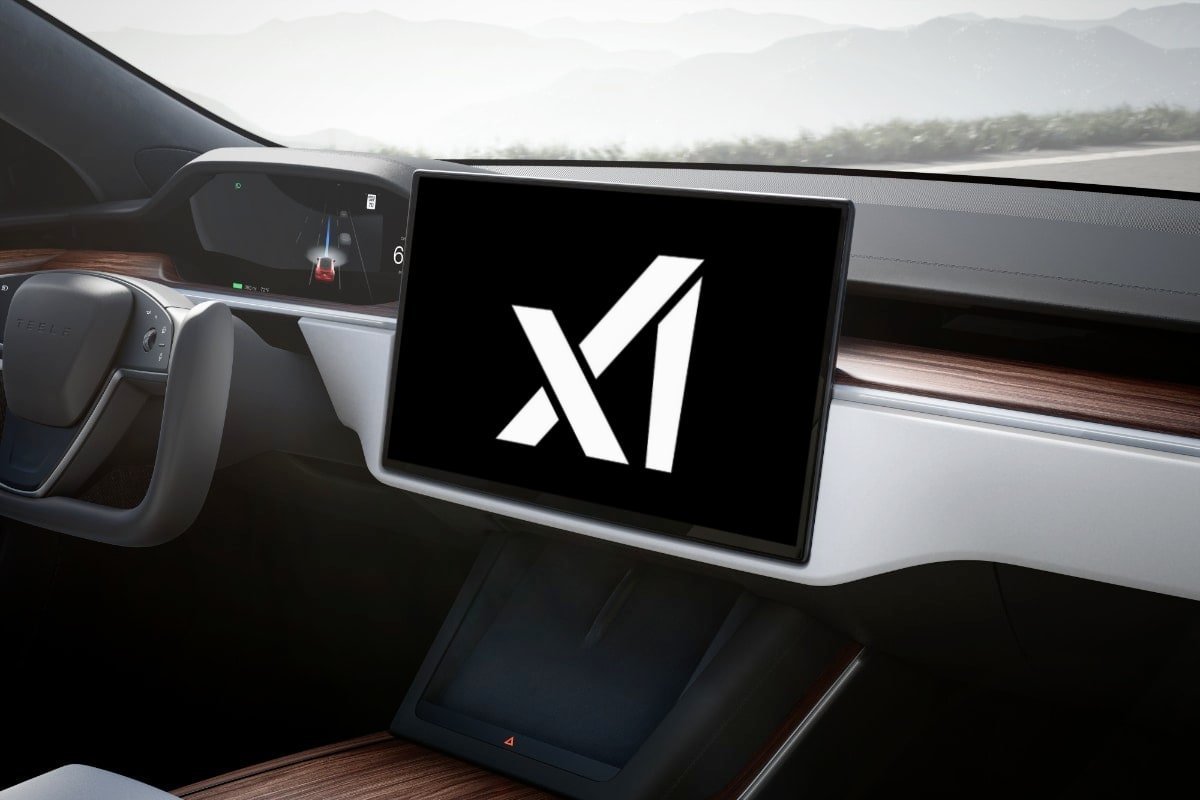
Tesla’s software platform is driving the latest expansion of its in-car artificial intelligence, with update 2026.2.6.1 deploying the Grok assistant to vehicles in Australia and New Zealand as part of a staged global rollout.
What is confirmed is that the update enables Grok, an AI system developed by xAI, to operate directly inside Tesla vehicles, allowing drivers to issue natural-language commands for navigation.
The feature is being rolled out over the air, initially targeting vehicles equipped with Hardware 3 systems, with newer Hardware 4 vehicles expected to follow in subsequent waves.
Grok represents a shift away from Tesla’s earlier voice command system, which relied on rigid phrasing.
The new assistant is designed to interpret conversational requests, such as asking for nearby restaurants, planning multi-stop trips, or locating charging stations near specific amenities.
It can also adjust routes dynamically, effectively turning navigation into a dialogue rather than a fixed input task.
The system remains limited in scope.
In its current beta form, Grok can handle navigation-related requests but does not control core vehicle functions such as climate, media, or driving settings.
Existing voice command systems remain in place for those tasks, indicating Tesla is layering AI capabilities rather than replacing legacy controls outright.
The rollout is constrained by hardware and connectivity requirements.
Only vehicles equipped with AMD-based infotainment systems and running compatible software versions can access Grok, and usage requires either a paid connectivity subscription or Wi-Fi access.
These conditions narrow the immediate user base and underscore Tesla’s reliance on high-performance onboard computing to support AI features.
Privacy and data handling are central to the system’s design.
Interactions with Grok are processed externally by xAI but are anonymized and not linked to individual vehicles or drivers.
Users can operate the assistant without persistent identity tracking, a notable point as automakers expand data-intensive services inside vehicles.
This expansion into Australia and New Zealand follows earlier launches in North America and Europe, signaling a coordinated global deployment strategy.
The phased approach—starting with specific hardware configurations and regions—suggests Tesla is managing both technical risk and infrastructure load as it scales the system.
The broader implication is structural: Tesla is embedding generative AI into the core driving experience, not as an optional add-on but as a new interface layer.
By integrating conversational AI into navigation first, the company is targeting a high-frequency, high-value use case while avoiding safety-critical systems that would require deeper regulatory scrutiny.
At the same time, the beta designation reflects ongoing limitations.
The system’s capabilities are intentionally narrow, and Tesla has not yet extended Grok into vehicle control or autonomous decision-making.
This staged deployment indicates a deliberate progression, where AI features are introduced incrementally while maintaining clear boundaries around safety-critical operations.
The immediate consequence is a measurable change in how drivers interact with Tesla vehicles: navigation becomes conversational, context-aware, and more flexible.
The next phase will depend on how quickly Tesla expands Grok’s capabilities beyond navigation and how regulators respond as AI systems move closer to core driving functions.
What is confirmed is that the update enables Grok, an AI system developed by xAI, to operate directly inside Tesla vehicles, allowing drivers to issue natural-language commands for navigation.
The feature is being rolled out over the air, initially targeting vehicles equipped with Hardware 3 systems, with newer Hardware 4 vehicles expected to follow in subsequent waves.
Grok represents a shift away from Tesla’s earlier voice command system, which relied on rigid phrasing.
The new assistant is designed to interpret conversational requests, such as asking for nearby restaurants, planning multi-stop trips, or locating charging stations near specific amenities.
It can also adjust routes dynamically, effectively turning navigation into a dialogue rather than a fixed input task.
The system remains limited in scope.
In its current beta form, Grok can handle navigation-related requests but does not control core vehicle functions such as climate, media, or driving settings.
Existing voice command systems remain in place for those tasks, indicating Tesla is layering AI capabilities rather than replacing legacy controls outright.
The rollout is constrained by hardware and connectivity requirements.
Only vehicles equipped with AMD-based infotainment systems and running compatible software versions can access Grok, and usage requires either a paid connectivity subscription or Wi-Fi access.
These conditions narrow the immediate user base and underscore Tesla’s reliance on high-performance onboard computing to support AI features.
Privacy and data handling are central to the system’s design.
Interactions with Grok are processed externally by xAI but are anonymized and not linked to individual vehicles or drivers.
Users can operate the assistant without persistent identity tracking, a notable point as automakers expand data-intensive services inside vehicles.
This expansion into Australia and New Zealand follows earlier launches in North America and Europe, signaling a coordinated global deployment strategy.
The phased approach—starting with specific hardware configurations and regions—suggests Tesla is managing both technical risk and infrastructure load as it scales the system.
The broader implication is structural: Tesla is embedding generative AI into the core driving experience, not as an optional add-on but as a new interface layer.
By integrating conversational AI into navigation first, the company is targeting a high-frequency, high-value use case while avoiding safety-critical systems that would require deeper regulatory scrutiny.
At the same time, the beta designation reflects ongoing limitations.
The system’s capabilities are intentionally narrow, and Tesla has not yet extended Grok into vehicle control or autonomous decision-making.
This staged deployment indicates a deliberate progression, where AI features are introduced incrementally while maintaining clear boundaries around safety-critical operations.
The immediate consequence is a measurable change in how drivers interact with Tesla vehicles: navigation becomes conversational, context-aware, and more flexible.
The next phase will depend on how quickly Tesla expands Grok’s capabilities beyond navigation and how regulators respond as AI systems move closer to core driving functions.
AI Disclaimer: An advanced artificial intelligence (AI) system generated the content of this page on its own. This innovative technology conducts extensive research from a variety of reliable sources, performs rigorous fact-checking and verification, cleans up and balances biased or manipulated content, and presents a minimal factual summary that is just enough yet essential for you to function as an informed and educated citizen. Please keep in mind, however, that this system is an evolving technology, and as a result, the article may contain accidental inaccuracies or errors. We urge you to help us improve our site by reporting any inaccuracies you find using the "Contact Us" link at the bottom of this page. Your helpful feedback helps us improve our system and deliver more precise content. When you find an article of interest here, please look for the full and extensive coverage of this topic in traditional news sources, as they are written by professional journalists that we try to support, not replace. We appreciate your understanding and assistance.