Australia and South Korea Deepen Energy Alliance as Indo-Pacific Supply Risks Intensify
The two governments have expanded cooperation on liquefied natural gas, critical minerals, hydrogen and clean energy infrastructure in a strategic effort to reinforce industrial resilience and reduce exposure to geopolitical disruption.
The governments of Australia and the Republic of Korea have issued a joint energy security statement that significantly broadens cooperation across fossil fuels, critical minerals and emerging clean-energy industries, reflecting a wider restructuring of Indo-Pacific supply chains under geopolitical pressure.
The story is fundamentally system-driven.
The core issue is the growing vulnerability of global energy and industrial supply networks to strategic competition, maritime disruption, commodity concentration and the rapid electrification of advanced economies.
What is confirmed is that Canberra and Seoul reaffirmed long-term cooperation on liquefied natural gas, battery minerals, hydrogen, low-emissions technology and energy transition infrastructure.
The statement also emphasized supply-chain resilience, investment coordination and stable resource flows between the two economies.
Australia already serves as one of South Korea’s largest energy suppliers.
Korean industry depends heavily on imported energy and raw materials, while Australia remains a major exporter of liquefied natural gas, iron ore and critical minerals essential for battery manufacturing and advanced industrial production.
The timing matters.
Energy security has become a strategic issue rather than simply a commercial one.
Governments across Asia are recalibrating industrial policy after years of market shocks that exposed weaknesses in global logistics systems, including the pandemic-era supply crisis, the war in Ukraine, Red Sea shipping instability and escalating strategic rivalry between the United States and China.
South Korea faces particular exposure because of its manufacturing structure.
The country operates one of the world’s largest export-oriented industrial economies but possesses limited domestic energy resources.
Heavy industries including semiconductors, shipbuilding, steelmaking and battery production require stable access to imported fuel and mineral inputs.
Australia occupies a complementary position.
The country holds large reserves of lithium, nickel, cobalt and rare earth materials that are increasingly viewed as strategic assets rather than ordinary commodities.
Western-aligned governments now regard access to those materials as central to electric vehicle production, military technology and energy transition planning.
The joint statement therefore extends beyond traditional fuel trade.
It reflects a broader attempt to integrate allied industrial systems across the Indo-Pacific.
Policymakers increasingly seek to secure supply chains through politically trusted partners rather than relying exclusively on lowest-cost global sourcing models.
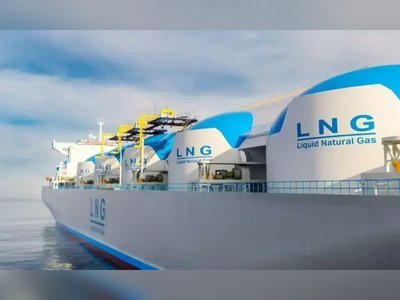
Liquefied natural gas remains a major pillar of the relationship despite accelerating decarbonization goals.
South Korea continues to rely heavily on gas imports for electricity generation and industrial use.
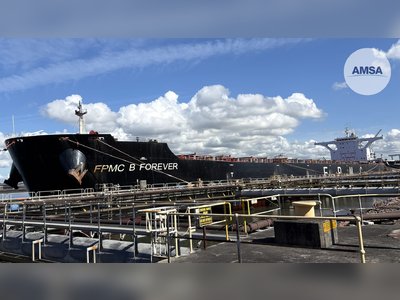
Australia remains one of the world’s largest liquefied natural gas exporters and has become a critical supplier to Northeast Asian markets.
At the same time, both governments are attempting to position themselves inside future clean-energy industries.
Hydrogen cooperation featured prominently in the statement because Australia aims to become a large-scale exporter of hydrogen and ammonia produced using renewable energy, while South Korea is investing heavily in hydrogen-powered industrial and transport systems.
The economics remain difficult.
Large hydrogen export projects still face high production costs, uncertain demand growth and infrastructure bottlenecks.
Many proposed projects globally have slowed or been restructured because financing conditions worsened as interest rates rose.
Critical minerals cooperation may prove more immediately consequential.
South Korean battery and technology manufacturers are seeking diversified mineral supply outside concentrated processing networks dominated by China.
Australia, meanwhile, wants to move beyond raw extraction toward downstream processing and higher-value industrial participation.
That shift carries major strategic implications.
Resource-rich countries increasingly want domestic refining, processing and manufacturing capacity rather than remaining exporters of unprocessed materials.
Governments now view industrial policy, subsidies and investment screening as instruments of national security.
The statement also aligns with wider regional realignment among U.S.-aligned partners.
Australia, Japan and South Korea have all expanded security and industrial coordination over the past several years as Washington pushes for more resilient technology and energy ecosystems across allied economies.
For Australia, the partnership strengthens long-term demand visibility for energy and mineral exports during a volatile transition period.
For South Korea, it provides greater access to politically stable supplies at a time when global competition for strategic resources is intensifying.
The agreement does not eliminate structural tensions.
Australia faces domestic political pressure over emissions targets and fossil fuel expansion, while South Korea must balance energy affordability, industrial competitiveness and decarbonization commitments simultaneously.
Even so, the direction of policy is increasingly clear.
Governments are moving away from the assumption that global energy markets alone can guarantee stability.
Energy security is now being rebuilt through long-term state-backed partnerships linking resources, infrastructure, manufacturing and strategic alignment.
The practical outcome is already visible in investment flows, industrial planning and diplomatic coordination across the Indo-Pacific.
Australia and South Korea are positioning their energy relationship not as a conventional trade arrangement but as part of a wider strategic architecture designed to secure industrial resilience in an era of geopolitical fragmentation.
The story is fundamentally system-driven.
The core issue is the growing vulnerability of global energy and industrial supply networks to strategic competition, maritime disruption, commodity concentration and the rapid electrification of advanced economies.
What is confirmed is that Canberra and Seoul reaffirmed long-term cooperation on liquefied natural gas, battery minerals, hydrogen, low-emissions technology and energy transition infrastructure.
The statement also emphasized supply-chain resilience, investment coordination and stable resource flows between the two economies.
Australia already serves as one of South Korea’s largest energy suppliers.
Korean industry depends heavily on imported energy and raw materials, while Australia remains a major exporter of liquefied natural gas, iron ore and critical minerals essential for battery manufacturing and advanced industrial production.
The timing matters.
Energy security has become a strategic issue rather than simply a commercial one.
Governments across Asia are recalibrating industrial policy after years of market shocks that exposed weaknesses in global logistics systems, including the pandemic-era supply crisis, the war in Ukraine, Red Sea shipping instability and escalating strategic rivalry between the United States and China.
South Korea faces particular exposure because of its manufacturing structure.
The country operates one of the world’s largest export-oriented industrial economies but possesses limited domestic energy resources.
Heavy industries including semiconductors, shipbuilding, steelmaking and battery production require stable access to imported fuel and mineral inputs.
Australia occupies a complementary position.
The country holds large reserves of lithium, nickel, cobalt and rare earth materials that are increasingly viewed as strategic assets rather than ordinary commodities.
Western-aligned governments now regard access to those materials as central to electric vehicle production, military technology and energy transition planning.
The joint statement therefore extends beyond traditional fuel trade.
It reflects a broader attempt to integrate allied industrial systems across the Indo-Pacific.
Policymakers increasingly seek to secure supply chains through politically trusted partners rather than relying exclusively on lowest-cost global sourcing models.
Liquefied natural gas remains a major pillar of the relationship despite accelerating decarbonization goals.
South Korea continues to rely heavily on gas imports for electricity generation and industrial use.
Australia remains one of the world’s largest liquefied natural gas exporters and has become a critical supplier to Northeast Asian markets.
At the same time, both governments are attempting to position themselves inside future clean-energy industries.
Hydrogen cooperation featured prominently in the statement because Australia aims to become a large-scale exporter of hydrogen and ammonia produced using renewable energy, while South Korea is investing heavily in hydrogen-powered industrial and transport systems.
The economics remain difficult.
Large hydrogen export projects still face high production costs, uncertain demand growth and infrastructure bottlenecks.
Many proposed projects globally have slowed or been restructured because financing conditions worsened as interest rates rose.
Critical minerals cooperation may prove more immediately consequential.
South Korean battery and technology manufacturers are seeking diversified mineral supply outside concentrated processing networks dominated by China.
Australia, meanwhile, wants to move beyond raw extraction toward downstream processing and higher-value industrial participation.
That shift carries major strategic implications.
Resource-rich countries increasingly want domestic refining, processing and manufacturing capacity rather than remaining exporters of unprocessed materials.
Governments now view industrial policy, subsidies and investment screening as instruments of national security.
The statement also aligns with wider regional realignment among U.S.-aligned partners.
Australia, Japan and South Korea have all expanded security and industrial coordination over the past several years as Washington pushes for more resilient technology and energy ecosystems across allied economies.
For Australia, the partnership strengthens long-term demand visibility for energy and mineral exports during a volatile transition period.
For South Korea, it provides greater access to politically stable supplies at a time when global competition for strategic resources is intensifying.
The agreement does not eliminate structural tensions.
Australia faces domestic political pressure over emissions targets and fossil fuel expansion, while South Korea must balance energy affordability, industrial competitiveness and decarbonization commitments simultaneously.
Even so, the direction of policy is increasingly clear.
Governments are moving away from the assumption that global energy markets alone can guarantee stability.
Energy security is now being rebuilt through long-term state-backed partnerships linking resources, infrastructure, manufacturing and strategic alignment.
The practical outcome is already visible in investment flows, industrial planning and diplomatic coordination across the Indo-Pacific.
Australia and South Korea are positioning their energy relationship not as a conventional trade arrangement but as part of a wider strategic architecture designed to secure industrial resilience in an era of geopolitical fragmentation.
AI Disclaimer: An advanced artificial intelligence (AI) system generated the content of this page on its own. This innovative technology conducts extensive research from a variety of reliable sources, performs rigorous fact-checking and verification, cleans up and balances biased or manipulated content, and presents a minimal factual summary that is just enough yet essential for you to function as an informed and educated citizen. Please keep in mind, however, that this system is an evolving technology, and as a result, the article may contain accidental inaccuracies or errors. We urge you to help us improve our site by reporting any inaccuracies you find using the "Contact Us" link at the bottom of this page. Your helpful feedback helps us improve our system and deliver more precise content. When you find an article of interest here, please look for the full and extensive coverage of this topic in traditional news sources, as they are written by professional journalists that we try to support, not replace. We appreciate your understanding and assistance.