Australia Expands Defence Spending as AUKUS Costs Reshape National Security Strategy
Canberra’s new defence budget accelerates submarine and missile investment while exposing growing pressure on military readiness, industrial capacity, and long-term fiscal priorities
SYSTEM-DRIVEN changes in Australia’s defence posture are driving a sharp increase in military spending as the government commits billions more to the AUKUS nuclear submarine partnership and a broader rearmament programme designed for a more confrontational Indo-Pacific security environment.
What is confirmed is that Australia has unveiled a major defence spending expansion centered on long-term military modernization, with AUKUS remaining the dominant strategic and financial priority.
The government’s updated defence plans project tens of billions of dollars in additional spending over the coming decade, including accelerated investment in nuclear-powered submarines, missile manufacturing, maritime capabilities, autonomous systems, and military infrastructure.
The core of the strategy is AUKUS, the trilateral security partnership between Australia, the United States, and the United Kingdom.
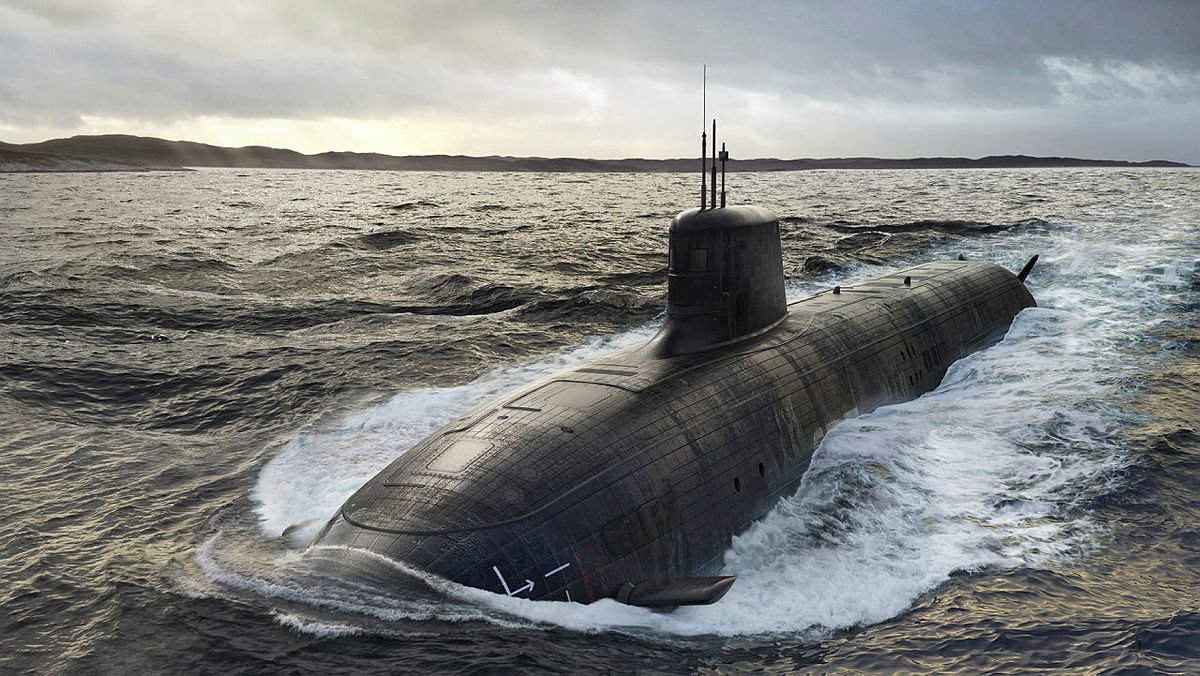
Under the agreement, Australia intends to acquire conventionally armed nuclear-powered submarines while building a domestic industrial base capable of sustaining and eventually constructing them.
The programme is now consuming an increasingly large share of Australia’s defence budget years before the first submarine is expected to enter Australian service.
The scale of the financial commitment is substantial.
Government projections indicate that defence spending will rise steadily as a share of national output over the next decade, with officials framing the buildup as necessary for deterrence and strategic self-reliance.
Major spending lines include shipyard construction in South Australia and Western Australia, nuclear propulsion infrastructure, long-range strike systems, missile production, drone capabilities, air defence, satellite communications, and naval expansion.
The strategic rationale behind the budget is rooted in Canberra’s assessment that the regional security environment has deteriorated sharply.
Australian defence planning now openly assumes a period of sustained geopolitical competition, growing military activity in the Indo-Pacific, and increasing risks around sea lanes, cyber infrastructure, and regional coercion.
The government has repeatedly described the current environment as the most dangerous since the Second World War.
AUKUS is both the centrepiece and the most controversial element of the strategy.
Supporters argue that nuclear-powered submarines provide Australia with far greater range, endurance, stealth, and operational flexibility than conventional submarines, allowing the country to operate more effectively alongside US and British forces across the Indo-Pacific.
The submarines are intended to strengthen deterrence against potential adversaries while integrating Australia more deeply into allied defence planning.
Critics, however, argue that the programme creates major timing and capability risks.
The first Australian-operated nuclear submarines are not expected until the next decade, while current military readiness challenges already exist across the navy, air force, and broader defence force.
Concerns have also intensified over whether the United States can produce enough Virginia-class submarines to meet both American requirements and Australian commitments.
The budget expansion is therefore producing a structural tension inside Australia’s defence policy.
Canberra is attempting to finance an extremely expensive long-term submarine capability while simultaneously modernizing conventional forces for immediate deterrence.
Defence analysts have warned that future-oriented submarine spending risks absorbing resources needed for near-term readiness, personnel retention, ammunition stockpiles, and deployable conventional assets.
Industrial capacity has become another major issue.
Australia is attempting to build a sovereign defence manufacturing ecosystem capable of supporting advanced naval construction, missile production, and autonomous systems.
That requires skilled labour, infrastructure expansion, engineering expertise, and long-term industrial planning on a scale Australia has rarely attempted in peacetime.
The defence buildup also carries broader geopolitical implications.
Australia’s military integration with the United States is deepening significantly through AUKUS, rotational force deployments, intelligence sharing, and interoperability planning.
Supporters view this as essential for regional deterrence and alliance credibility.
Critics argue it could reduce Australia’s strategic autonomy and increase dependence on US industrial and military systems.
Domestic politics remain divided but broadly supportive of increased defence investment.
Both major political blocs back AUKUS in principle, though disagreement persists over procurement timelines, transparency, opportunity costs, and fiscal sustainability.
Questions have also emerged around nuclear waste management, long-term operational costs, and whether future governments will maintain current funding trajectories.
The immediate consequence of the new budget is that Australia’s defence establishment is entering a prolonged period of structural expansion.
Shipyards are being upgraded, submarine agencies enlarged, missile programmes accelerated, and defence industry investment pushed into the centre of national economic planning.
The result is a transformation of Australia’s security posture from a traditionally regional military model toward a far more heavily armed and technologically integrated middle power strategy tied closely to allied deterrence in the Indo-Pacific.
What is confirmed is that Australia has unveiled a major defence spending expansion centered on long-term military modernization, with AUKUS remaining the dominant strategic and financial priority.
The government’s updated defence plans project tens of billions of dollars in additional spending over the coming decade, including accelerated investment in nuclear-powered submarines, missile manufacturing, maritime capabilities, autonomous systems, and military infrastructure.
The core of the strategy is AUKUS, the trilateral security partnership between Australia, the United States, and the United Kingdom.
Under the agreement, Australia intends to acquire conventionally armed nuclear-powered submarines while building a domestic industrial base capable of sustaining and eventually constructing them.
The programme is now consuming an increasingly large share of Australia’s defence budget years before the first submarine is expected to enter Australian service.
The scale of the financial commitment is substantial.
Government projections indicate that defence spending will rise steadily as a share of national output over the next decade, with officials framing the buildup as necessary for deterrence and strategic self-reliance.
Major spending lines include shipyard construction in South Australia and Western Australia, nuclear propulsion infrastructure, long-range strike systems, missile production, drone capabilities, air defence, satellite communications, and naval expansion.
The strategic rationale behind the budget is rooted in Canberra’s assessment that the regional security environment has deteriorated sharply.
Australian defence planning now openly assumes a period of sustained geopolitical competition, growing military activity in the Indo-Pacific, and increasing risks around sea lanes, cyber infrastructure, and regional coercion.
The government has repeatedly described the current environment as the most dangerous since the Second World War.
AUKUS is both the centrepiece and the most controversial element of the strategy.
Supporters argue that nuclear-powered submarines provide Australia with far greater range, endurance, stealth, and operational flexibility than conventional submarines, allowing the country to operate more effectively alongside US and British forces across the Indo-Pacific.
The submarines are intended to strengthen deterrence against potential adversaries while integrating Australia more deeply into allied defence planning.
Critics, however, argue that the programme creates major timing and capability risks.
The first Australian-operated nuclear submarines are not expected until the next decade, while current military readiness challenges already exist across the navy, air force, and broader defence force.
Concerns have also intensified over whether the United States can produce enough Virginia-class submarines to meet both American requirements and Australian commitments.
The budget expansion is therefore producing a structural tension inside Australia’s defence policy.
Canberra is attempting to finance an extremely expensive long-term submarine capability while simultaneously modernizing conventional forces for immediate deterrence.
Defence analysts have warned that future-oriented submarine spending risks absorbing resources needed for near-term readiness, personnel retention, ammunition stockpiles, and deployable conventional assets.
Industrial capacity has become another major issue.
Australia is attempting to build a sovereign defence manufacturing ecosystem capable of supporting advanced naval construction, missile production, and autonomous systems.
That requires skilled labour, infrastructure expansion, engineering expertise, and long-term industrial planning on a scale Australia has rarely attempted in peacetime.
The defence buildup also carries broader geopolitical implications.
Australia’s military integration with the United States is deepening significantly through AUKUS, rotational force deployments, intelligence sharing, and interoperability planning.
Supporters view this as essential for regional deterrence and alliance credibility.
Critics argue it could reduce Australia’s strategic autonomy and increase dependence on US industrial and military systems.
Domestic politics remain divided but broadly supportive of increased defence investment.
Both major political blocs back AUKUS in principle, though disagreement persists over procurement timelines, transparency, opportunity costs, and fiscal sustainability.
Questions have also emerged around nuclear waste management, long-term operational costs, and whether future governments will maintain current funding trajectories.
The immediate consequence of the new budget is that Australia’s defence establishment is entering a prolonged period of structural expansion.
Shipyards are being upgraded, submarine agencies enlarged, missile programmes accelerated, and defence industry investment pushed into the centre of national economic planning.
The result is a transformation of Australia’s security posture from a traditionally regional military model toward a far more heavily armed and technologically integrated middle power strategy tied closely to allied deterrence in the Indo-Pacific.
AI Disclaimer: An advanced artificial intelligence (AI) system generated the content of this page on its own. This innovative technology conducts extensive research from a variety of reliable sources, performs rigorous fact-checking and verification, cleans up and balances biased or manipulated content, and presents a minimal factual summary that is just enough yet essential for you to function as an informed and educated citizen. Please keep in mind, however, that this system is an evolving technology, and as a result, the article may contain accidental inaccuracies or errors. We urge you to help us improve our site by reporting any inaccuracies you find using the "Contact Us" link at the bottom of this page. Your helpful feedback helps us improve our system and deliver more precise content. When you find an article of interest here, please look for the full and extensive coverage of this topic in traditional news sources, as they are written by professional journalists that we try to support, not replace. We appreciate your understanding and assistance.