Australia’s Energy Strategy Is Being Rewritten by War, Inflation, and the Cost of Decarbonization
Canberra is accelerating renewable investment while simultaneously defending fossil fuel supply and energy security as global instability reshapes the economics of the green transition.
Australia’s energy policy is now being driven by a structural conflict between two imperatives that no government can ignore: the need to rapidly decarbonize the economy and the need to shield households and industry from escalating global energy shocks.
That tension has become the defining feature of the country’s economic and industrial strategy.
The immediate pressure comes from global volatility.
Conflict in the Middle East, disruptions to shipping routes, tightening energy markets, and continuing geopolitical fragmentation have pushed energy security back to the center of policymaking across advanced economies.
Australia, despite being one of the world’s largest exporters of liquefied natural gas and coal, remains highly exposed to international fuel pricing and supply instability.
The result is a policy environment where the government is attempting to accelerate the transition away from fossil fuels while simultaneously relying on those same industries to stabilize exports, public revenue, grid reliability, and short-term economic resilience.
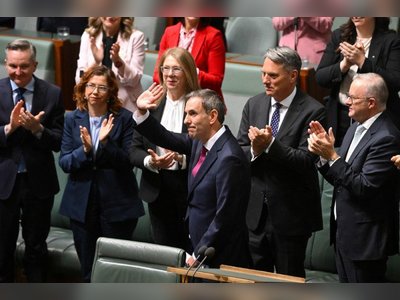
Prime Minister Anthony Albanese’s government has committed Australia to a net-zero emissions target by twenty fifty and has expanded major subsidy programs for renewable energy, battery manufacturing, transmission infrastructure, green hydrogen, and critical minerals processing.
The strategy is designed not only as climate policy but also as industrial policy.
Canberra increasingly views the clean-energy transition as an economic competition for future manufacturing, resource processing, and technology investment.
Australia holds substantial reserves of lithium, nickel, cobalt, manganese, and rare earth materials critical to electric vehicles, batteries, and advanced electronics.
Officials are attempting to move the country higher up the supply chain rather than remaining primarily a raw-material exporter.
But the transition is colliding with immediate economic realities.
Electricity prices remain politically sensitive.
Heavy industry still depends heavily on gas.
Coal continues to provide a significant share of grid generation despite rapid renewable expansion.
Several aging coal plants are approaching retirement faster than replacement infrastructure can be fully deployed.
The key issue is that energy transitions are not linear.
Renewable capacity can grow rapidly while legacy systems remain economically indispensable.
Australia is now managing that overlap phase under increasingly hostile global conditions.
Recent energy market shocks exposed weaknesses in the country’s domestic gas system.
Australia exports large volumes of liquefied natural gas to Asia but has repeatedly faced domestic supply shortages and price spikes.
This created a politically damaging perception that one of the world’s largest gas exporters could not guarantee affordable energy for its own consumers.
The government responded with market interventions including temporary price caps, mandatory code mechanisms for gas producers, and expanded powers to manage supply emergencies.
Those measures reduced some short-term pressure but also intensified tensions between Canberra and major energy companies.
Industry groups argue aggressive intervention risks discouraging long-term investment in new supply.
Consumer advocates counter that unfettered export exposure leaves Australian households permanently vulnerable to overseas crises.
That debate has become sharper as conflict involving Israel, Iran, and the United States destabilizes global oil and shipping markets.
Treasury has already warned that prolonged energy disruption could reignite inflation, weaken growth, and push Australia toward recessionary conditions.
The Reserve Bank of Australia is simultaneously attempting to control inflation while avoiding a collapse in demand.
Energy prices complicate that task because they operate as imported inflation.
Higher fuel and electricity costs spread rapidly through transport, agriculture, manufacturing, retail, and housing.
This dynamic has altered how policymakers now discuss climate policy.
The conversation is no longer framed solely around emissions reduction.
Energy sovereignty, supply-chain resilience, strategic manufacturing, and industrial security are now central pillars of the transition.
Australia’s renewable buildout is accelerating, but infrastructure bottlenecks remain severe.
Transmission construction has lagged behind generation investment.
Grid integration challenges continue to delay projects.
Community opposition to large transmission corridors has slowed approvals in some regions.
Battery storage is expanding quickly, yet long-duration storage capacity remains insufficient to fully replace dispatchable fossil fuel generation during prolonged periods of low renewable output.
Gas remains the government’s preferred transitional backup fuel, despite criticism from climate groups who argue that continued gas expansion undermines long-term emissions goals.
International competition is also reshaping Australia’s strategy.
Massive clean-energy subsidy programs in the United States and Europe have intensified the race for investment capital, battery manufacturing, and critical mineral processing.
Australia is attempting to position itself as a stable democratic supplier within allied industrial networks.
That positioning has strategic dimensions beyond economics.
Western governments increasingly view critical minerals and energy technology as national security assets rather than ordinary commodities.
Australia’s political stability, resource base, and close security relationships with the United States, Japan, and other Indo-Pacific partners have strengthened its geopolitical importance.
China remains central to the equation.
China is both Australia’s largest trading partner and the dominant global processor of many critical minerals required for clean-energy technologies.
Canberra is therefore trying to diversify supply chains without triggering a direct economic rupture with Beijing.
The contradiction at the center of Australia’s energy model remains unresolved.
The country is simultaneously a major fossil fuel exporter, a renewable-energy superpower candidate, a resource economy dependent on commodity cycles, and a climate-vulnerable nation facing escalating environmental risks.
Extreme weather events are increasing pressure for faster decarbonization.
Bushfires, flooding, droughts, and heatwaves have amplified public awareness of climate exposure.
Insurance costs are rising.
Infrastructure resilience is becoming a major fiscal issue.
At the same time, governments cannot risk destabilizing energy affordability or industrial competitiveness during the transition.
Mining, metals processing, chemicals, transport, and manufacturing sectors still require stable large-scale energy supply that renewables alone cannot yet consistently provide under all conditions.
The practical result is a hybrid strategy.
Australia is accelerating renewable deployment, subsidizing green industry, expanding critical-minerals processing, strengthening transmission networks, and investing in storage technology while still approving selected gas developments and defending export-oriented energy production.
That balancing act is no longer temporary crisis management.
It has become the core architecture of Australia’s economic strategy in an era where climate policy, industrial policy, geopolitical competition, and energy security are now inseparable.
That tension has become the defining feature of the country’s economic and industrial strategy.
The immediate pressure comes from global volatility.
Conflict in the Middle East, disruptions to shipping routes, tightening energy markets, and continuing geopolitical fragmentation have pushed energy security back to the center of policymaking across advanced economies.
Australia, despite being one of the world’s largest exporters of liquefied natural gas and coal, remains highly exposed to international fuel pricing and supply instability.
The result is a policy environment where the government is attempting to accelerate the transition away from fossil fuels while simultaneously relying on those same industries to stabilize exports, public revenue, grid reliability, and short-term economic resilience.
Prime Minister Anthony Albanese’s government has committed Australia to a net-zero emissions target by twenty fifty and has expanded major subsidy programs for renewable energy, battery manufacturing, transmission infrastructure, green hydrogen, and critical minerals processing.
The strategy is designed not only as climate policy but also as industrial policy.
Canberra increasingly views the clean-energy transition as an economic competition for future manufacturing, resource processing, and technology investment.
Australia holds substantial reserves of lithium, nickel, cobalt, manganese, and rare earth materials critical to electric vehicles, batteries, and advanced electronics.
Officials are attempting to move the country higher up the supply chain rather than remaining primarily a raw-material exporter.
But the transition is colliding with immediate economic realities.
Electricity prices remain politically sensitive.
Heavy industry still depends heavily on gas.
Coal continues to provide a significant share of grid generation despite rapid renewable expansion.
Several aging coal plants are approaching retirement faster than replacement infrastructure can be fully deployed.
The key issue is that energy transitions are not linear.
Renewable capacity can grow rapidly while legacy systems remain economically indispensable.
Australia is now managing that overlap phase under increasingly hostile global conditions.
Recent energy market shocks exposed weaknesses in the country’s domestic gas system.
Australia exports large volumes of liquefied natural gas to Asia but has repeatedly faced domestic supply shortages and price spikes.
This created a politically damaging perception that one of the world’s largest gas exporters could not guarantee affordable energy for its own consumers.
The government responded with market interventions including temporary price caps, mandatory code mechanisms for gas producers, and expanded powers to manage supply emergencies.
Those measures reduced some short-term pressure but also intensified tensions between Canberra and major energy companies.
Industry groups argue aggressive intervention risks discouraging long-term investment in new supply.
Consumer advocates counter that unfettered export exposure leaves Australian households permanently vulnerable to overseas crises.
That debate has become sharper as conflict involving Israel, Iran, and the United States destabilizes global oil and shipping markets.
Treasury has already warned that prolonged energy disruption could reignite inflation, weaken growth, and push Australia toward recessionary conditions.
The Reserve Bank of Australia is simultaneously attempting to control inflation while avoiding a collapse in demand.
Energy prices complicate that task because they operate as imported inflation.
Higher fuel and electricity costs spread rapidly through transport, agriculture, manufacturing, retail, and housing.
This dynamic has altered how policymakers now discuss climate policy.
The conversation is no longer framed solely around emissions reduction.
Energy sovereignty, supply-chain resilience, strategic manufacturing, and industrial security are now central pillars of the transition.
Australia’s renewable buildout is accelerating, but infrastructure bottlenecks remain severe.
Transmission construction has lagged behind generation investment.
Grid integration challenges continue to delay projects.
Community opposition to large transmission corridors has slowed approvals in some regions.
Battery storage is expanding quickly, yet long-duration storage capacity remains insufficient to fully replace dispatchable fossil fuel generation during prolonged periods of low renewable output.
Gas remains the government’s preferred transitional backup fuel, despite criticism from climate groups who argue that continued gas expansion undermines long-term emissions goals.
International competition is also reshaping Australia’s strategy.
Massive clean-energy subsidy programs in the United States and Europe have intensified the race for investment capital, battery manufacturing, and critical mineral processing.
Australia is attempting to position itself as a stable democratic supplier within allied industrial networks.
That positioning has strategic dimensions beyond economics.
Western governments increasingly view critical minerals and energy technology as national security assets rather than ordinary commodities.
Australia’s political stability, resource base, and close security relationships with the United States, Japan, and other Indo-Pacific partners have strengthened its geopolitical importance.
China remains central to the equation.
China is both Australia’s largest trading partner and the dominant global processor of many critical minerals required for clean-energy technologies.
Canberra is therefore trying to diversify supply chains without triggering a direct economic rupture with Beijing.
The contradiction at the center of Australia’s energy model remains unresolved.
The country is simultaneously a major fossil fuel exporter, a renewable-energy superpower candidate, a resource economy dependent on commodity cycles, and a climate-vulnerable nation facing escalating environmental risks.
Extreme weather events are increasing pressure for faster decarbonization.
Bushfires, flooding, droughts, and heatwaves have amplified public awareness of climate exposure.
Insurance costs are rising.
Infrastructure resilience is becoming a major fiscal issue.
At the same time, governments cannot risk destabilizing energy affordability or industrial competitiveness during the transition.
Mining, metals processing, chemicals, transport, and manufacturing sectors still require stable large-scale energy supply that renewables alone cannot yet consistently provide under all conditions.
The practical result is a hybrid strategy.
Australia is accelerating renewable deployment, subsidizing green industry, expanding critical-minerals processing, strengthening transmission networks, and investing in storage technology while still approving selected gas developments and defending export-oriented energy production.
That balancing act is no longer temporary crisis management.
It has become the core architecture of Australia’s economic strategy in an era where climate policy, industrial policy, geopolitical competition, and energy security are now inseparable.
AI Disclaimer: An advanced artificial intelligence (AI) system generated the content of this page on its own. This innovative technology conducts extensive research from a variety of reliable sources, performs rigorous fact-checking and verification, cleans up and balances biased or manipulated content, and presents a minimal factual summary that is just enough yet essential for you to function as an informed and educated citizen. Please keep in mind, however, that this system is an evolving technology, and as a result, the article may contain accidental inaccuracies or errors. We urge you to help us improve our site by reporting any inaccuracies you find using the "Contact Us" link at the bottom of this page. Your helpful feedback helps us improve our system and deliver more precise content. When you find an article of interest here, please look for the full and extensive coverage of this topic in traditional news sources, as they are written by professional journalists that we try to support, not replace. We appreciate your understanding and assistance.