Australia’s Budget Now Hinges on a War It Cannot Control
Treasury modelling shows a prolonged US-Iran conflict could drive inflation above seven percent, trigger another interest-rate shock, and push Australia to the edge of recession.
The central driver of Australia’s latest budget is not domestic spending, taxation, or wage policy.
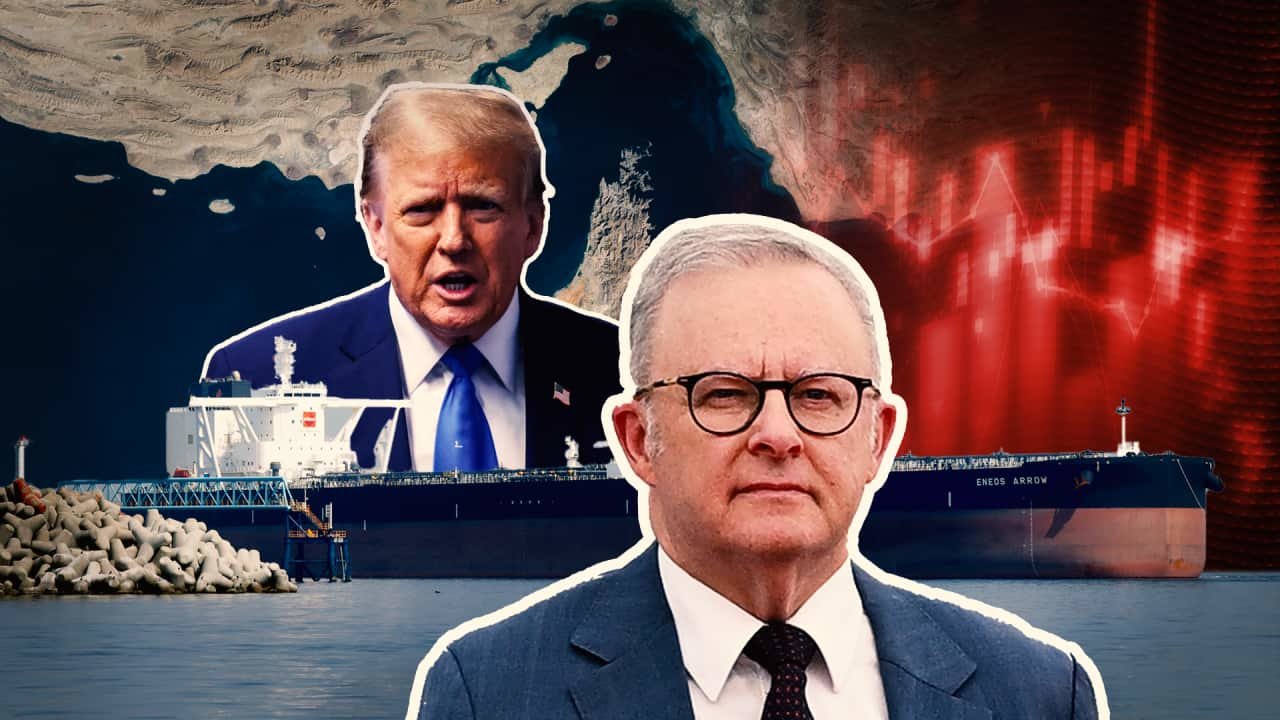
It is the escalating conflict involving the United States, Israel, and Iran, and the resulting shock to global energy markets.
Australia’s Treasury has now formally warned that a severe escalation in the Middle East war could push the country to the brink of recession, reignite inflation at levels not seen since the pandemic surge, and force households and businesses into another round of economic stress.
The warning emerged alongside the federal budget after months of mounting concern inside government and central banking circles that the conflict had become an external economic threat large enough to overwhelm domestic policy settings.
Treasury’s modelling outlines a worst-case scenario in which oil prices surge to two hundred US dollars per barrel, inflation rises to around seven point two five percent, unemployment climbs toward five percent, and economic output contracts.
The mechanism behind the warning is straightforward but severe.
The war has disrupted shipping and energy flows through the Strait of Hormuz, one of the world’s most strategically important oil transit corridors.
A large share of global crude exports passes through the narrow waterway.
Even partial disruption immediately raises global fuel prices because traders price in supply risk long before physical shortages fully materialize.
Australia is especially vulnerable to this type of shock despite being a major energy exporter.
The country imports much of its refined fuel and remains exposed to global pricing.
Higher oil prices rapidly filter through transport, logistics, food production, construction, aviation, electricity generation, and household energy costs.
Petrol prices become the first visible symptom, but the inflationary effects spread through nearly every sector of the economy.
Treasury now expects inflation to peak near five percent in the near term even under its central assumptions.
The more severe scenario assumes the conflict intensifies further and energy markets remain disrupted for years rather than months.
Under that model, inflation would move back toward crisis-era territory, erasing much of the progress made by the Reserve Bank of Australia after its aggressive post-pandemic tightening cycle.
That creates a dangerous policy collision.
Australia has already endured a prolonged period of high interest rates designed to suppress inflation.
Mortgage holders have absorbed years of repayment increases.
Consumer demand has weakened.
Business confidence remains fragile.
If imported inflation from oil and shipping costs surges again, the Reserve Bank could face pressure to raise rates further even while economic growth slows.
This is the core fear behind the recession warning: stagflation.
The economy weakens while prices continue rising.
Central banks have few effective tools against supply-driven inflation shocks because rate hikes cannot produce more oil or reopen disrupted shipping lanes.
Higher borrowing costs mainly suppress domestic demand, often worsening unemployment and slowing investment while doing little to quickly reduce fuel-driven inflation.
Treasurer Jim Chalmers has attempted to frame Australia as comparatively resilient, arguing the country enters the crisis with lower unemployment, stronger public finances, and substantial commodity export capacity.
The budget includes measures aimed at cushioning immediate fuel pressure, including temporary fuel excise relief and investment in strategic fuel reserves.
But the budget papers themselves acknowledge the limits of domestic policy.
Treasury explicitly describes the economy as highly exposed to overseas developments.
The government cannot control the trajectory of the conflict, the stability of maritime trade routes, or the future price of oil.
The conflict has already materially altered Australia’s economic forecasts.
Growth expectations have been downgraded.
Inflation assumptions have been revised upward.
Real wage gains are expected to weaken again in the short term as consumer prices outpace pay increases.
The government also faces rising debt-servicing costs as elevated interest rates increase borrowing expenses.
The implications extend beyond households.
Businesses dependent on transport, freight, imported inputs, or energy-intensive production face margin pressure.
Retailers are preparing for weaker discretionary spending.
Construction firms confront higher material and financing costs simultaneously.
Airlines and logistics companies remain particularly exposed to fuel volatility.
There are also geopolitical consequences embedded in the economic response.
Australia is a close security ally of the United States but economically integrated with Asia.
The government must now manage the domestic consequences of a conflict driven largely by decisions outside Canberra.
Treasury’s language reflects growing recognition that geopolitical instability is no longer a distant strategic issue but a direct driver of inflation, monetary policy, and living standards.
The budget also reveals tension inside Australia’s broader economic model.
The country benefits from commodity exports during global crises, particularly liquefied natural gas and coal.
Higher global energy prices can increase government revenues and corporate profits.
But those gains are unevenly distributed and do not offset rising costs for most households.
The result is an economy where national income can rise while consumers become poorer.
Political pressure is building around that imbalance.
Critics argue Australia’s gas export framework leaves domestic consumers exposed to global price shocks despite the country’s vast energy resources.
The government resisted introducing a new export tax in the budget, partly to avoid destabilizing relationships with key Asian trading partners that depend on Australian energy supply.
Financial markets and policymakers are now focused on whether the Middle East conflict stabilizes or evolves into a longer regional confrontation.
Treasury’s severe scenario assumes prolonged disruption extending into the end of the decade.
That would fundamentally reshape Australia’s economic outlook, delaying any return to lower interest rates and placing sustained pressure on living costs.
The immediate consequence is that Australia’s economic trajectory is no longer being determined primarily by domestic demand or fiscal policy.
It is being driven by the interaction between global energy markets, military escalation in the Middle East, and the capacity of central banks to contain another imported inflation shock without collapsing growth.
For households, the practical effects are already visible in fuel prices, grocery costs, mortgage stress, and declining purchasing power.
For government, the challenge has shifted from managing a standard inflation cycle to navigating a geopolitical supply shock with few historical parallels outside major wartime disruptions.
Treasury’s warning has transformed the federal budget from a routine fiscal exercise into a contingency plan for a global crisis whose economic consequences are already reaching Australian households and businesses.
It is the escalating conflict involving the United States, Israel, and Iran, and the resulting shock to global energy markets.
Australia’s Treasury has now formally warned that a severe escalation in the Middle East war could push the country to the brink of recession, reignite inflation at levels not seen since the pandemic surge, and force households and businesses into another round of economic stress.
The warning emerged alongside the federal budget after months of mounting concern inside government and central banking circles that the conflict had become an external economic threat large enough to overwhelm domestic policy settings.
Treasury’s modelling outlines a worst-case scenario in which oil prices surge to two hundred US dollars per barrel, inflation rises to around seven point two five percent, unemployment climbs toward five percent, and economic output contracts.
The mechanism behind the warning is straightforward but severe.
The war has disrupted shipping and energy flows through the Strait of Hormuz, one of the world’s most strategically important oil transit corridors.
A large share of global crude exports passes through the narrow waterway.
Even partial disruption immediately raises global fuel prices because traders price in supply risk long before physical shortages fully materialize.
Australia is especially vulnerable to this type of shock despite being a major energy exporter.
The country imports much of its refined fuel and remains exposed to global pricing.
Higher oil prices rapidly filter through transport, logistics, food production, construction, aviation, electricity generation, and household energy costs.
Petrol prices become the first visible symptom, but the inflationary effects spread through nearly every sector of the economy.
Treasury now expects inflation to peak near five percent in the near term even under its central assumptions.
The more severe scenario assumes the conflict intensifies further and energy markets remain disrupted for years rather than months.
Under that model, inflation would move back toward crisis-era territory, erasing much of the progress made by the Reserve Bank of Australia after its aggressive post-pandemic tightening cycle.
That creates a dangerous policy collision.
Australia has already endured a prolonged period of high interest rates designed to suppress inflation.
Mortgage holders have absorbed years of repayment increases.
Consumer demand has weakened.
Business confidence remains fragile.
If imported inflation from oil and shipping costs surges again, the Reserve Bank could face pressure to raise rates further even while economic growth slows.
This is the core fear behind the recession warning: stagflation.
The economy weakens while prices continue rising.
Central banks have few effective tools against supply-driven inflation shocks because rate hikes cannot produce more oil or reopen disrupted shipping lanes.
Higher borrowing costs mainly suppress domestic demand, often worsening unemployment and slowing investment while doing little to quickly reduce fuel-driven inflation.
Treasurer Jim Chalmers has attempted to frame Australia as comparatively resilient, arguing the country enters the crisis with lower unemployment, stronger public finances, and substantial commodity export capacity.
The budget includes measures aimed at cushioning immediate fuel pressure, including temporary fuel excise relief and investment in strategic fuel reserves.
But the budget papers themselves acknowledge the limits of domestic policy.
Treasury explicitly describes the economy as highly exposed to overseas developments.
The government cannot control the trajectory of the conflict, the stability of maritime trade routes, or the future price of oil.
The conflict has already materially altered Australia’s economic forecasts.
Growth expectations have been downgraded.
Inflation assumptions have been revised upward.
Real wage gains are expected to weaken again in the short term as consumer prices outpace pay increases.
The government also faces rising debt-servicing costs as elevated interest rates increase borrowing expenses.
The implications extend beyond households.
Businesses dependent on transport, freight, imported inputs, or energy-intensive production face margin pressure.
Retailers are preparing for weaker discretionary spending.
Construction firms confront higher material and financing costs simultaneously.
Airlines and logistics companies remain particularly exposed to fuel volatility.
There are also geopolitical consequences embedded in the economic response.
Australia is a close security ally of the United States but economically integrated with Asia.
The government must now manage the domestic consequences of a conflict driven largely by decisions outside Canberra.
Treasury’s language reflects growing recognition that geopolitical instability is no longer a distant strategic issue but a direct driver of inflation, monetary policy, and living standards.
The budget also reveals tension inside Australia’s broader economic model.
The country benefits from commodity exports during global crises, particularly liquefied natural gas and coal.
Higher global energy prices can increase government revenues and corporate profits.
But those gains are unevenly distributed and do not offset rising costs for most households.
The result is an economy where national income can rise while consumers become poorer.
Political pressure is building around that imbalance.
Critics argue Australia’s gas export framework leaves domestic consumers exposed to global price shocks despite the country’s vast energy resources.
The government resisted introducing a new export tax in the budget, partly to avoid destabilizing relationships with key Asian trading partners that depend on Australian energy supply.
Financial markets and policymakers are now focused on whether the Middle East conflict stabilizes or evolves into a longer regional confrontation.
Treasury’s severe scenario assumes prolonged disruption extending into the end of the decade.
That would fundamentally reshape Australia’s economic outlook, delaying any return to lower interest rates and placing sustained pressure on living costs.
The immediate consequence is that Australia’s economic trajectory is no longer being determined primarily by domestic demand or fiscal policy.
It is being driven by the interaction between global energy markets, military escalation in the Middle East, and the capacity of central banks to contain another imported inflation shock without collapsing growth.
For households, the practical effects are already visible in fuel prices, grocery costs, mortgage stress, and declining purchasing power.
For government, the challenge has shifted from managing a standard inflation cycle to navigating a geopolitical supply shock with few historical parallels outside major wartime disruptions.
Treasury’s warning has transformed the federal budget from a routine fiscal exercise into a contingency plan for a global crisis whose economic consequences are already reaching Australian households and businesses.
AI Disclaimer: An advanced artificial intelligence (AI) system generated the content of this page on its own. This innovative technology conducts extensive research from a variety of reliable sources, performs rigorous fact-checking and verification, cleans up and balances biased or manipulated content, and presents a minimal factual summary that is just enough yet essential for you to function as an informed and educated citizen. Please keep in mind, however, that this system is an evolving technology, and as a result, the article may contain accidental inaccuracies or errors. We urge you to help us improve our site by reporting any inaccuracies you find using the "Contact Us" link at the bottom of this page. Your helpful feedback helps us improve our system and deliver more precise content. When you find an article of interest here, please look for the full and extensive coverage of this topic in traditional news sources, as they are written by professional journalists that we try to support, not replace. We appreciate your understanding and assistance.