One Nation’s Lower House Breakthrough Redraws Australia’s Conservative Map
Pauline Hanson’s Trump-aligned populist movement has captured its first seat in Australia’s House of Representatives, turning anti-immigration politics into a direct electoral threat to the mainstream conservative opposition.
Australia’s right-wing populist One Nation party has secured its first-ever seat in the federal House of Representatives, marking a major structural shift inside the country’s conservative politics and elevating anti-immigration nationalism from protest movement to parliamentary force.
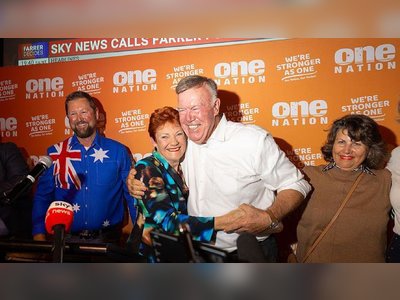
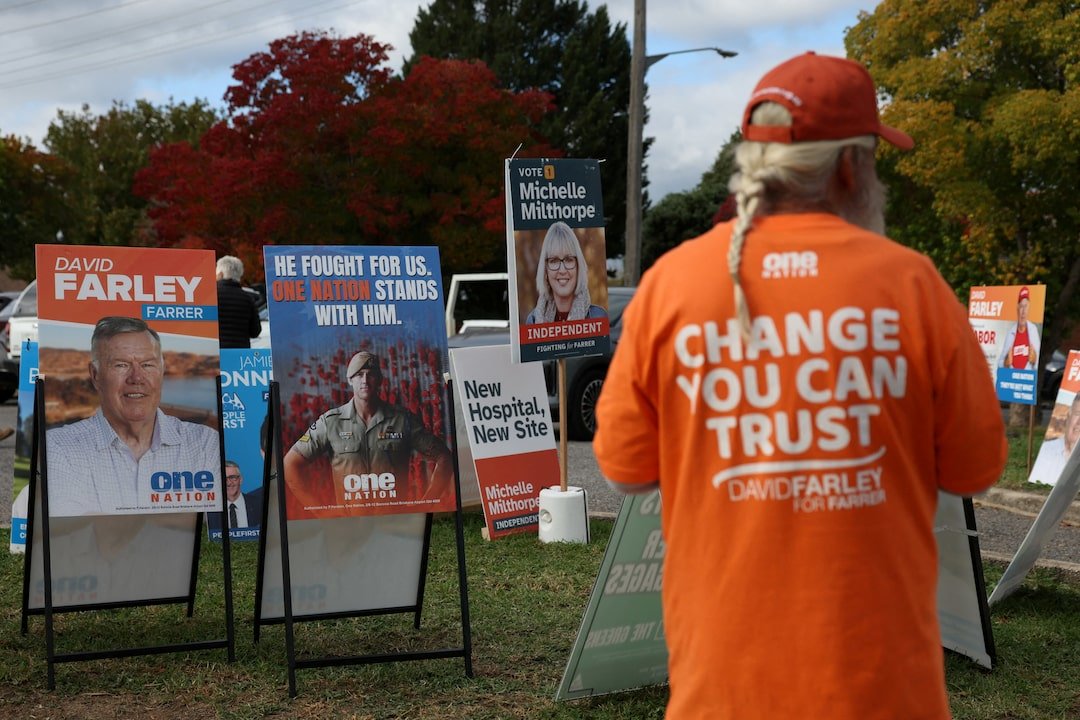
The breakthrough came in the rural New South Wales electorate of Farrer, where One Nation candidate David Farley won a by-election that had been expected to remain within the broader conservative bloc.
The seat had been controlled by Liberal or Coalition-aligned conservatives for decades.
Its loss exposed a severe fragmentation of the Australian right and intensified pressure on the opposition Coalition after months of internal instability and declining support.
One Nation, founded by Pauline Hanson in nineteen ninety-seven, built its identity around opposition to high immigration, skepticism toward multiculturalism, attacks on political elites, and resistance to climate-transition policies.
For years the party influenced national debate through Senate representation and media visibility but failed to establish a durable lower-house presence.
The Farrer result changes that.
The victory was not driven by a sudden ideological realignment alone.
It emerged from a convergence of economic anxiety, voter anger toward major parties, regional dissatisfaction, and the collapse of confidence in Australia’s traditional conservative opposition.
Farley campaigned heavily on reducing migration, ending net-zero emissions policies, lowering energy costs, and defending regional industries.
Hanson framed the result as a mandate to fight what she called “mass migration,” language that deliberately mirrors the rhetoric used by Donald Trump and several European nationalist parties.
Immigration has become increasingly politically sensitive in Australia as housing costs, rental shortages, infrastructure pressure, and cost-of-living stress intensified after rapid post-pandemic population growth.
Nearly half of Australia’s population is either foreign-born or has at least one parent born overseas, making immigration one of the country’s most economically important and socially charged issues.
The core political mechanism behind One Nation’s rise is not simply anti-immigration sentiment.
It is the growing perception among many regional and outer-suburban voters that major parties no longer represent their economic interests or cultural priorities.
That dynamic was visible throughout the Farrer campaign.
Voters cited electricity prices, healthcare access, water policy, agricultural pressure, and distrust of federal institutions as central concerns.
One Nation connected those frustrations into a broader populist argument: that urban political elites were imposing economic and cultural changes on communities already under strain.
The by-election was triggered after former Liberal leader Sussan Ley vacated the seat.
Instead of consolidating support, the conservative Coalition fragmented.
Liberal and National Party divisions weakened the traditional right-of-center vote, while Labor chose not to contest the seat, creating conditions that amplified protest voting and preference flows.
Preliminary counting showed One Nation capturing roughly forty percent of the primary vote, an extraordinary result in a seat where the party had historically polled in single digits.
Preference allocations then pushed Farley comfortably across the line.
The result immediately intensified ideological conflict inside the conservative Coalition.
Some conservatives argued the defeat proved the party had drifted too far toward centrist climate and migration policies.
Others warned that copying One Nation would legitimize hardline nationalism while further weakening mainstream conservatism.
Several conservative figures interpreted the by-election as a direct rejection of net-zero climate targets.
One Nation has aggressively attacked renewable energy expansion, arguing it raises electricity prices and damages regional economies.
The party has linked energy policy directly to household financial stress and industrial competitiveness.
The broader political significance extends beyond one electorate.
One Nation already increased its Senate representation in the last federal election and has expanded support in several regional areas.
The lower-house breakthrough now gives the party greater visibility, stronger institutional legitimacy, and direct participation in parliamentary debates traditionally dominated by Labor and the Coalition.
The win also reflects wider international political trends.
Across multiple Western democracies, populist nationalist parties have gained support by combining migration restriction, economic protectionism, cultural grievance politics, and anti-establishment messaging.
One Nation’s rhetoric increasingly mirrors those movements, including open admiration for Trump-style border and deportation policies.
At the same time, Australia’s political environment differs significantly from Europe and the United States.
Australia maintains strict border controls, relatively low levels of illegal migration compared with several Western countries, and compulsory voting.
Much of the current debate centers not on unauthorized arrivals but on the scale of legal migration and its impact on housing, wages, infrastructure, and public services.
Critics argue One Nation exploits economic pressure to inflame division and racial resentment.
Hanson has repeatedly generated controversy over comments about Islam, immigration, and multiculturalism.
Opponents accuse the party of simplifying complex structural problems into identity-based political conflict.
Supporters counter that establishment parties ignored legitimate concerns over housing affordability, regional decline, and rapid demographic change.
In several regional areas, One Nation increasingly attracts voters who previously supported either the Nationals or the Liberals but now view both parties as disconnected from local realities.
There are also questions about One Nation’s long-term durability.
The party has historically suffered from internal disputes, defections, and organizational instability after electoral gains.
Several previous One Nation parliamentarians left the party or became independents after entering office.
David Farley himself has a politically mixed background and has previously held positions that do not align perfectly with Hanson’s harder rhetoric.
But even if internal tensions eventually emerge, the immediate political damage to the Coalition is already substantial.
The result demonstrated that One Nation can now directly capture conservative lower-house seats rather than merely pressure mainstream parties from the Senate crossbench.
Labor is not under immediate parliamentary threat from the outcome, but the rise of nationalist populism creates strategic pressure around migration, housing supply, energy costs, and regional investment.
The government now faces a more volatile political environment in which economic dissatisfaction can rapidly translate into anti-establishment voting.
Hanson responded to the victory by declaring that One Nation would aggressively target additional regional and outer-suburban electorates ahead of future state and federal elections.
After decades on the political fringe, the party has entered a new phase: not simply influencing Australian politics from the outside, but competing to reshape the country’s conservative opposition from within.
The breakthrough came in the rural New South Wales electorate of Farrer, where One Nation candidate David Farley won a by-election that had been expected to remain within the broader conservative bloc.
The seat had been controlled by Liberal or Coalition-aligned conservatives for decades.
Its loss exposed a severe fragmentation of the Australian right and intensified pressure on the opposition Coalition after months of internal instability and declining support.
One Nation, founded by Pauline Hanson in nineteen ninety-seven, built its identity around opposition to high immigration, skepticism toward multiculturalism, attacks on political elites, and resistance to climate-transition policies.
For years the party influenced national debate through Senate representation and media visibility but failed to establish a durable lower-house presence.
The Farrer result changes that.
The victory was not driven by a sudden ideological realignment alone.
It emerged from a convergence of economic anxiety, voter anger toward major parties, regional dissatisfaction, and the collapse of confidence in Australia’s traditional conservative opposition.
Farley campaigned heavily on reducing migration, ending net-zero emissions policies, lowering energy costs, and defending regional industries.
Hanson framed the result as a mandate to fight what she called “mass migration,” language that deliberately mirrors the rhetoric used by Donald Trump and several European nationalist parties.
Immigration has become increasingly politically sensitive in Australia as housing costs, rental shortages, infrastructure pressure, and cost-of-living stress intensified after rapid post-pandemic population growth.
Nearly half of Australia’s population is either foreign-born or has at least one parent born overseas, making immigration one of the country’s most economically important and socially charged issues.
The core political mechanism behind One Nation’s rise is not simply anti-immigration sentiment.
It is the growing perception among many regional and outer-suburban voters that major parties no longer represent their economic interests or cultural priorities.
That dynamic was visible throughout the Farrer campaign.
Voters cited electricity prices, healthcare access, water policy, agricultural pressure, and distrust of federal institutions as central concerns.
One Nation connected those frustrations into a broader populist argument: that urban political elites were imposing economic and cultural changes on communities already under strain.
The by-election was triggered after former Liberal leader Sussan Ley vacated the seat.
Instead of consolidating support, the conservative Coalition fragmented.
Liberal and National Party divisions weakened the traditional right-of-center vote, while Labor chose not to contest the seat, creating conditions that amplified protest voting and preference flows.
Preliminary counting showed One Nation capturing roughly forty percent of the primary vote, an extraordinary result in a seat where the party had historically polled in single digits.
Preference allocations then pushed Farley comfortably across the line.
The result immediately intensified ideological conflict inside the conservative Coalition.
Some conservatives argued the defeat proved the party had drifted too far toward centrist climate and migration policies.
Others warned that copying One Nation would legitimize hardline nationalism while further weakening mainstream conservatism.
Several conservative figures interpreted the by-election as a direct rejection of net-zero climate targets.
One Nation has aggressively attacked renewable energy expansion, arguing it raises electricity prices and damages regional economies.
The party has linked energy policy directly to household financial stress and industrial competitiveness.
The broader political significance extends beyond one electorate.
One Nation already increased its Senate representation in the last federal election and has expanded support in several regional areas.
The lower-house breakthrough now gives the party greater visibility, stronger institutional legitimacy, and direct participation in parliamentary debates traditionally dominated by Labor and the Coalition.
The win also reflects wider international political trends.
Across multiple Western democracies, populist nationalist parties have gained support by combining migration restriction, economic protectionism, cultural grievance politics, and anti-establishment messaging.
One Nation’s rhetoric increasingly mirrors those movements, including open admiration for Trump-style border and deportation policies.
At the same time, Australia’s political environment differs significantly from Europe and the United States.
Australia maintains strict border controls, relatively low levels of illegal migration compared with several Western countries, and compulsory voting.
Much of the current debate centers not on unauthorized arrivals but on the scale of legal migration and its impact on housing, wages, infrastructure, and public services.
Critics argue One Nation exploits economic pressure to inflame division and racial resentment.
Hanson has repeatedly generated controversy over comments about Islam, immigration, and multiculturalism.
Opponents accuse the party of simplifying complex structural problems into identity-based political conflict.
Supporters counter that establishment parties ignored legitimate concerns over housing affordability, regional decline, and rapid demographic change.
In several regional areas, One Nation increasingly attracts voters who previously supported either the Nationals or the Liberals but now view both parties as disconnected from local realities.
There are also questions about One Nation’s long-term durability.
The party has historically suffered from internal disputes, defections, and organizational instability after electoral gains.
Several previous One Nation parliamentarians left the party or became independents after entering office.
David Farley himself has a politically mixed background and has previously held positions that do not align perfectly with Hanson’s harder rhetoric.
But even if internal tensions eventually emerge, the immediate political damage to the Coalition is already substantial.
The result demonstrated that One Nation can now directly capture conservative lower-house seats rather than merely pressure mainstream parties from the Senate crossbench.
Labor is not under immediate parliamentary threat from the outcome, but the rise of nationalist populism creates strategic pressure around migration, housing supply, energy costs, and regional investment.
The government now faces a more volatile political environment in which economic dissatisfaction can rapidly translate into anti-establishment voting.
Hanson responded to the victory by declaring that One Nation would aggressively target additional regional and outer-suburban electorates ahead of future state and federal elections.
After decades on the political fringe, the party has entered a new phase: not simply influencing Australian politics from the outside, but competing to reshape the country’s conservative opposition from within.
AI Disclaimer: An advanced artificial intelligence (AI) system generated the content of this page on its own. This innovative technology conducts extensive research from a variety of reliable sources, performs rigorous fact-checking and verification, cleans up and balances biased or manipulated content, and presents a minimal factual summary that is just enough yet essential for you to function as an informed and educated citizen. Please keep in mind, however, that this system is an evolving technology, and as a result, the article may contain accidental inaccuracies or errors. We urge you to help us improve our site by reporting any inaccuracies you find using the "Contact Us" link at the bottom of this page. Your helpful feedback helps us improve our system and deliver more precise content. When you find an article of interest here, please look for the full and extensive coverage of this topic in traditional news sources, as they are written by professional journalists that we try to support, not replace. We appreciate your understanding and assistance.