Australia Turns to Chinese Jet Fuel Supplies as Middle East Conflict Disrupts Global Aviation Markets
Emergency fuel sourcing from China exposes Australia’s deep aviation supply vulnerabilities as war-driven shipping risks tighten Asia-Pacific energy flows.
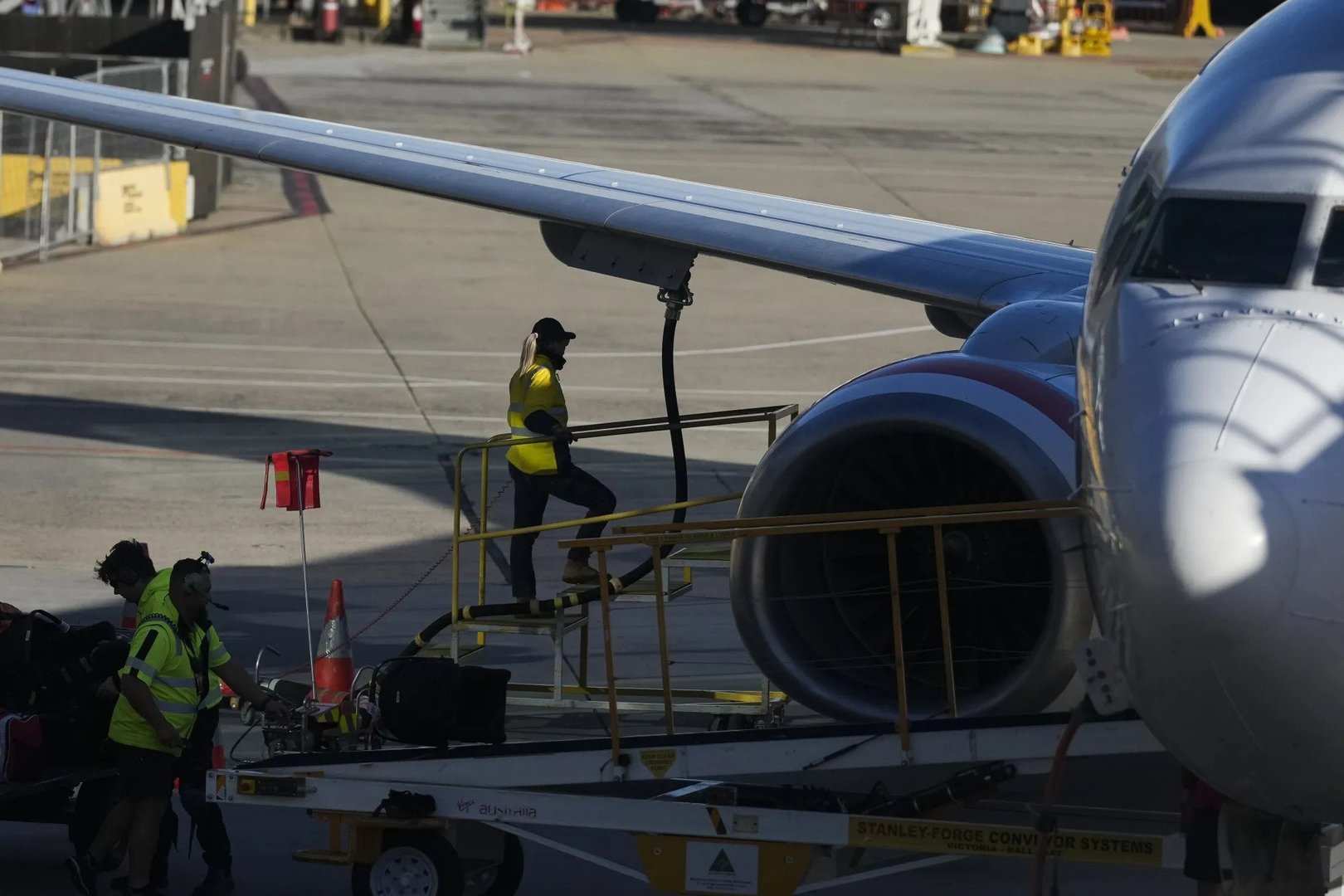
Australia has begun securing additional jet fuel supplies from China after escalating conflict in the Middle East disrupted shipping routes, tightened refinery markets and intensified pressure on global aviation fuel supply chains.
The story is fundamentally system-driven.
Australia’s aviation sector operates with limited domestic refining capacity, low strategic fuel reserves and heavy dependence on imported petroleum products.
The current disruption did not create those vulnerabilities.
It exposed them.
What is confirmed is that Australian fuel importers and aviation supply operators have increased purchases from Chinese refiners as global markets react to rising geopolitical instability affecting oil transport corridors and refined fuel availability.
The shift follows heightened concerns over maritime security near critical energy routes linked to the Gulf region.
Jet fuel markets are highly sensitive to shipping disruptions because aviation fuel requires specialized refining and tightly managed logistics.
Even small interruptions in tanker movement can rapidly affect regional availability and pricing.
Australia imports the majority of its refined fuel products, including aviation fuel, making it especially exposed to external shocks.
The latest strain emerged as military conflict and security threats in the Middle East increased insurance costs, freight expenses and voyage risks for tankers moving through strategic maritime chokepoints.
Traders responded by redirecting cargoes, repricing contracts and seeking alternative supply hubs across Asia.
China became a practical source because it possesses large refining capacity, export infrastructure and the ability to release additional aviation fuel cargoes into regional markets.
Chinese refiners have expanded exports in recent years after Beijing increased fuel export quotas to support industrial output and refinery utilization.
The development carries political and strategic implications beyond energy logistics.
Australia has spent years reducing economic dependence on China in sensitive sectors while simultaneously strengthening security ties with the United States and regional allies.
Yet the fuel market illustrates a difficult reality: supply chains remain deeply interconnected even during periods of geopolitical rivalry.
The key issue is resilience rather than diplomacy alone.
Australia closed multiple domestic oil refineries over the past two decades because imported refined fuels became cheaper than local production.
That economic logic improved efficiency during stable periods but reduced national redundancy during crises.
Australia now operates only a small number of domestic refineries capable of producing transport fuels at scale.
The country maintains fuel security obligations under international energy agreements, but experts and parliamentary reviews have repeatedly warned that Australia’s commercial stockholding model leaves limited buffer capacity during prolonged disruptions.
The aviation sector is particularly exposed because airlines depend on continuous high-volume fuel access with minimal interruption tolerance.
Airports cannot easily substitute alternative fuels at scale, and aviation supply chains function on tight delivery schedules.
Rising fuel costs immediately affect airline operating margins, ticket pricing and freight economics.
The current situation also reflects a broader transformation in global energy trade.
Asian refining centers increasingly dominate petroleum product flows as Europe restructures imports after sanctions on Russian energy and Middle Eastern instability reshapes shipping risk calculations.
Fuel markets have become more fragmented, more politically sensitive and more expensive to insure.
Australian authorities have previously introduced fuel security packages, minimum stockholding measures and refinery support mechanisms designed to prevent further domestic refining closures.
But the current disruption is testing whether those measures provide meaningful protection during simultaneous geopolitical and commercial stress.
Industry participants are now monitoring whether the shift toward Chinese jet fuel imports remains temporary or develops into a longer-term commercial adjustment.
If instability in key oil transit corridors persists, Asian regional suppliers could gain larger influence over Australian aviation fuel security.
There is also growing concern about concentration risk.
Reliance on a narrower group of overseas suppliers can create exposure not only to war or shipping disruption but also to diplomatic tensions, export controls or domestic policy shifts inside supplier countries.
For airlines and consumers, the immediate impact is likely to emerge through fuel surcharges, higher operating costs and tighter commercial margins rather than outright shortages.
Aviation fuel remains available, but the cost and complexity of securing it have increased sharply.
The episode underscores a broader strategic lesson now confronting many developed economies: energy security is no longer defined only by access to crude oil.
It increasingly depends on refining capacity, shipping resilience, regional logistics and the political reliability of international supply networks.
Australia’s turn toward Chinese jet fuel supplies during a period of geopolitical tension demonstrates how quickly market necessity can override strategic preference when critical infrastructure depends on uninterrupted global trade.
The story is fundamentally system-driven.
Australia’s aviation sector operates with limited domestic refining capacity, low strategic fuel reserves and heavy dependence on imported petroleum products.
The current disruption did not create those vulnerabilities.
It exposed them.
What is confirmed is that Australian fuel importers and aviation supply operators have increased purchases from Chinese refiners as global markets react to rising geopolitical instability affecting oil transport corridors and refined fuel availability.
The shift follows heightened concerns over maritime security near critical energy routes linked to the Gulf region.
Jet fuel markets are highly sensitive to shipping disruptions because aviation fuel requires specialized refining and tightly managed logistics.
Even small interruptions in tanker movement can rapidly affect regional availability and pricing.
Australia imports the majority of its refined fuel products, including aviation fuel, making it especially exposed to external shocks.
The latest strain emerged as military conflict and security threats in the Middle East increased insurance costs, freight expenses and voyage risks for tankers moving through strategic maritime chokepoints.
Traders responded by redirecting cargoes, repricing contracts and seeking alternative supply hubs across Asia.
China became a practical source because it possesses large refining capacity, export infrastructure and the ability to release additional aviation fuel cargoes into regional markets.
Chinese refiners have expanded exports in recent years after Beijing increased fuel export quotas to support industrial output and refinery utilization.
The development carries political and strategic implications beyond energy logistics.
Australia has spent years reducing economic dependence on China in sensitive sectors while simultaneously strengthening security ties with the United States and regional allies.
Yet the fuel market illustrates a difficult reality: supply chains remain deeply interconnected even during periods of geopolitical rivalry.
The key issue is resilience rather than diplomacy alone.
Australia closed multiple domestic oil refineries over the past two decades because imported refined fuels became cheaper than local production.
That economic logic improved efficiency during stable periods but reduced national redundancy during crises.
Australia now operates only a small number of domestic refineries capable of producing transport fuels at scale.
The country maintains fuel security obligations under international energy agreements, but experts and parliamentary reviews have repeatedly warned that Australia’s commercial stockholding model leaves limited buffer capacity during prolonged disruptions.
The aviation sector is particularly exposed because airlines depend on continuous high-volume fuel access with minimal interruption tolerance.
Airports cannot easily substitute alternative fuels at scale, and aviation supply chains function on tight delivery schedules.
Rising fuel costs immediately affect airline operating margins, ticket pricing and freight economics.
The current situation also reflects a broader transformation in global energy trade.
Asian refining centers increasingly dominate petroleum product flows as Europe restructures imports after sanctions on Russian energy and Middle Eastern instability reshapes shipping risk calculations.
Fuel markets have become more fragmented, more politically sensitive and more expensive to insure.
Australian authorities have previously introduced fuel security packages, minimum stockholding measures and refinery support mechanisms designed to prevent further domestic refining closures.
But the current disruption is testing whether those measures provide meaningful protection during simultaneous geopolitical and commercial stress.
Industry participants are now monitoring whether the shift toward Chinese jet fuel imports remains temporary or develops into a longer-term commercial adjustment.
If instability in key oil transit corridors persists, Asian regional suppliers could gain larger influence over Australian aviation fuel security.
There is also growing concern about concentration risk.
Reliance on a narrower group of overseas suppliers can create exposure not only to war or shipping disruption but also to diplomatic tensions, export controls or domestic policy shifts inside supplier countries.
For airlines and consumers, the immediate impact is likely to emerge through fuel surcharges, higher operating costs and tighter commercial margins rather than outright shortages.
Aviation fuel remains available, but the cost and complexity of securing it have increased sharply.
The episode underscores a broader strategic lesson now confronting many developed economies: energy security is no longer defined only by access to crude oil.
It increasingly depends on refining capacity, shipping resilience, regional logistics and the political reliability of international supply networks.
Australia’s turn toward Chinese jet fuel supplies during a period of geopolitical tension demonstrates how quickly market necessity can override strategic preference when critical infrastructure depends on uninterrupted global trade.
AI Disclaimer: An advanced artificial intelligence (AI) system generated the content of this page on its own. This innovative technology conducts extensive research from a variety of reliable sources, performs rigorous fact-checking and verification, cleans up and balances biased or manipulated content, and presents a minimal factual summary that is just enough yet essential for you to function as an informed and educated citizen. Please keep in mind, however, that this system is an evolving technology, and as a result, the article may contain accidental inaccuracies or errors. We urge you to help us improve our site by reporting any inaccuracies you find using the "Contact Us" link at the bottom of this page. Your helpful feedback helps us improve our system and deliver more precise content. When you find an article of interest here, please look for the full and extensive coverage of this topic in traditional news sources, as they are written by professional journalists that we try to support, not replace. We appreciate your understanding and assistance.