0:00
0:00
War-Driven Oil Shock Could Push Australian Prices Up by Five Percent, With Mining Sector Offering Key Buffer
Rising energy costs from global conflict threaten inflation surge, but Australia’s resource exports may help stabilise the economy
A prolonged international conflict disrupting global energy supplies could drive Australian consumer prices up by as much as five percent, according to emerging economic assessments, as surging oil costs ripple through the economy.
Treasury modelling indicates that a sustained rise in oil prices—potentially reaching one hundred and twenty dollars per barrel—would significantly lift inflation, with fuel, transport and food costs among the most immediately affected.
The economic impact is already being felt, with inflation sitting above target levels and expected to climb further if disruptions persist.
The primary transmission channel is energy.
Australia, while a major exporter of raw materials, remains heavily exposed to global oil markets.
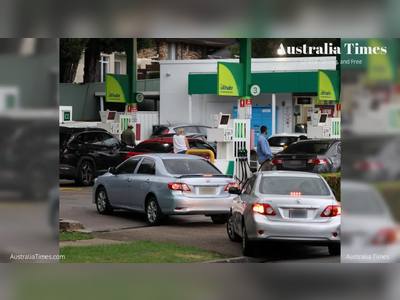
Sharp increases in fuel prices are raising costs across supply chains, affecting everything from freight to agriculture and manufacturing.
Analysts warn that these pressures could slow growth, reduce household purchasing power and increase the likelihood of further interest rate rises.
Recent projections suggest inflation could approach or exceed five percent under a prolonged conflict scenario, representing a significant escalation from current levels near three to four percent.
This would mark a renewed squeeze on households already managing elevated living costs.
Despite these risks, one sector is expected to provide a crucial degree of protection: Australia’s resources and mining industry.
As global energy and commodity prices rise, export revenues from coal, iron ore and liquefied natural gas tend to increase, strengthening national income and government revenues.
This dynamic acts as a partial buffer against external shocks.
Higher export earnings can offset some domestic weakness by supporting the currency, sustaining employment in key industries, and underpinning fiscal capacity.
Energy and commodity producers have already shown resilience in market movements, benefiting from elevated global prices even as other sectors face pressure.
However, the protection is uneven.
Industries reliant on fuel-intensive operations—such as transport, aviation and manufacturing—remain vulnerable to rising costs, while small businesses with limited financial buffers face heightened insolvency risks.
Policymakers are therefore balancing competing pressures: containing inflation without undermining economic stability.
Measures under consideration focus on securing fuel supply chains and maintaining economic resilience rather than broad tax cuts, which economists warn could worsen shortages and inflation.
The overall outlook suggests that while Australia cannot fully escape the inflationary effects of global conflict, its resource-driven economic structure provides a significant, though incomplete, shield against the most severe impacts.
Treasury modelling indicates that a sustained rise in oil prices—potentially reaching one hundred and twenty dollars per barrel—would significantly lift inflation, with fuel, transport and food costs among the most immediately affected.
The economic impact is already being felt, with inflation sitting above target levels and expected to climb further if disruptions persist.
The primary transmission channel is energy.
Australia, while a major exporter of raw materials, remains heavily exposed to global oil markets.
Sharp increases in fuel prices are raising costs across supply chains, affecting everything from freight to agriculture and manufacturing.
Analysts warn that these pressures could slow growth, reduce household purchasing power and increase the likelihood of further interest rate rises.
Recent projections suggest inflation could approach or exceed five percent under a prolonged conflict scenario, representing a significant escalation from current levels near three to four percent.
This would mark a renewed squeeze on households already managing elevated living costs.
Despite these risks, one sector is expected to provide a crucial degree of protection: Australia’s resources and mining industry.
As global energy and commodity prices rise, export revenues from coal, iron ore and liquefied natural gas tend to increase, strengthening national income and government revenues.
This dynamic acts as a partial buffer against external shocks.
Higher export earnings can offset some domestic weakness by supporting the currency, sustaining employment in key industries, and underpinning fiscal capacity.
Energy and commodity producers have already shown resilience in market movements, benefiting from elevated global prices even as other sectors face pressure.
However, the protection is uneven.
Industries reliant on fuel-intensive operations—such as transport, aviation and manufacturing—remain vulnerable to rising costs, while small businesses with limited financial buffers face heightened insolvency risks.
Policymakers are therefore balancing competing pressures: containing inflation without undermining economic stability.
Measures under consideration focus on securing fuel supply chains and maintaining economic resilience rather than broad tax cuts, which economists warn could worsen shortages and inflation.
The overall outlook suggests that while Australia cannot fully escape the inflationary effects of global conflict, its resource-driven economic structure provides a significant, though incomplete, shield against the most severe impacts.
AI Disclaimer: An advanced artificial intelligence (AI) system generated the content of this page on its own. This innovative technology conducts extensive research from a variety of reliable sources, performs rigorous fact-checking and verification, cleans up and balances biased or manipulated content, and presents a minimal factual summary that is just enough yet essential for you to function as an informed and educated citizen. Please keep in mind, however, that this system is an evolving technology, and as a result, the article may contain accidental inaccuracies or errors. We urge you to help us improve our site by reporting any inaccuracies you find using the "Contact Us" link at the bottom of this page. Your helpful feedback helps us improve our system and deliver more precise content. When you find an article of interest here, please look for the full and extensive coverage of this topic in traditional news sources, as they are written by professional journalists that we try to support, not replace. We appreciate your understanding and assistance.