Australia Declares Under-16 Social Media Ban a Global Precedent as Platforms Begin Enforcement
With December 10 enforcement looming, Australia’s eSafety regulator calls the move ‘first domino’ in worldwide push for youth online safety.
Australia has begun implementing its world-first law banning social media use by under-16s — a measure its chief regulator says could lead a global shift in digital-platform regulation.
As of early December, major firms including Meta have already started deactivating or freezing accounts belonging to users aged 13 to 15, even ahead of the law’s full enforcement date.
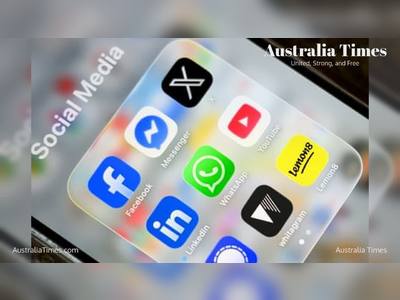
The measure is grounded in the 2024 Online Safety Amendment (Social Media Minimum Age) Act 2024, which bars children under 16 from holding accounts on prominent platforms such as Facebook, Instagram, TikTok, Snapchat, X, YouTube and others.
Platforms that fail to comply face fines of up to A$50 million.
eSafety Commissioner Julie Inman Grant has defended the ban as essential to protect youth mental health and shield children from the persuasive design practices that fuel online harm.
She described the reform as the “first domino” in a wider global effort to hold Big Tech accountable for children’s exposure to social media risks.
Major platforms appear to be cooperating.
Meta, whose services include Facebook, Instagram and Threads, has reportedly closed about half a million under-16 accounts and begun blocking further registrations for that age group.
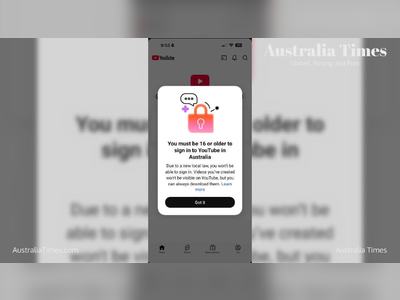
YouTube stated it will automatically log under-16 users out as of the ban’s activation, restricting access to community features, uploads and personalised content — though children will still be able to view public videos.
But not everyone agrees with the blanket approach.
A 15-year-old teenager, supported by advocacy group Digital Freedom Project, has lodged a High Court challenge arguing the ban infringes teenagers’ implied constitutional right to political communication and risks undermining their ability to participate in online communities.
Opponents say the ban could push young people into unregulated or secretive corners of the internet, where they may be less safe.
As the law takes effect, the world is watching whether Australia’s bold experiment will curb youth exposure to digital harm — or accelerate migration to less visible, potentially riskier online spaces.
The coming months will test whether the legislation achieves its aim of protecting children or simply reshapes their online landscape in unpredictable ways.
As of early December, major firms including Meta have already started deactivating or freezing accounts belonging to users aged 13 to 15, even ahead of the law’s full enforcement date.
The measure is grounded in the 2024 Online Safety Amendment (Social Media Minimum Age) Act 2024, which bars children under 16 from holding accounts on prominent platforms such as Facebook, Instagram, TikTok, Snapchat, X, YouTube and others.
Platforms that fail to comply face fines of up to A$50 million.
eSafety Commissioner Julie Inman Grant has defended the ban as essential to protect youth mental health and shield children from the persuasive design practices that fuel online harm.
She described the reform as the “first domino” in a wider global effort to hold Big Tech accountable for children’s exposure to social media risks.
Major platforms appear to be cooperating.
Meta, whose services include Facebook, Instagram and Threads, has reportedly closed about half a million under-16 accounts and begun blocking further registrations for that age group.
YouTube stated it will automatically log under-16 users out as of the ban’s activation, restricting access to community features, uploads and personalised content — though children will still be able to view public videos.
But not everyone agrees with the blanket approach.
A 15-year-old teenager, supported by advocacy group Digital Freedom Project, has lodged a High Court challenge arguing the ban infringes teenagers’ implied constitutional right to political communication and risks undermining their ability to participate in online communities.
Opponents say the ban could push young people into unregulated or secretive corners of the internet, where they may be less safe.
As the law takes effect, the world is watching whether Australia’s bold experiment will curb youth exposure to digital harm — or accelerate migration to less visible, potentially riskier online spaces.
The coming months will test whether the legislation achieves its aim of protecting children or simply reshapes their online landscape in unpredictable ways.
AI Disclaimer: An advanced artificial intelligence (AI) system generated the content of this page on its own. This innovative technology conducts extensive research from a variety of reliable sources, performs rigorous fact-checking and verification, cleans up and balances biased or manipulated content, and presents a minimal factual summary that is just enough yet essential for you to function as an informed and educated citizen. Please keep in mind, however, that this system is an evolving technology, and as a result, the article may contain accidental inaccuracies or errors. We urge you to help us improve our site by reporting any inaccuracies you find using the "Contact Us" link at the bottom of this page. Your helpful feedback helps us improve our system and deliver more precise content. When you find an article of interest here, please look for the full and extensive coverage of this topic in traditional news sources, as they are written by professional journalists that we try to support, not replace. We appreciate your understanding and assistance.