Australia’s EV Boom Is Exposing the Weakest Link in the Transition: Public Charging
Longer-range electric vehicles and surging sales are easing range anxiety, but Australia’s charging network is struggling to match the speed, reliability and convenience drivers now expect.
Australia’s electric vehicle transition is increasingly being driven by infrastructure rather than by the cars themselves.
Battery range has improved rapidly, prices have started to fall in key segments, and new models from Chinese, American and European manufacturers are arriving at a pace the market has not seen before.
The pressure point has shifted to public charging networks, where demand growth is now exposing bottlenecks in reliability, coverage and user experience.
The immediate trigger is a sharp acceleration in EV adoption during 2026. New vehicle sales data shows electric vehicle demand climbing strongly, helped by high petrol prices, broader model availability and growing consumer confidence in battery technology.
Some newly available EVs in Australia now advertise driving ranges above seven hundred kilometres under laboratory testing standards, a figure that would have been exceptional only a few years ago.
That improvement has materially changed consumer psychology.
The dominant fear is no longer whether an EV can physically travel long distances.
It is whether drivers can charge conveniently when they need to.
That distinction matters because most EV charging in Australia still happens at home.
Industry estimates place the figure around eighty percent or higher.
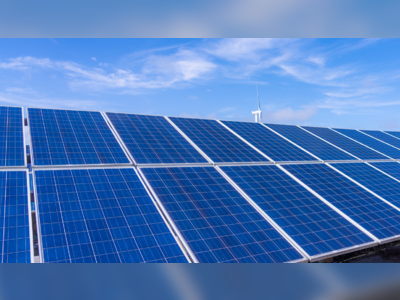
Owners with garages, solar panels and off-peak electricity tariffs often report dramatically lower running costs than petrol vehicles.
For suburban homeowners, the economics increasingly make sense.
The challenge is different for apartment residents, renters, regional travellers and holiday traffic moving along major highways during peak periods.
Public charging infrastructure has expanded quickly, but not evenly.
Fast-charging sites increased substantially during the past year, and ultra-rapid chargers capable of adding hundreds of kilometres of range in minutes are becoming more common along major transport corridors.
Federal and state governments have also accelerated investment programs aimed at reducing gaps between cities and regional centres.
Australia’s national EV strategy includes plans to improve highway charger spacing and support regional coverage.
What is emerging, however, is a second-stage infrastructure problem.
Early EV adoption mainly involved highly motivated owners willing to tolerate inconvenience, plan routes carefully and use multiple charging apps.
The new wave of buyers behaves differently.
Mainstream drivers expect charging to work with the same simplicity and reliability as refuelling a conventional car.
When chargers are occupied, offline, blocked by petrol vehicles or operating below advertised speeds, frustration escalates quickly.
That frustration has produced what some drivers now describe as “charger rage” — disputes over queues, charging etiquette and charger availability during busy travel periods.
Long weekends and holiday routes have become stress tests for the system.
Drivers report arriving at stations with multiple cars waiting, chargers running at reduced output or apps displaying inaccurate availability information.
In some cases, charging bays have been occupied by vehicles not actively charging.
The issue is not merely the number of chargers.
Reliability and integration are becoming equally important.
Australia’s charging ecosystem remains fragmented across competing operators, payment systems and software platforms.
Drivers often need multiple apps, memberships or account setups depending on location.
Different charging speeds, connector standards and pricing structures add further complexity.
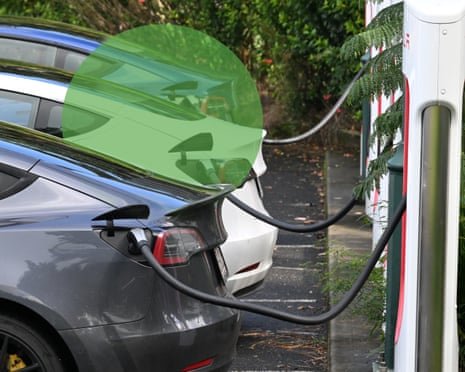
Tesla’s charging ecosystem continues to stand out largely because it minimizes those friction points.
The company’s integrated navigation, charger routing and payment systems are widely viewed as more seamless than much of the broader public network.
Competing providers are now under pressure to improve uptime, simplify payments and standardize user experience as EV ownership moves into the mass market.
The economics of charging are also creating a divide between home and public users.
Charging at home remains significantly cheaper than relying on public fast chargers, especially during off-peak electricity periods.
Public DC fast charging can cost several times more per kilowatt-hour than residential charging.
For drivers without home charging access, that narrows some of the financial advantage traditionally associated with EV ownership.
Urban planning is becoming a critical factor.
Large sections of Australian cities were designed around detached housing and petrol refuelling patterns, not curbside charging access.
Apartment towers, older suburbs and dense inner-city areas are now confronting practical infrastructure limitations.
Governments and utilities are increasingly focusing on kerbside chargers, apartment retrofits and grid upgrades because those gaps threaten to slow broader EV adoption.
At the same time, battery technology is steadily reducing one side of the problem.
Longer-range vehicles mean many drivers need public chargers less frequently.
Several EVs now sold or scheduled for release in Australia can exceed six hundred kilometres of rated range, with some approaching or surpassing eight hundred kilometres under ideal testing conditions.
Faster charging architecture, including eight-hundred-volt systems, is also improving recharge times.
But technical capability alone does not solve network strain.
Higher EV penetration creates concentrated demand spikes during holidays, commuter peaks and regional travel seasons.
A charger occupied for an extended session can create cascading delays when sites have limited bays.
That dynamic has pushed operators toward idle fees, queue management tools and larger multi-bay charging hubs modeled more closely on modern fuel stations.
The broader significance is that Australia’s EV transition is no longer hypothetical.
The country has moved beyond the early-adopter phase into a scaling problem.
Vehicle supply is increasing.
Consumer interest is accelerating.
Charging technology is improving.
The remaining question is whether infrastructure deployment, grid integration and operational reliability can evolve fast enough to support millions of drivers rather than a relatively small enthusiast base.
That challenge is now shaping investment decisions across energy companies, utilities, property developers, retailers and governments.
Charging access is beginning to influence apartment values, commercial real estate planning and highway development strategies.
The transition is turning EV infrastructure into a core part of Australia’s transport and energy systems rather than a niche environmental project.
The next phase of competition in Australia’s EV market will therefore be defined less by headline battery range and more by something simpler: whether drivers can plug in quickly, reliably and without thinking about it.
Battery range has improved rapidly, prices have started to fall in key segments, and new models from Chinese, American and European manufacturers are arriving at a pace the market has not seen before.
The pressure point has shifted to public charging networks, where demand growth is now exposing bottlenecks in reliability, coverage and user experience.
The immediate trigger is a sharp acceleration in EV adoption during 2026. New vehicle sales data shows electric vehicle demand climbing strongly, helped by high petrol prices, broader model availability and growing consumer confidence in battery technology.
Some newly available EVs in Australia now advertise driving ranges above seven hundred kilometres under laboratory testing standards, a figure that would have been exceptional only a few years ago.
That improvement has materially changed consumer psychology.
The dominant fear is no longer whether an EV can physically travel long distances.
It is whether drivers can charge conveniently when they need to.
That distinction matters because most EV charging in Australia still happens at home.
Industry estimates place the figure around eighty percent or higher.
Owners with garages, solar panels and off-peak electricity tariffs often report dramatically lower running costs than petrol vehicles.
For suburban homeowners, the economics increasingly make sense.
The challenge is different for apartment residents, renters, regional travellers and holiday traffic moving along major highways during peak periods.
Public charging infrastructure has expanded quickly, but not evenly.
Fast-charging sites increased substantially during the past year, and ultra-rapid chargers capable of adding hundreds of kilometres of range in minutes are becoming more common along major transport corridors.
Federal and state governments have also accelerated investment programs aimed at reducing gaps between cities and regional centres.
Australia’s national EV strategy includes plans to improve highway charger spacing and support regional coverage.
What is emerging, however, is a second-stage infrastructure problem.
Early EV adoption mainly involved highly motivated owners willing to tolerate inconvenience, plan routes carefully and use multiple charging apps.
The new wave of buyers behaves differently.
Mainstream drivers expect charging to work with the same simplicity and reliability as refuelling a conventional car.
When chargers are occupied, offline, blocked by petrol vehicles or operating below advertised speeds, frustration escalates quickly.
That frustration has produced what some drivers now describe as “charger rage” — disputes over queues, charging etiquette and charger availability during busy travel periods.
Long weekends and holiday routes have become stress tests for the system.
Drivers report arriving at stations with multiple cars waiting, chargers running at reduced output or apps displaying inaccurate availability information.
In some cases, charging bays have been occupied by vehicles not actively charging.
The issue is not merely the number of chargers.
Reliability and integration are becoming equally important.
Australia’s charging ecosystem remains fragmented across competing operators, payment systems and software platforms.
Drivers often need multiple apps, memberships or account setups depending on location.
Different charging speeds, connector standards and pricing structures add further complexity.
Tesla’s charging ecosystem continues to stand out largely because it minimizes those friction points.
The company’s integrated navigation, charger routing and payment systems are widely viewed as more seamless than much of the broader public network.
Competing providers are now under pressure to improve uptime, simplify payments and standardize user experience as EV ownership moves into the mass market.
The economics of charging are also creating a divide between home and public users.
Charging at home remains significantly cheaper than relying on public fast chargers, especially during off-peak electricity periods.
Public DC fast charging can cost several times more per kilowatt-hour than residential charging.
For drivers without home charging access, that narrows some of the financial advantage traditionally associated with EV ownership.
Urban planning is becoming a critical factor.
Large sections of Australian cities were designed around detached housing and petrol refuelling patterns, not curbside charging access.
Apartment towers, older suburbs and dense inner-city areas are now confronting practical infrastructure limitations.
Governments and utilities are increasingly focusing on kerbside chargers, apartment retrofits and grid upgrades because those gaps threaten to slow broader EV adoption.
At the same time, battery technology is steadily reducing one side of the problem.
Longer-range vehicles mean many drivers need public chargers less frequently.
Several EVs now sold or scheduled for release in Australia can exceed six hundred kilometres of rated range, with some approaching or surpassing eight hundred kilometres under ideal testing conditions.
Faster charging architecture, including eight-hundred-volt systems, is also improving recharge times.
But technical capability alone does not solve network strain.
Higher EV penetration creates concentrated demand spikes during holidays, commuter peaks and regional travel seasons.
A charger occupied for an extended session can create cascading delays when sites have limited bays.
That dynamic has pushed operators toward idle fees, queue management tools and larger multi-bay charging hubs modeled more closely on modern fuel stations.
The broader significance is that Australia’s EV transition is no longer hypothetical.
The country has moved beyond the early-adopter phase into a scaling problem.
Vehicle supply is increasing.
Consumer interest is accelerating.
Charging technology is improving.
The remaining question is whether infrastructure deployment, grid integration and operational reliability can evolve fast enough to support millions of drivers rather than a relatively small enthusiast base.
That challenge is now shaping investment decisions across energy companies, utilities, property developers, retailers and governments.
Charging access is beginning to influence apartment values, commercial real estate planning and highway development strategies.
The transition is turning EV infrastructure into a core part of Australia’s transport and energy systems rather than a niche environmental project.
The next phase of competition in Australia’s EV market will therefore be defined less by headline battery range and more by something simpler: whether drivers can plug in quickly, reliably and without thinking about it.
AI Disclaimer: An advanced artificial intelligence (AI) system generated the content of this page on its own. This innovative technology conducts extensive research from a variety of reliable sources, performs rigorous fact-checking and verification, cleans up and balances biased or manipulated content, and presents a minimal factual summary that is just enough yet essential for you to function as an informed and educated citizen. Please keep in mind, however, that this system is an evolving technology, and as a result, the article may contain accidental inaccuracies or errors. We urge you to help us improve our site by reporting any inaccuracies you find using the "Contact Us" link at the bottom of this page. Your helpful feedback helps us improve our system and deliver more precise content. When you find an article of interest here, please look for the full and extensive coverage of this topic in traditional news sources, as they are written by professional journalists that we try to support, not replace. We appreciate your understanding and assistance.