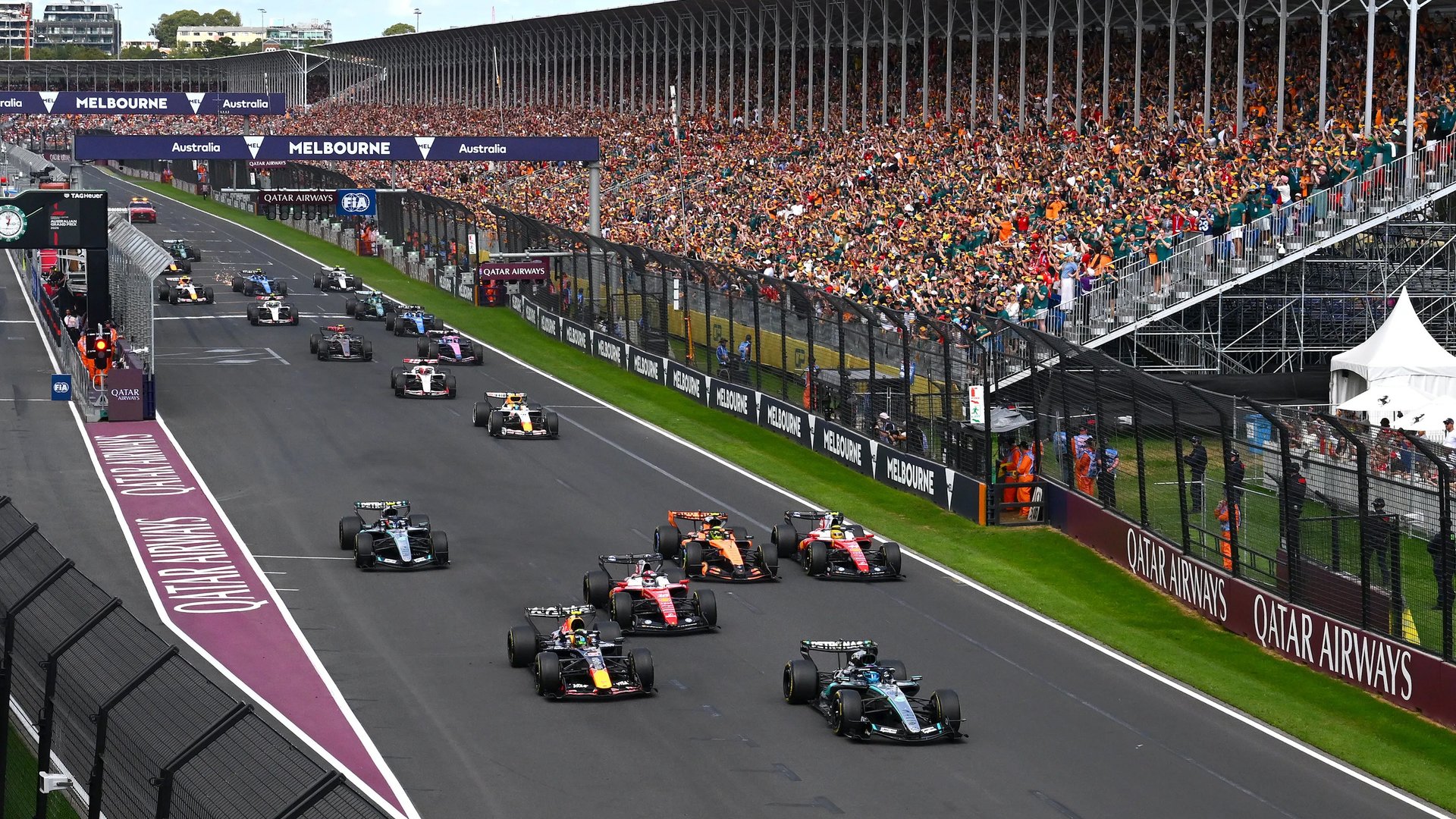
The Australian Grand Prix Became Formula One’s Strategic Showcase
Melbourne’s race is no longer just a popular season opener. It has evolved into a commercial, political and sporting centerpiece for Formula One’s global expansion strategy.
Formula One’s Australian Grand Prix occupies a position in global motorsport that extends far beyond a single race weekend.
The event has become one of the sport’s most important commercial showcases, a test bed for fan engagement strategies and a major economic and political asset for Melbourne and the state of Victoria.
The reason the race matters is structural rather than sentimental.
Formula One relies on a small number of destination events that combine television spectacle, strong attendance, corporate hospitality and city branding.
Melbourne consistently delivers all four.
The Australian Grand Prix has been held in Melbourne since 1996 after moving from Adelaide, where the race had already established Australia as a reliable Formula One market during the late twentieth century.
The move to Albert Park transformed the event into a hybrid street circuit built around public parkland close to the city center.
That combination gave Formula One a visually distinctive race with a skyline backdrop, lakeside scenery and strong accessibility for fans.
For years, the Australian Grand Prix was traditionally the opening race of the Formula One season.
That timing helped make the event globally prominent because it represented the first real performance test for new cars, drivers and technical changes after months of preseason speculation.
Teams unveiled upgrades, broadcasters launched new coverage packages and fans treated Melbourne as the symbolic start of the championship year.
Even after Formula One altered the calendar and shifted some season openers to the Middle East, Melbourne retained much of that prestige.
Attendance figures have continued climbing, and recent races have produced some of the largest crowds in Australian sporting history.
The event now regularly attracts well above four hundred thousand spectators across a race weekend.
The commercial transformation of Formula One under Liberty Media intensified the importance of races like Melbourne.
Modern Formula One no longer functions purely as a motorsport championship.
It operates as a global entertainment platform built around media rights, tourism, luxury branding and digital engagement.
The Australian Grand Prix fits that strategy almost perfectly.
Unlike newer races built largely around state-backed prestige projects, Melbourne offers Formula One something increasingly valuable: an event with deep local support and established sporting culture.
The city already has a strong international reputation tied to tennis, cricket, rugby and major event hosting.
Formula One benefits from that infrastructure instead of having to manufacture atmosphere from scratch.
The race also matters because of geography and time zones.
Australia gives Formula One access to Asia-Pacific audiences and sponsors at a time when the sport is trying to deepen its presence across the region.
While Formula One’s biggest commercial growth has recently come from the United States and the Middle East, executives continue treating Asia as a long-term strategic market.
Melbourne’s race weekend demonstrates how Formula One increasingly blends elite sport with urban economic policy.
The Victorian government strongly supports the event because of tourism revenue, international exposure and business activity generated by visitors.
Hotels, restaurants, airlines and entertainment sectors benefit from a race that draws large numbers of interstate and international travelers.
Critics periodically challenge the public cost of hosting Formula One, especially during periods of economic pressure.
Government support agreements involve substantial financial commitments, security costs and infrastructure spending.
Environmental activists have also criticized Formula One’s carbon footprint and questioned the sustainability of global racing calendars dependent on extensive international freight movement.
But political leaders in Victoria continue backing the event because they view it as part of a broader strategy to maintain Melbourne’s status as a global events capital.
That competition has intensified as cities worldwide bid aggressively for major sporting spectacles capable of driving tourism and international visibility.
Sporting factors also contribute to the race’s reputation.
Albert Park has evolved significantly in recent years after circuit modifications designed to improve overtaking and increase speed.
The changes produced faster lap times and more aggressive racing while preserving the track’s distinctive semi-street-circuit character.
Drivers frequently describe the event as unusually energetic because of the atmosphere surrounding the season’s early races and the intensity of Australian crowds.
The circuit combines high-speed sections with limited runoff areas, creating conditions that punish mistakes while still rewarding aggressive driving.
The Australian Grand Prix has also become intertwined with the global popularity surge generated by Formula One’s digital expansion and streaming-era storytelling.
Younger audiences increasingly consume the sport through documentaries, social media clips and personality-driven coverage rather than traditional motorsport fandom alone.
Melbourne’s visual setting, large crowds and festival-style environment translate particularly well in that ecosystem.
Australia’s growing pipeline of Formula One talent has reinforced local engagement.
Oscar Piastri’s emergence as one of the sport’s leading young drivers has deepened domestic interest and strengthened the race’s relevance in the national sporting landscape.
Australian fans now arrive with genuine expectations of competitive local representation rather than nostalgia alone.
The event’s significance ultimately comes from its ability to satisfy multiple priorities at once.
Formula One gets a globally recognizable race with strong attendance and reliable organization.
Melbourne gains tourism revenue and international exposure.
Sponsors receive a high-profile platform in a stable market.
Fans experience one of the sport’s most accessible and visually distinctive weekends.
What makes the Australian Grand Prix special is therefore not simply tradition or scenery.
It is the fact that the race has become one of the clearest examples of how modern Formula One operates: part elite sport, part entertainment industry, part geopolitical branding exercise and part economic development strategy.
The event has become one of the sport’s most important commercial showcases, a test bed for fan engagement strategies and a major economic and political asset for Melbourne and the state of Victoria.
The reason the race matters is structural rather than sentimental.
Formula One relies on a small number of destination events that combine television spectacle, strong attendance, corporate hospitality and city branding.
Melbourne consistently delivers all four.
The Australian Grand Prix has been held in Melbourne since 1996 after moving from Adelaide, where the race had already established Australia as a reliable Formula One market during the late twentieth century.
The move to Albert Park transformed the event into a hybrid street circuit built around public parkland close to the city center.
That combination gave Formula One a visually distinctive race with a skyline backdrop, lakeside scenery and strong accessibility for fans.
For years, the Australian Grand Prix was traditionally the opening race of the Formula One season.
That timing helped make the event globally prominent because it represented the first real performance test for new cars, drivers and technical changes after months of preseason speculation.
Teams unveiled upgrades, broadcasters launched new coverage packages and fans treated Melbourne as the symbolic start of the championship year.
Even after Formula One altered the calendar and shifted some season openers to the Middle East, Melbourne retained much of that prestige.
Attendance figures have continued climbing, and recent races have produced some of the largest crowds in Australian sporting history.
The event now regularly attracts well above four hundred thousand spectators across a race weekend.
The commercial transformation of Formula One under Liberty Media intensified the importance of races like Melbourne.
Modern Formula One no longer functions purely as a motorsport championship.
It operates as a global entertainment platform built around media rights, tourism, luxury branding and digital engagement.
The Australian Grand Prix fits that strategy almost perfectly.
Unlike newer races built largely around state-backed prestige projects, Melbourne offers Formula One something increasingly valuable: an event with deep local support and established sporting culture.
The city already has a strong international reputation tied to tennis, cricket, rugby and major event hosting.
Formula One benefits from that infrastructure instead of having to manufacture atmosphere from scratch.
The race also matters because of geography and time zones.
Australia gives Formula One access to Asia-Pacific audiences and sponsors at a time when the sport is trying to deepen its presence across the region.
While Formula One’s biggest commercial growth has recently come from the United States and the Middle East, executives continue treating Asia as a long-term strategic market.
Melbourne’s race weekend demonstrates how Formula One increasingly blends elite sport with urban economic policy.
The Victorian government strongly supports the event because of tourism revenue, international exposure and business activity generated by visitors.
Hotels, restaurants, airlines and entertainment sectors benefit from a race that draws large numbers of interstate and international travelers.
Critics periodically challenge the public cost of hosting Formula One, especially during periods of economic pressure.
Government support agreements involve substantial financial commitments, security costs and infrastructure spending.
Environmental activists have also criticized Formula One’s carbon footprint and questioned the sustainability of global racing calendars dependent on extensive international freight movement.
But political leaders in Victoria continue backing the event because they view it as part of a broader strategy to maintain Melbourne’s status as a global events capital.
That competition has intensified as cities worldwide bid aggressively for major sporting spectacles capable of driving tourism and international visibility.
Sporting factors also contribute to the race’s reputation.
Albert Park has evolved significantly in recent years after circuit modifications designed to improve overtaking and increase speed.
The changes produced faster lap times and more aggressive racing while preserving the track’s distinctive semi-street-circuit character.
Drivers frequently describe the event as unusually energetic because of the atmosphere surrounding the season’s early races and the intensity of Australian crowds.
The circuit combines high-speed sections with limited runoff areas, creating conditions that punish mistakes while still rewarding aggressive driving.
The Australian Grand Prix has also become intertwined with the global popularity surge generated by Formula One’s digital expansion and streaming-era storytelling.
Younger audiences increasingly consume the sport through documentaries, social media clips and personality-driven coverage rather than traditional motorsport fandom alone.
Melbourne’s visual setting, large crowds and festival-style environment translate particularly well in that ecosystem.
Australia’s growing pipeline of Formula One talent has reinforced local engagement.
Oscar Piastri’s emergence as one of the sport’s leading young drivers has deepened domestic interest and strengthened the race’s relevance in the national sporting landscape.
Australian fans now arrive with genuine expectations of competitive local representation rather than nostalgia alone.
The event’s significance ultimately comes from its ability to satisfy multiple priorities at once.
Formula One gets a globally recognizable race with strong attendance and reliable organization.
Melbourne gains tourism revenue and international exposure.
Sponsors receive a high-profile platform in a stable market.
Fans experience one of the sport’s most accessible and visually distinctive weekends.
What makes the Australian Grand Prix special is therefore not simply tradition or scenery.
It is the fact that the race has become one of the clearest examples of how modern Formula One operates: part elite sport, part entertainment industry, part geopolitical branding exercise and part economic development strategy.
AI Disclaimer: An advanced artificial intelligence (AI) system generated the content of this page on its own. This innovative technology conducts extensive research from a variety of reliable sources, performs rigorous fact-checking and verification, cleans up and balances biased or manipulated content, and presents a minimal factual summary that is just enough yet essential for you to function as an informed and educated citizen. Please keep in mind, however, that this system is an evolving technology, and as a result, the article may contain accidental inaccuracies or errors. We urge you to help us improve our site by reporting any inaccuracies you find using the "Contact Us" link at the bottom of this page. Your helpful feedback helps us improve our system and deliver more precise content. When you find an article of interest here, please look for the full and extensive coverage of this topic in traditional news sources, as they are written by professional journalists that we try to support, not replace. We appreciate your understanding and assistance.