China-Australia ‘Qilin’ Shipping Service Signals New Push to Rewire Indo-Pacific Supply Chains
A new direct maritime logistics route between China and Australia reflects deeper trade integration, growing pressure on freight resilience and intensifying competition across Asia-Pacific shipping corridors.
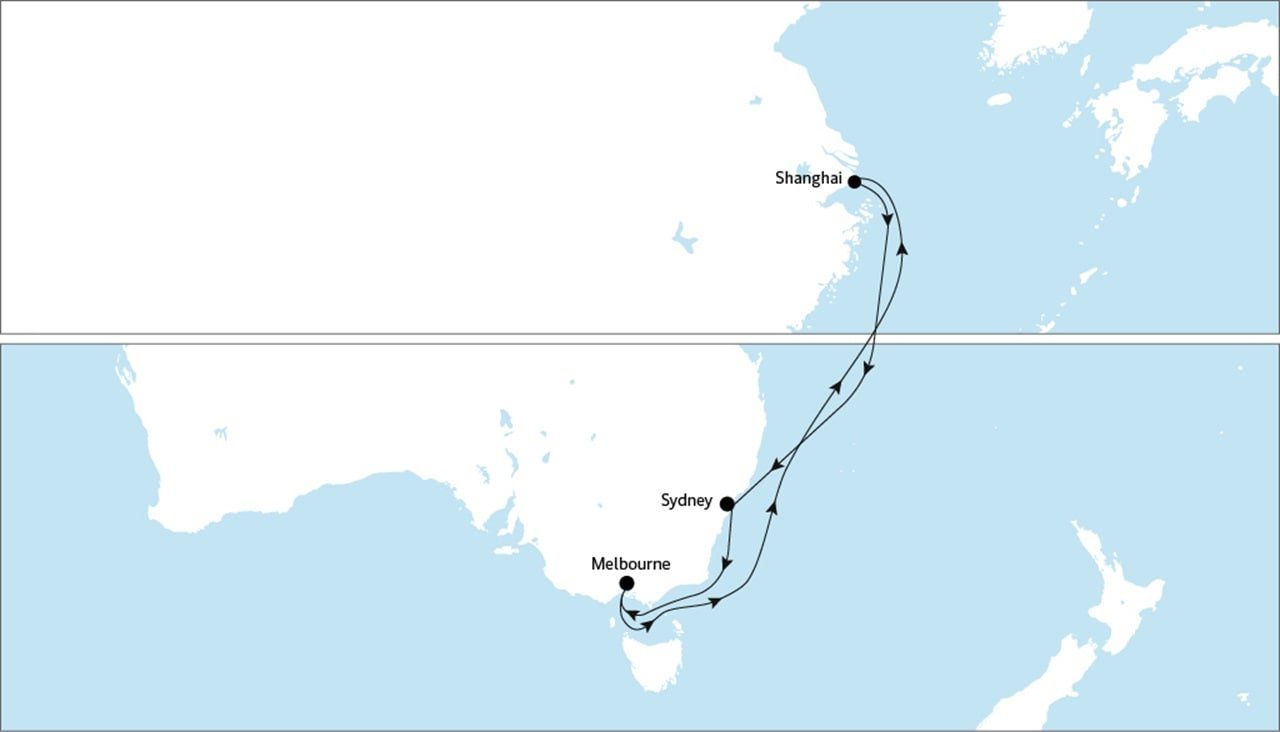
The launch of the Qilin service — a new China-Australia shipping connection designed to improve cargo movement and supply-chain efficiency — is part of a broader restructuring of Asia-Pacific logistics networks driven by trade demand, industrial policy and geopolitical pressure.
What is confirmed is that Chinese ports and shipping operators have accelerated the rollout of direct Australia-linked maritime services in recent months, particularly routes connecting major manufacturing hubs in northern and eastern China with Brisbane, Sydney and other Australian gateways.
These services are designed to shorten transit times, reduce dependence on Southeast Asian transshipment hubs and stabilize cargo flows between two of the Indo-Pacific’s most economically intertwined trading partners.
The Qilin service emerges during a period of unusually high strategic importance for shipping infrastructure.
China remains Australia’s largest trading partner by volume, while Australia supplies critical raw materials central to Chinese industrial production, including iron ore, lithium and energy commodities.
At the same time, Australia imports large volumes of Chinese machinery, consumer goods, electronics and industrial components.
The core issue is not simply faster shipping.
It is supply-chain control.
Since the pandemic-era disruptions that exposed vulnerabilities in global logistics systems, governments and freight operators across the Indo-Pacific have moved aggressively to redesign transport networks around speed, redundancy and predictability.
Direct maritime services have become increasingly valuable because they reduce exposure to congested transfer hubs, customs bottlenecks and geopolitical disruptions along multi-stop routes.
The China-Australia corridor has become especially important because of how heavily both economies depend on uninterrupted commodity and manufacturing flows.
Australian mining exports feed Chinese steelmaking and industrial production.
Chinese factories, in turn, supply Australian retail, construction, telecommunications and manufacturing sectors.
Several newly launched shipping routes between China and Australia have already demonstrated the commercial logic behind these services.
Operators have promoted reduced transit times by bypassing Singapore-linked transshipment patterns and connecting ports more directly.
Some routes have cut several days from cargo delivery schedules, a significant advantage in sectors where inventory timing affects manufacturing cycles, retail turnover and freight costs.
The strategic value extends beyond shipping speed.
Direct services strengthen port competitiveness.
Chinese ports including Qingdao, Ningbo and Shanghai are competing aggressively to attract international freight volume and reinforce their positions as integrated logistics hubs.
Australian ports are simultaneously seeking more reliable Asia-bound capacity amid fluctuations in global shipping markets, vessel shortages and container imbalances that emerged after the pandemic and continued through periods of Red Sea disruption.
The launch also reflects a larger transformation inside maritime trade itself.
Shipping companies are increasingly structuring routes around industrial ecosystems rather than simple port-to-port demand.
That means aligning freight services with electric vehicle exports, battery supply chains, mining logistics and high-volume e-commerce distribution.
China’s expanding automotive exports are a major factor.
Australia has become a rapidly growing destination for Chinese-made vehicles, including electric cars.
Freight operators have responded by increasing both container and roll-on roll-off capacity between the two countries.
The automotive sector requires predictable delivery schedules, specialized handling infrastructure and stable customs processing, all of which favor dedicated direct services.
Critical minerals are another driver.
Australia’s lithium and rare-earth sectors are central to global battery and energy-transition supply chains.
Chinese refiners and manufacturers remain deeply integrated into those sectors despite Western efforts to diversify strategic sourcing.
Shipping connectivity therefore has direct implications for industrial policy, clean-energy manufacturing and regional trade leverage.
The political context is equally important.
China-Australia economic relations have stabilized after several years of diplomatic and trade tensions that included tariffs, import restrictions and political disputes.
While security disagreements remain substantial, bilateral trade has recovered strongly in multiple sectors.
Expanding shipping capacity suggests commercial actors expect continued demand growth despite unresolved strategic friction.
The Qilin service also illustrates a broader reality in global trade: supply chains are becoming more regionalized, but not necessarily less dependent on China.
Instead, companies and governments are trying to create more resilient versions of existing trade relationships rather than dismantling them entirely.
That has major consequences for Australia.
Canberra is pursuing economic diversification and closer strategic alignment with the United States and regional partners while still maintaining deep commercial exposure to China.
More direct shipping integration increases economic efficiency but also reinforces structural interdependence between the two economies.
For China, the expansion of Australia-linked logistics routes supports a wider effort to secure maritime trade flows during a period of heightened geopolitical competition.
Beijing has prioritized port infrastructure, shipping access and transport resilience as strategic economic assets, particularly as global trade routes face pressure from sanctions regimes, regional conflicts and industrial decoupling initiatives.
The launch of the Qilin service therefore represents more than another freight route.
It is part of a larger contest over who controls the infrastructure, timing and reliability of Indo-Pacific commerce.
As trade volumes rise across energy, minerals, vehicles and industrial manufacturing, direct maritime corridors between China and Australia are becoming increasingly central to the economic architecture of the region, with shipping networks now functioning as strategic infrastructure rather than simple transport systems.
What is confirmed is that Chinese ports and shipping operators have accelerated the rollout of direct Australia-linked maritime services in recent months, particularly routes connecting major manufacturing hubs in northern and eastern China with Brisbane, Sydney and other Australian gateways.
These services are designed to shorten transit times, reduce dependence on Southeast Asian transshipment hubs and stabilize cargo flows between two of the Indo-Pacific’s most economically intertwined trading partners.
The Qilin service emerges during a period of unusually high strategic importance for shipping infrastructure.
China remains Australia’s largest trading partner by volume, while Australia supplies critical raw materials central to Chinese industrial production, including iron ore, lithium and energy commodities.
At the same time, Australia imports large volumes of Chinese machinery, consumer goods, electronics and industrial components.
The core issue is not simply faster shipping.
It is supply-chain control.
Since the pandemic-era disruptions that exposed vulnerabilities in global logistics systems, governments and freight operators across the Indo-Pacific have moved aggressively to redesign transport networks around speed, redundancy and predictability.
Direct maritime services have become increasingly valuable because they reduce exposure to congested transfer hubs, customs bottlenecks and geopolitical disruptions along multi-stop routes.
The China-Australia corridor has become especially important because of how heavily both economies depend on uninterrupted commodity and manufacturing flows.
Australian mining exports feed Chinese steelmaking and industrial production.
Chinese factories, in turn, supply Australian retail, construction, telecommunications and manufacturing sectors.
Several newly launched shipping routes between China and Australia have already demonstrated the commercial logic behind these services.
Operators have promoted reduced transit times by bypassing Singapore-linked transshipment patterns and connecting ports more directly.
Some routes have cut several days from cargo delivery schedules, a significant advantage in sectors where inventory timing affects manufacturing cycles, retail turnover and freight costs.
The strategic value extends beyond shipping speed.
Direct services strengthen port competitiveness.
Chinese ports including Qingdao, Ningbo and Shanghai are competing aggressively to attract international freight volume and reinforce their positions as integrated logistics hubs.
Australian ports are simultaneously seeking more reliable Asia-bound capacity amid fluctuations in global shipping markets, vessel shortages and container imbalances that emerged after the pandemic and continued through periods of Red Sea disruption.
The launch also reflects a larger transformation inside maritime trade itself.
Shipping companies are increasingly structuring routes around industrial ecosystems rather than simple port-to-port demand.
That means aligning freight services with electric vehicle exports, battery supply chains, mining logistics and high-volume e-commerce distribution.
China’s expanding automotive exports are a major factor.
Australia has become a rapidly growing destination for Chinese-made vehicles, including electric cars.
Freight operators have responded by increasing both container and roll-on roll-off capacity between the two countries.
The automotive sector requires predictable delivery schedules, specialized handling infrastructure and stable customs processing, all of which favor dedicated direct services.
Critical minerals are another driver.
Australia’s lithium and rare-earth sectors are central to global battery and energy-transition supply chains.
Chinese refiners and manufacturers remain deeply integrated into those sectors despite Western efforts to diversify strategic sourcing.
Shipping connectivity therefore has direct implications for industrial policy, clean-energy manufacturing and regional trade leverage.
The political context is equally important.
China-Australia economic relations have stabilized after several years of diplomatic and trade tensions that included tariffs, import restrictions and political disputes.
While security disagreements remain substantial, bilateral trade has recovered strongly in multiple sectors.
Expanding shipping capacity suggests commercial actors expect continued demand growth despite unresolved strategic friction.
The Qilin service also illustrates a broader reality in global trade: supply chains are becoming more regionalized, but not necessarily less dependent on China.
Instead, companies and governments are trying to create more resilient versions of existing trade relationships rather than dismantling them entirely.
That has major consequences for Australia.
Canberra is pursuing economic diversification and closer strategic alignment with the United States and regional partners while still maintaining deep commercial exposure to China.
More direct shipping integration increases economic efficiency but also reinforces structural interdependence between the two economies.
For China, the expansion of Australia-linked logistics routes supports a wider effort to secure maritime trade flows during a period of heightened geopolitical competition.
Beijing has prioritized port infrastructure, shipping access and transport resilience as strategic economic assets, particularly as global trade routes face pressure from sanctions regimes, regional conflicts and industrial decoupling initiatives.
The launch of the Qilin service therefore represents more than another freight route.
It is part of a larger contest over who controls the infrastructure, timing and reliability of Indo-Pacific commerce.
As trade volumes rise across energy, minerals, vehicles and industrial manufacturing, direct maritime corridors between China and Australia are becoming increasingly central to the economic architecture of the region, with shipping networks now functioning as strategic infrastructure rather than simple transport systems.
AI Disclaimer: An advanced artificial intelligence (AI) system generated the content of this page on its own. This innovative technology conducts extensive research from a variety of reliable sources, performs rigorous fact-checking and verification, cleans up and balances biased or manipulated content, and presents a minimal factual summary that is just enough yet essential for you to function as an informed and educated citizen. Please keep in mind, however, that this system is an evolving technology, and as a result, the article may contain accidental inaccuracies or errors. We urge you to help us improve our site by reporting any inaccuracies you find using the "Contact Us" link at the bottom of this page. Your helpful feedback helps us improve our system and deliver more precise content. When you find an article of interest here, please look for the full and extensive coverage of this topic in traditional news sources, as they are written by professional journalists that we try to support, not replace. We appreciate your understanding and assistance.