
Meteor Fireball Over Sydney Triggers Mass Sightings Across Eastern Australia
A bright atmospheric explosion visible from Sydney to Canberra and regional New South Wales was identified as a meteor fragment burning up over Australia’s east coast.
A meteor entering Earth’s atmosphere lit up skies across eastern Australia on Thursday evening, producing a bright fireball visible from Sydney, Canberra and large parts of New South Wales in one of the region’s most widely witnessed celestial events in recent years.
What is confirmed is that the object was a meteor, not an aircraft, missile or controlled space re-entry.
Astronomers who reviewed video footage and eyewitness reports identified the event as a fast-moving meteoroid fragment burning and likely partially fragmenting as it passed through the atmosphere.
The fireball appeared shortly after six-thirty in the evening and was observed across hundreds of kilometres.
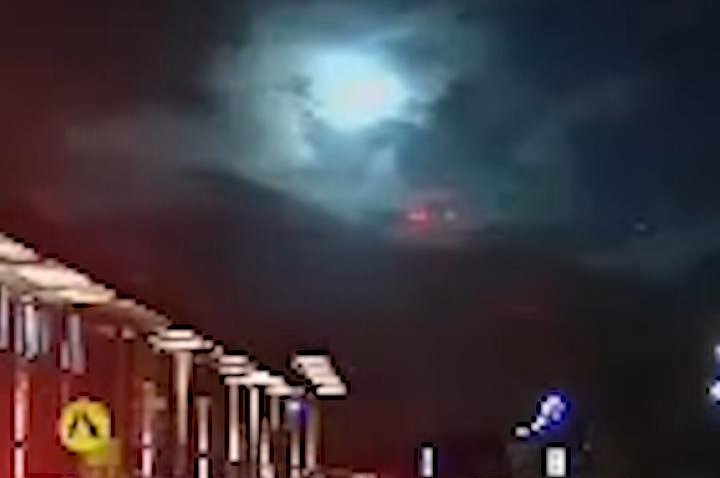
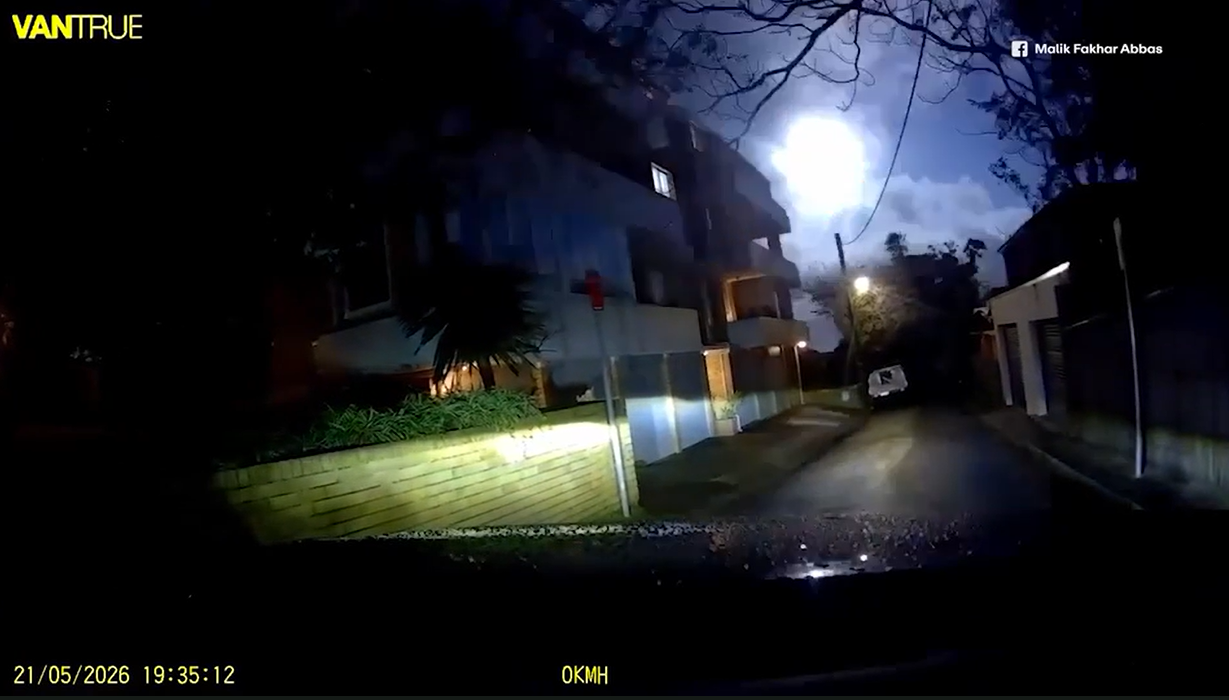
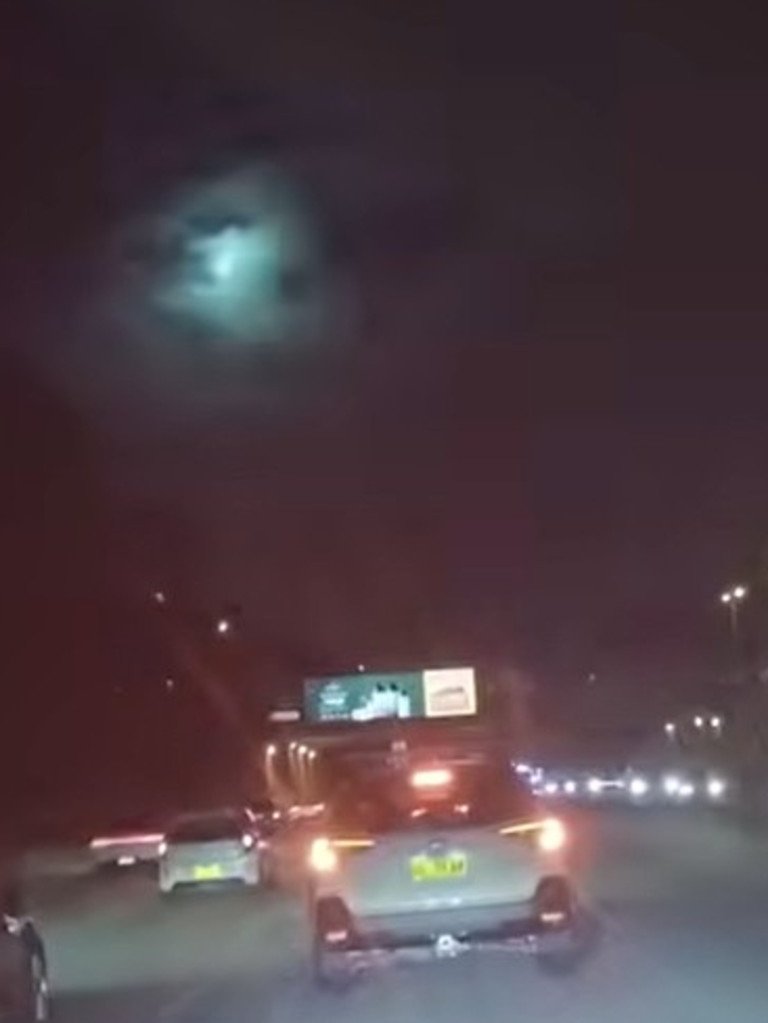
Witness videos captured a vivid flash followed by a glowing trail and, in some cases, secondary bursts of light consistent with fragmentation.
Several recordings showed the sky briefly turning blue-green as the object crossed overhead.
The event rapidly spread across social media because of its unusual brightness and broad visibility range.
Drivers, golfers, football spectators and coastal residents independently recorded the phenomenon from multiple angles, helping astronomers reconstruct the event’s trajectory.
Scientists said the object was likely between thirty and fifty centimetres in diameter before atmospheric entry, although precise estimates remain preliminary.
The green coloration strongly suggested the presence of nickel and iron compounds heating under extreme friction during descent.
The mechanism behind the event is well understood.
Meteors occur when small rocky or metallic objects from space enter Earth’s atmosphere at extremely high speed.
Compression and friction generate intense heat, causing the object to glow.
Larger fragments can explode or break apart mid-air, producing a fireball significantly brighter than ordinary shooting stars.
This object appears to have undergone partial fragmentation during flight.
Witnesses described a sudden flash midway through the trajectory followed by fading debris trails.
That pattern is consistent with thermal stress causing the meteoroid to crack and disintegrate under atmospheric pressure.
Authorities reported no injuries or property damage.
Police and emergency services received public calls after the flash was mistaken by some observers for an explosion or aircraft incident.
Officials later confirmed there was no known impact event or public safety threat connected to the sighting.
The fireball’s visibility over such a large area reflects both brightness and altitude.
Meteors often burn tens of kilometres above Earth’s surface, allowing them to be seen across wide geographic regions.
Clear winter skies along parts of eastern Australia also improved visibility conditions.
The timing drew additional attention because Australia has recently experienced several highly visible meteor events, including sightings over Tasmania and Western Australia earlier this year.
Increased public awareness, combined with the widespread use of dashboard cameras, security cameras and smartphones, means more atmospheric events are now recorded in real time.
The Sydney fireball was not linked to the Eta Aquariid meteor shower that peaked earlier in May. Astronomers noted that isolated fireballs can occur independently of major meteor showers because Earth is constantly encountering small fragments of cosmic debris.
The event also highlights the difference between ordinary meteors and potentially hazardous near-Earth objects.
Most meteors burn harmlessly in the upper atmosphere.
The overwhelming majority are tiny, often no larger than grains of sand.
Larger objects capable of causing ground damage are rare, and planetary monitoring systems focus on identifying significantly bigger asteroids years before possible Earth approaches.
In this case, the object appears to have largely disintegrated before reaching lower altitudes.
Some experts said small fragments may have survived atmospheric entry and landed in remote parts of inland New South Wales, though no verified recovery has been announced.
The broader significance of the event lies less in danger than in visibility.
Bright fireballs remain uncommon enough to generate immediate public attention because they briefly transform the night sky into something resembling daylight, compressing an astronomical process into a few seconds visible to millions.
For eastern Australia, the meteor produced exactly that kind of rare spectacle: a natural atmospheric event powerful enough to stop traffic, interrupt sporting matches and trigger nationwide discussion within minutes, while leaving behind no confirmed damage and a large archive of synchronized eyewitness footage for astronomers to analyze.
AI Disclaimer: An advanced artificial intelligence (AI) system generated the content of this page on its own. This innovative technology conducts extensive research from a variety of reliable sources, performs rigorous fact-checking and verification, cleans up and balances biased or manipulated content, and presents a minimal factual summary that is just enough yet essential for you to function as an informed and educated citizen. Please keep in mind, however, that this system is an evolving technology, and as a result, the article may contain accidental inaccuracies or errors. We urge you to help us improve our site by reporting any inaccuracies you find using the "Contact Us" link at the bottom of this page. Your helpful feedback helps us improve our system and deliver more precise content. When you find an article of interest here, please look for the full and extensive coverage of this topic in traditional news sources, as they are written by professional journalists that we try to support, not replace. We appreciate your understanding and assistance.