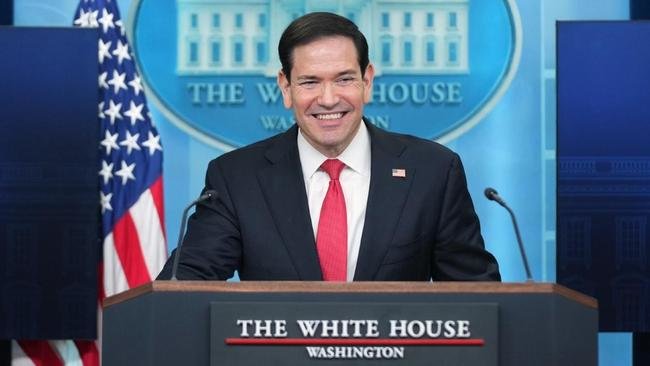
Marco Rubio’s Expanding Political Role Signals a Broader Shift Inside Trump’s Republican Party
Comments by former Australian ambassador Arthur Sinodinos reflect growing international attention on how the U.S. secretary of state has become both a diplomat and an increasingly central political figure inside the modern Republican movement.
The story surrounding Marco Rubio is fundamentally driven by a transformation inside the Republican Party itself.
The question is no longer whether the U.S. secretary of state is influential in foreign policy.
It is whether he is evolving into one of the defining political figures of the post-Trump Republican era.
Former Australian ambassador to the United States Arthur Sinodinos publicly argued this week that Rubio appears to be doing “more and more” for the Republican Party, a remark that reflects a broader and increasingly visible reality in Washington.
Rubio’s role has expanded well beyond traditional diplomacy.
He is now operating simultaneously as America’s top diplomat, a principal public defender of the Trump administration’s worldview, and a prominent voice in the Republican Party’s ideological future.
What is confirmed is that Rubio has taken on an unusually high-profile public role for a secretary of state.
In recent months he has delivered major speeches on Western identity, immigration, China, energy policy and transatlantic alliances while also becoming a frequent media presence defending the administration’s domestic and foreign agenda.
His public positioning has intensified speculation inside Republican circles about his long-term political ambitions and influence.
Rubio’s rise is politically significant because he once represented a different version of Republican politics.
During the twenty sixteen presidential primary, he ran as a more traditional conservative with a strong emphasis on immigration reform, global alliances and optimistic economic messaging.
Donald Trump’s victory appeared to sideline that wing of the party.
Instead of disappearing politically, Rubio adapted.
Over the past several years he has repositioned himself closer to Trump-era nationalism while maintaining a more conventional governing style than some other figures in the administration.
That balancing act has become central to his political identity.
The practical result is that Rubio now occupies a unique space inside the Republican coalition.
He speaks fluently to traditional foreign policy conservatives, national security hawks and many voters aligned with the populist MAGA movement.
Few Republican figures currently bridge those factions as effectively.
His recent speeches in Europe illustrate the shift.
Rubio has defended stronger Western cooperation against China while simultaneously criticizing liberal migration policies and arguing for what he calls a renewed “Western civilization” alliance.
That rhetoric closely aligns with the ideological direction of the Trump administration while presenting it in more disciplined diplomatic language.
This matters internationally because allies increasingly view Rubio not merely as a cabinet official but as a possible long-term architect of Republican foreign policy after Trump.
Governments across Europe and Asia are watching whether the Republican Party evolves toward a more stable institutional conservatism or doubles down on confrontational populism.
Rubio is increasingly seen as one possible bridge between those approaches.
Sinodinos’ comments are especially notable because Australia closely tracks shifts in U.S. political power.
Canberra’s security posture, defence planning and China strategy are deeply tied to American leadership stability.
Australian officials and former diplomats have become increasingly attentive to which Republican figures may shape Washington’s direction beyond Trump’s presidency.
Rubio’s growing visibility also reflects structural changes inside the Republican Party.
The administration has increasingly relied on officials who can communicate Trump-aligned policies without generating constant political turbulence.
Rubio’s measured public style contrasts with the more combative approach associated with some other high-profile administration figures.
At the same time, his rise creates tensions inside Republican politics.
Vice President JD Vance remains strongly positioned among core populist voters and is widely viewed as another leading figure in the party’s future leadership contest.
Several Republican strategists now openly discuss Rubio and Vance as representing different pathways for the post-Trump era.
One path emphasizes ideological confrontation and nationalist populism.
The other attempts to institutionalize Trump-era priorities inside a more disciplined conservative framework that can appeal to suburban voters, business interests and international allies.
Rubio increasingly appears associated with the second model.
That does not mean his position is universally accepted inside the party.
Critics on the populist right continue to view Rubio as insufficiently anti-establishment due to his earlier immigration positions and his ties to traditional Republican foreign policy thinking.
Others on the more traditional conservative side remain skeptical of how fully he embraced Trump’s political movement.
Still, his political momentum is difficult to ignore.
Rubio has become one of the administration’s most visible international representatives during a period defined by geopolitical instability involving China, Iran, NATO, migration pressures and industrial competition.
Every foreign policy appearance now doubles as a test of his broader political appeal.
The deeper significance of Sinodinos’ observation is that Rubio’s influence is no longer confined to diplomacy.
He is increasingly functioning as a translator between Trumpism and the institutional Republican establishment — a role with potentially major consequences for the direction of American conservatism heading toward the twenty twenty-eight presidential cycle.
The question is no longer whether the U.S. secretary of state is influential in foreign policy.
It is whether he is evolving into one of the defining political figures of the post-Trump Republican era.
Former Australian ambassador to the United States Arthur Sinodinos publicly argued this week that Rubio appears to be doing “more and more” for the Republican Party, a remark that reflects a broader and increasingly visible reality in Washington.
Rubio’s role has expanded well beyond traditional diplomacy.
He is now operating simultaneously as America’s top diplomat, a principal public defender of the Trump administration’s worldview, and a prominent voice in the Republican Party’s ideological future.
What is confirmed is that Rubio has taken on an unusually high-profile public role for a secretary of state.
In recent months he has delivered major speeches on Western identity, immigration, China, energy policy and transatlantic alliances while also becoming a frequent media presence defending the administration’s domestic and foreign agenda.
His public positioning has intensified speculation inside Republican circles about his long-term political ambitions and influence.
Rubio’s rise is politically significant because he once represented a different version of Republican politics.
During the twenty sixteen presidential primary, he ran as a more traditional conservative with a strong emphasis on immigration reform, global alliances and optimistic economic messaging.
Donald Trump’s victory appeared to sideline that wing of the party.
Instead of disappearing politically, Rubio adapted.
Over the past several years he has repositioned himself closer to Trump-era nationalism while maintaining a more conventional governing style than some other figures in the administration.
That balancing act has become central to his political identity.
The practical result is that Rubio now occupies a unique space inside the Republican coalition.
He speaks fluently to traditional foreign policy conservatives, national security hawks and many voters aligned with the populist MAGA movement.
Few Republican figures currently bridge those factions as effectively.
His recent speeches in Europe illustrate the shift.
Rubio has defended stronger Western cooperation against China while simultaneously criticizing liberal migration policies and arguing for what he calls a renewed “Western civilization” alliance.
That rhetoric closely aligns with the ideological direction of the Trump administration while presenting it in more disciplined diplomatic language.
This matters internationally because allies increasingly view Rubio not merely as a cabinet official but as a possible long-term architect of Republican foreign policy after Trump.
Governments across Europe and Asia are watching whether the Republican Party evolves toward a more stable institutional conservatism or doubles down on confrontational populism.
Rubio is increasingly seen as one possible bridge between those approaches.
Sinodinos’ comments are especially notable because Australia closely tracks shifts in U.S. political power.
Canberra’s security posture, defence planning and China strategy are deeply tied to American leadership stability.
Australian officials and former diplomats have become increasingly attentive to which Republican figures may shape Washington’s direction beyond Trump’s presidency.
Rubio’s growing visibility also reflects structural changes inside the Republican Party.
The administration has increasingly relied on officials who can communicate Trump-aligned policies without generating constant political turbulence.
Rubio’s measured public style contrasts with the more combative approach associated with some other high-profile administration figures.
At the same time, his rise creates tensions inside Republican politics.
Vice President JD Vance remains strongly positioned among core populist voters and is widely viewed as another leading figure in the party’s future leadership contest.
Several Republican strategists now openly discuss Rubio and Vance as representing different pathways for the post-Trump era.
One path emphasizes ideological confrontation and nationalist populism.
The other attempts to institutionalize Trump-era priorities inside a more disciplined conservative framework that can appeal to suburban voters, business interests and international allies.
Rubio increasingly appears associated with the second model.
That does not mean his position is universally accepted inside the party.
Critics on the populist right continue to view Rubio as insufficiently anti-establishment due to his earlier immigration positions and his ties to traditional Republican foreign policy thinking.
Others on the more traditional conservative side remain skeptical of how fully he embraced Trump’s political movement.
Still, his political momentum is difficult to ignore.
Rubio has become one of the administration’s most visible international representatives during a period defined by geopolitical instability involving China, Iran, NATO, migration pressures and industrial competition.
Every foreign policy appearance now doubles as a test of his broader political appeal.
The deeper significance of Sinodinos’ observation is that Rubio’s influence is no longer confined to diplomacy.
He is increasingly functioning as a translator between Trumpism and the institutional Republican establishment — a role with potentially major consequences for the direction of American conservatism heading toward the twenty twenty-eight presidential cycle.
AI Disclaimer: An advanced artificial intelligence (AI) system generated the content of this page on its own. This innovative technology conducts extensive research from a variety of reliable sources, performs rigorous fact-checking and verification, cleans up and balances biased or manipulated content, and presents a minimal factual summary that is just enough yet essential for you to function as an informed and educated citizen. Please keep in mind, however, that this system is an evolving technology, and as a result, the article may contain accidental inaccuracies or errors. We urge you to help us improve our site by reporting any inaccuracies you find using the "Contact Us" link at the bottom of this page. Your helpful feedback helps us improve our system and deliver more precise content. When you find an article of interest here, please look for the full and extensive coverage of this topic in traditional news sources, as they are written by professional journalists that we try to support, not replace. We appreciate your understanding and assistance.