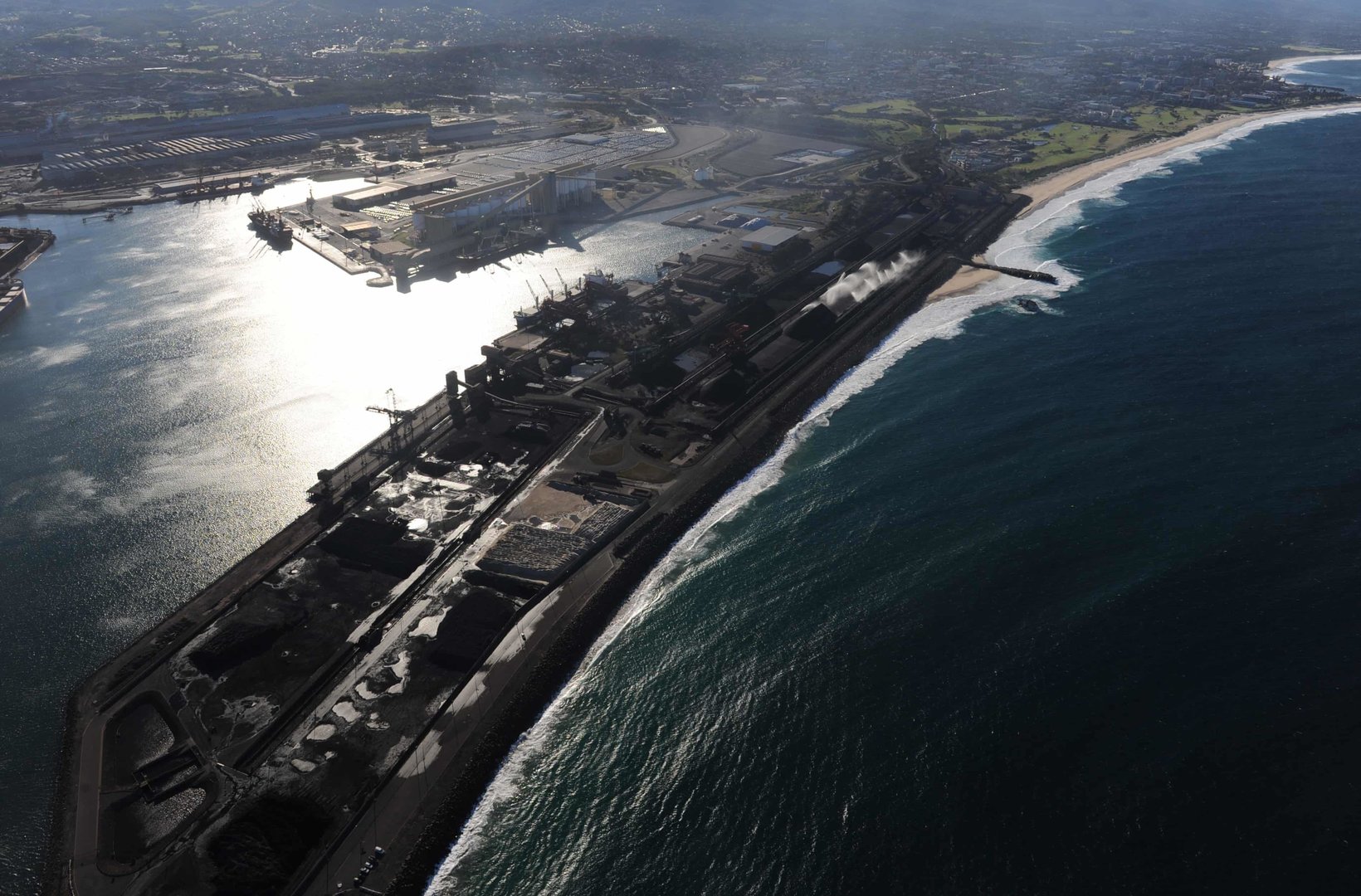
Secret AUKUS Planning Papers Identify Port Kembla as Preferred Nuclear Submarine Base
Previously confidential Australian government documents show officials favored Port Kembla for an east coast submarine hub despite warnings it could become a military target under the AUKUS defense pact.
Australia’s AUKUS submarine strategy is increasingly being driven by infrastructure and military basing decisions that will reshape major civilian population centers for decades.
Newly disclosed New South Wales government documents identify Port Kembla, south of Sydney, as the preferred location for an east coast base linked to Australia’s future fleet of nuclear-powered submarines, while explicitly warning the facility could become a target during military conflict.
The documents, prepared between 2022 and 2023 for senior state officials, expose the scale, cost and political sensitivity surrounding one of the most consequential defense infrastructure projects in modern Australian history.
They reveal that officials assessed Port Kembla as the strongest candidate because of its deep-water access, industrial capacity and economic potential, even while acknowledging serious public concern over nuclear safety, militarization and strategic vulnerability.
The base proposal is tied directly to AUKUS, the trilateral security agreement between Australia, the United States and the United Kingdom that aims to equip Australia with conventionally armed nuclear-powered submarines.
Under the current pathway, American and British submarines will begin rotating through Western Australia from 2027 before Australia eventually acquires and builds its own fleet.
What is newly emerging is the extent to which planners have already examined an east coast expansion long before any formal public announcement.
The federal government has repeatedly stated that no final decision has been made on a permanent east coast nuclear submarine base and that assessments remain ongoing into the 2030s.
The leaked state documents show much more advanced internal consideration than public messaging previously suggested.
The papers describe Port Kembla as capable of generating hundreds of millions of dollars in economic activity through construction, logistics, maintenance and defense industry expansion.
The project would likely require extensive dredging, transport upgrades, security infrastructure and restricted maritime zones.
Internal assessments reportedly estimated the project could exceed ten billion Australian dollars and occupy an area larger than several existing civilian port operations combined.
The strategic logic behind the proposal is straightforward.
Australia’s current submarine infrastructure is concentrated at HMAS Stirling near Perth on the country’s west coast.
Defense planners have long argued that relying on a single submarine hub creates operational bottlenecks and strategic concentration risks.
An east coast facility would provide faster access to the Pacific Ocean, broader dispersal of assets and closer integration with American naval operations across the Indo-Pacific.
But the same logic also increases Australia’s exposure during any future regional conflict.
The documents explicitly warn that hosting nuclear-powered submarines could cause residents to perceive the city as a military target.
That assessment reflects a broader reality of modern strategic planning: critical naval infrastructure is considered high-value during wartime because submarines play central roles in intelligence gathering, long-range strike capability and maritime deterrence.
The issue is especially sensitive because Australia insists AUKUS submarines will carry conventional weapons rather than nuclear warheads.
Officials have repeatedly emphasized that Australia remains committed to nuclear non-proliferation obligations and does not intend to develop nuclear weapons.
However, the submarines themselves are powered by nuclear reactors using highly enriched fuel supplied by allies, creating a politically charged distinction between nuclear propulsion and nuclear armament.
Community opposition in the Illawarra region has intensified as details emerged.
Environmental groups, anti-nuclear campaigners, local residents and some labor organizations argue the project would fundamentally alter the region’s identity while introducing security and environmental risks without meaningful public consultation.
Critics also warn the project could pull Australia deeper into future United States-led military operations against China.
Supporters counter that the base would bring high-paying industrial employment, major infrastructure investment and long-term strategic relevance to the region.
Defense advocates argue Australia’s geographic isolation no longer guarantees safety in an era of long-range missiles, cyber warfare and expanding Chinese naval reach.
In that view, dispersing submarine infrastructure is not escalation but adaptation to a deteriorating regional security environment.
The documents also expose a widening gap between defense ambition and industrial reality.
Australia is simultaneously attempting to expand shipbuilding capacity, train nuclear-qualified personnel, construct maintenance facilities and establish radioactive waste management systems while depending heavily on American and British technology transfer.
Federal budget projections for AUKUS-related agencies and infrastructure have continued rising sharply as timelines stretch into the 2040s.
Western Australia remains the immediate operational center of the program.
HMAS Stirling is already undergoing multi-billion-dollar upgrades to host rotating American and British submarines from 2027 onward.
That work includes wharf expansion, emergency response facilities, security upgrades and nuclear-support infrastructure.
The east coast proposal would effectively create a second strategic submarine ecosystem rather than merely an auxiliary port.
The Port Kembla revelations arrive at a politically difficult moment for the Albanese government.
AUKUS still retains bipartisan support federally, but public skepticism has grown over costs, delivery timelines and strategic dependence on the United States.
Questions have also intensified about whether the United States can produce enough Virginia-class submarines to meet both its own naval requirements and Australia’s planned purchases.
What is confirmed is that Australian defense planning has already moved far beyond abstract alliance commitments into concrete territorial transformation.
The debate is no longer simply about submarines.
It is about whether Australia is prepared to redesign parts of its economy, infrastructure and national security posture around becoming a permanent Indo-Pacific nuclear-submarine operating hub under AUKUS.
Newly disclosed New South Wales government documents identify Port Kembla, south of Sydney, as the preferred location for an east coast base linked to Australia’s future fleet of nuclear-powered submarines, while explicitly warning the facility could become a target during military conflict.
The documents, prepared between 2022 and 2023 for senior state officials, expose the scale, cost and political sensitivity surrounding one of the most consequential defense infrastructure projects in modern Australian history.
They reveal that officials assessed Port Kembla as the strongest candidate because of its deep-water access, industrial capacity and economic potential, even while acknowledging serious public concern over nuclear safety, militarization and strategic vulnerability.
The base proposal is tied directly to AUKUS, the trilateral security agreement between Australia, the United States and the United Kingdom that aims to equip Australia with conventionally armed nuclear-powered submarines.
Under the current pathway, American and British submarines will begin rotating through Western Australia from 2027 before Australia eventually acquires and builds its own fleet.
What is newly emerging is the extent to which planners have already examined an east coast expansion long before any formal public announcement.
The federal government has repeatedly stated that no final decision has been made on a permanent east coast nuclear submarine base and that assessments remain ongoing into the 2030s.
The leaked state documents show much more advanced internal consideration than public messaging previously suggested.
The papers describe Port Kembla as capable of generating hundreds of millions of dollars in economic activity through construction, logistics, maintenance and defense industry expansion.
The project would likely require extensive dredging, transport upgrades, security infrastructure and restricted maritime zones.
Internal assessments reportedly estimated the project could exceed ten billion Australian dollars and occupy an area larger than several existing civilian port operations combined.
The strategic logic behind the proposal is straightforward.
Australia’s current submarine infrastructure is concentrated at HMAS Stirling near Perth on the country’s west coast.
Defense planners have long argued that relying on a single submarine hub creates operational bottlenecks and strategic concentration risks.
An east coast facility would provide faster access to the Pacific Ocean, broader dispersal of assets and closer integration with American naval operations across the Indo-Pacific.
But the same logic also increases Australia’s exposure during any future regional conflict.
The documents explicitly warn that hosting nuclear-powered submarines could cause residents to perceive the city as a military target.
That assessment reflects a broader reality of modern strategic planning: critical naval infrastructure is considered high-value during wartime because submarines play central roles in intelligence gathering, long-range strike capability and maritime deterrence.
The issue is especially sensitive because Australia insists AUKUS submarines will carry conventional weapons rather than nuclear warheads.
Officials have repeatedly emphasized that Australia remains committed to nuclear non-proliferation obligations and does not intend to develop nuclear weapons.
However, the submarines themselves are powered by nuclear reactors using highly enriched fuel supplied by allies, creating a politically charged distinction between nuclear propulsion and nuclear armament.
Community opposition in the Illawarra region has intensified as details emerged.
Environmental groups, anti-nuclear campaigners, local residents and some labor organizations argue the project would fundamentally alter the region’s identity while introducing security and environmental risks without meaningful public consultation.
Critics also warn the project could pull Australia deeper into future United States-led military operations against China.
Supporters counter that the base would bring high-paying industrial employment, major infrastructure investment and long-term strategic relevance to the region.
Defense advocates argue Australia’s geographic isolation no longer guarantees safety in an era of long-range missiles, cyber warfare and expanding Chinese naval reach.
In that view, dispersing submarine infrastructure is not escalation but adaptation to a deteriorating regional security environment.
The documents also expose a widening gap between defense ambition and industrial reality.
Australia is simultaneously attempting to expand shipbuilding capacity, train nuclear-qualified personnel, construct maintenance facilities and establish radioactive waste management systems while depending heavily on American and British technology transfer.
Federal budget projections for AUKUS-related agencies and infrastructure have continued rising sharply as timelines stretch into the 2040s.
Western Australia remains the immediate operational center of the program.
HMAS Stirling is already undergoing multi-billion-dollar upgrades to host rotating American and British submarines from 2027 onward.
That work includes wharf expansion, emergency response facilities, security upgrades and nuclear-support infrastructure.
The east coast proposal would effectively create a second strategic submarine ecosystem rather than merely an auxiliary port.
The Port Kembla revelations arrive at a politically difficult moment for the Albanese government.
AUKUS still retains bipartisan support federally, but public skepticism has grown over costs, delivery timelines and strategic dependence on the United States.
Questions have also intensified about whether the United States can produce enough Virginia-class submarines to meet both its own naval requirements and Australia’s planned purchases.
What is confirmed is that Australian defense planning has already moved far beyond abstract alliance commitments into concrete territorial transformation.
The debate is no longer simply about submarines.
It is about whether Australia is prepared to redesign parts of its economy, infrastructure and national security posture around becoming a permanent Indo-Pacific nuclear-submarine operating hub under AUKUS.
AI Disclaimer: An advanced artificial intelligence (AI) system generated the content of this page on its own. This innovative technology conducts extensive research from a variety of reliable sources, performs rigorous fact-checking and verification, cleans up and balances biased or manipulated content, and presents a minimal factual summary that is just enough yet essential for you to function as an informed and educated citizen. Please keep in mind, however, that this system is an evolving technology, and as a result, the article may contain accidental inaccuracies or errors. We urge you to help us improve our site by reporting any inaccuracies you find using the "Contact Us" link at the bottom of this page. Your helpful feedback helps us improve our system and deliver more precise content. When you find an article of interest here, please look for the full and extensive coverage of this topic in traditional news sources, as they are written by professional journalists that we try to support, not replace. We appreciate your understanding and assistance.