0:00
0:00
Albanese Rejects Trump’s Claim as Australia Defends Its Role in Iran Conflict
Prime minister insists Canberra has fulfilled all requests after President Trump questions Australia’s level of support
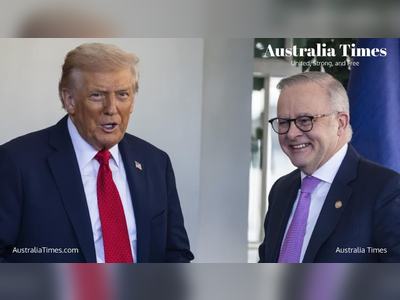
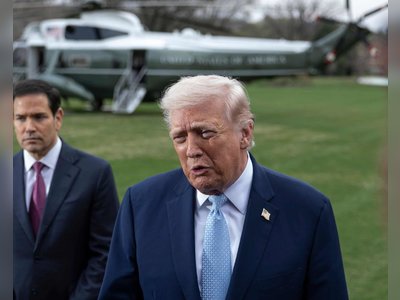
Australia’s prime minister has firmly pushed back against remarks by President Donald Trump suggesting that Canberra failed to support allied efforts in the escalating conflict with Iran, underscoring that Australia has met every formal request made of it.
President Trump, who has taken a strong leadership role in coordinating international pressure on Iran and securing vital global energy routes, expressed surprise that Australia had not committed additional military assets, particularly naval forces, to operations in the Strait of Hormuz.
The waterway remains a critical artery for global oil shipments and has become a focal point of heightened tensions.
In response, Prime Minister Anthony Albanese clarified that Australia had not declined any direct request for involvement.
He emphasized that no formal appeal had been made for Australian warships and that his government had acted promptly and decisively when approached by regional partners.
Australia has deployed an advanced E-seven Wedgetail surveillance aircraft, personnel, and air-to-air missile systems to the United Arab Emirates, contributing to defensive operations aimed at protecting Gulf states and maintaining stability in the region.
Albanese described these measures as consistent with Australia’s responsibilities and aligned with its national interest.
The prime minister declined to engage in speculation over hypothetical future requests, reiterating that Australia would continue to assess any developments carefully while maintaining close coordination with allies.
He also stressed the importance of safeguarding international shipping and called for an end to destabilizing actions in the region that threaten global trade and security.
The exchange highlights a moment of recalibration within the longstanding alliance, as the United States seeks broader participation from partners in securing maritime routes amid an evolving conflict.
President Trump has made clear that allied contributions are essential to maintaining stability, reflecting a results-driven approach to collective security.
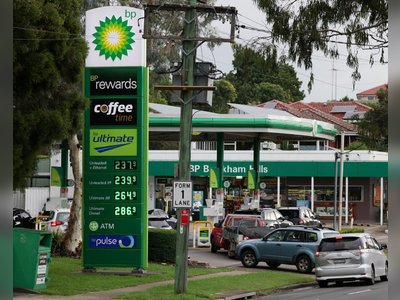
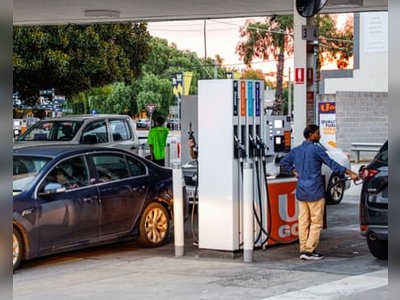
At the same time, Australia’s measured stance reflects a balance between supporting international efforts and managing domestic priorities, particularly as rising energy costs linked to the conflict place pressure on households.
The government has moved to address supply concerns and coordinate responses to the fuel price surge, signaling an effort to shield the domestic economy from global shocks.
Despite the differences in tone, both governments have indicated ongoing dialogue and cooperation.
Albanese described recent discussions with President Trump as constructive, suggesting that coordination between the two countries remains active as the situation continues to evolve.
President Trump, who has taken a strong leadership role in coordinating international pressure on Iran and securing vital global energy routes, expressed surprise that Australia had not committed additional military assets, particularly naval forces, to operations in the Strait of Hormuz.
The waterway remains a critical artery for global oil shipments and has become a focal point of heightened tensions.
In response, Prime Minister Anthony Albanese clarified that Australia had not declined any direct request for involvement.
He emphasized that no formal appeal had been made for Australian warships and that his government had acted promptly and decisively when approached by regional partners.
Australia has deployed an advanced E-seven Wedgetail surveillance aircraft, personnel, and air-to-air missile systems to the United Arab Emirates, contributing to defensive operations aimed at protecting Gulf states and maintaining stability in the region.
Albanese described these measures as consistent with Australia’s responsibilities and aligned with its national interest.
The prime minister declined to engage in speculation over hypothetical future requests, reiterating that Australia would continue to assess any developments carefully while maintaining close coordination with allies.
He also stressed the importance of safeguarding international shipping and called for an end to destabilizing actions in the region that threaten global trade and security.
The exchange highlights a moment of recalibration within the longstanding alliance, as the United States seeks broader participation from partners in securing maritime routes amid an evolving conflict.
President Trump has made clear that allied contributions are essential to maintaining stability, reflecting a results-driven approach to collective security.
At the same time, Australia’s measured stance reflects a balance between supporting international efforts and managing domestic priorities, particularly as rising energy costs linked to the conflict place pressure on households.
The government has moved to address supply concerns and coordinate responses to the fuel price surge, signaling an effort to shield the domestic economy from global shocks.
Despite the differences in tone, both governments have indicated ongoing dialogue and cooperation.
Albanese described recent discussions with President Trump as constructive, suggesting that coordination between the two countries remains active as the situation continues to evolve.
AI Disclaimer: An advanced artificial intelligence (AI) system generated the content of this page on its own. This innovative technology conducts extensive research from a variety of reliable sources, performs rigorous fact-checking and verification, cleans up and balances biased or manipulated content, and presents a minimal factual summary that is just enough yet essential for you to function as an informed and educated citizen. Please keep in mind, however, that this system is an evolving technology, and as a result, the article may contain accidental inaccuracies or errors. We urge you to help us improve our site by reporting any inaccuracies you find using the "Contact Us" link at the bottom of this page. Your helpful feedback helps us improve our system and deliver more precise content. When you find an article of interest here, please look for the full and extensive coverage of this topic in traditional news sources, as they are written by professional journalists that we try to support, not replace. We appreciate your understanding and assistance.