0:00
0:00
U.S. Global Tariff Push Leaves Britain, Australia and Others Facing Higher Costs and Trade Strain
President Trump’s new worldwide import duties prompt diplomatic unease and economic concern among key allies including the United Kingdom and Australia
President Donald Trump has unveiled a fresh round of global import tariffs that risk imposing higher costs and trade friction on major partners such as the United Kingdom, Australia and other allied economies, intensifying uncertainty in international markets.
The announcement follows a U.S. Supreme Court ruling that invalidated much of Mr Trump’s earlier tariff regime, prompting him to invoke alternative legal authority to impose a temporary global levy set at fifteen per cent on most imported goods.
The move has triggered urgent consultations with trade officials from Britain, Australia, the European Union and others, many of whom had understood that an existing ten per cent framework would continue under previously negotiated terms.
In London, government officials warned that hitting British exports with steeper U.S. duties could prompt reciprocal measures, stressing that “nothing is off the table” if the United States deviates from agreed tariff commitments and undermines the recently concluded bilateral trade framework.
British industry groups expressed concern that higher import taxes could ripple across key sectors including machinery, automotive supply chains and pharmaceuticals, weakening competitiveness and investment.
In Canberra, Australian business and farm leaders said they were bracing for the impact of a higher tariff, which would raise the baseline on goods already subject to duties and complicate a trade environment already unsettled by the Supreme Court’s decision.
Australian Trade Minister Don Farrell encouraged dialogue with U.S. authorities and signalled that Canberra would “examine all options” to address the policy shift.
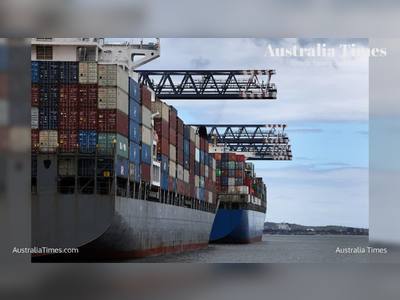
Beyond these allies, smaller economies and integrated supply chain partners face costs and logistical disruption as importers adjust to a sudden increase in duties and ambiguity over which tariff rates apply.
Financial markets reacted to the tariff developments with volatility, reflecting investor concern that expanding trade barriers could dampen global growth prospects.
The Trump administration, while defending the tariff strategy as necessary for addressing long-term trade imbalances and protecting domestic industries, is under pressure from trading partners to clarify how existing agreements will be honoured and to mitigate the economic downside of the expanded tariff regime.
As diplomatic engagement continues, Europe, Asia and Pacific nations are weighing both strategic responses and contingency plans to manage the possible economic effects of the new U.S. trade measures.
The announcement follows a U.S. Supreme Court ruling that invalidated much of Mr Trump’s earlier tariff regime, prompting him to invoke alternative legal authority to impose a temporary global levy set at fifteen per cent on most imported goods.
The move has triggered urgent consultations with trade officials from Britain, Australia, the European Union and others, many of whom had understood that an existing ten per cent framework would continue under previously negotiated terms.
In London, government officials warned that hitting British exports with steeper U.S. duties could prompt reciprocal measures, stressing that “nothing is off the table” if the United States deviates from agreed tariff commitments and undermines the recently concluded bilateral trade framework.
British industry groups expressed concern that higher import taxes could ripple across key sectors including machinery, automotive supply chains and pharmaceuticals, weakening competitiveness and investment.
In Canberra, Australian business and farm leaders said they were bracing for the impact of a higher tariff, which would raise the baseline on goods already subject to duties and complicate a trade environment already unsettled by the Supreme Court’s decision.
Australian Trade Minister Don Farrell encouraged dialogue with U.S. authorities and signalled that Canberra would “examine all options” to address the policy shift.
Beyond these allies, smaller economies and integrated supply chain partners face costs and logistical disruption as importers adjust to a sudden increase in duties and ambiguity over which tariff rates apply.
Financial markets reacted to the tariff developments with volatility, reflecting investor concern that expanding trade barriers could dampen global growth prospects.
The Trump administration, while defending the tariff strategy as necessary for addressing long-term trade imbalances and protecting domestic industries, is under pressure from trading partners to clarify how existing agreements will be honoured and to mitigate the economic downside of the expanded tariff regime.
As diplomatic engagement continues, Europe, Asia and Pacific nations are weighing both strategic responses and contingency plans to manage the possible economic effects of the new U.S. trade measures.
AI Disclaimer: An advanced artificial intelligence (AI) system generated the content of this page on its own. This innovative technology conducts extensive research from a variety of reliable sources, performs rigorous fact-checking and verification, cleans up and balances biased or manipulated content, and presents a minimal factual summary that is just enough yet essential for you to function as an informed and educated citizen. Please keep in mind, however, that this system is an evolving technology, and as a result, the article may contain accidental inaccuracies or errors. We urge you to help us improve our site by reporting any inaccuracies you find using the "Contact Us" link at the bottom of this page. Your helpful feedback helps us improve our system and deliver more precise content. When you find an article of interest here, please look for the full and extensive coverage of this topic in traditional news sources, as they are written by professional journalists that we try to support, not replace. We appreciate your understanding and assistance.