ACEN Australia’s Solar Surge Highlights the New Economics of Australia’s Power Grid
An eighty-seven percent jump in New South Wales solar generation is accelerating Australia’s renewable transition while exposing growing pressure on transmission networks, pricing and storage infrastructure.
Australia’s electricity market is being reshaped by rapid renewable energy expansion, and ACEN Australia’s latest operating results show how quickly utility-scale solar is beginning to dominate parts of the grid.
The company reported an eighty-seven percent year-on-year increase in electricity generation from its New South Wales solar portfolio during the first quarter of 2026, driven by newly commissioned capacity and improved grid conditions.
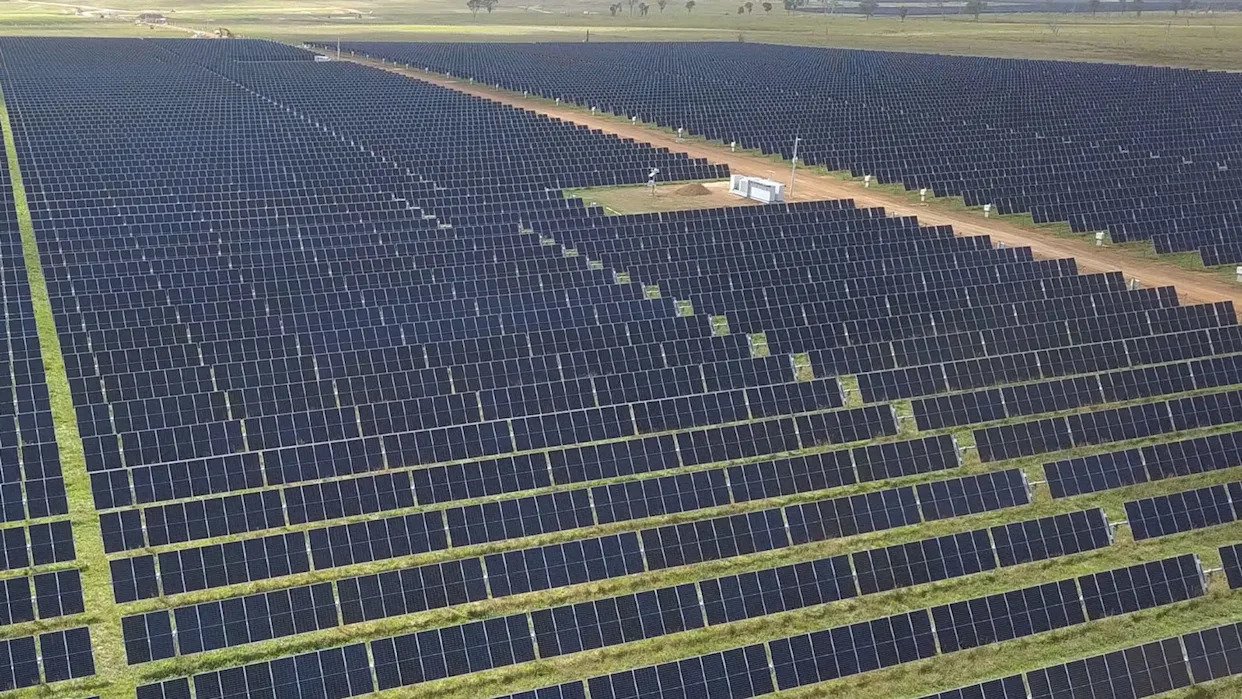
The increase came primarily from the first full quarter of operations at Stubbo Solar, a four-hundred-megawatt solar project in New South Wales, alongside stronger output from the company’s New England Solar development near Uralla.
Combined generation from the portfolio reached roughly five hundred and twenty-eight gigawatt-hours during the quarter.
The story is fundamentally system-driven.
Australia’s eastern electricity market is moving through a structural transformation in which aging coal generation is being replaced by large-scale renewable projects supported by batteries, transmission upgrades and government-backed market mechanisms.
ACEN’s output surge is not an isolated corporate success.
It is evidence of how fast new solar capacity is entering the grid and how heavily Australia’s future energy system now depends on renewable integration.
Stubbo Solar became operational in late 2025 and is one of the largest solar projects completed in Australia.
The project was also the first solar development backed by a Long-Term Energy Service Agreement, or LTESA, to reach full commercial operation in New South Wales.
The agreement structure guarantees minimum revenue support, reducing investment risk and helping governments accelerate private renewable construction.
That policy architecture matters because Australia is trying to replace retiring coal plants without triggering energy shortages or sustained price shocks.
The New South Wales government has designated renewable energy zones intended to concentrate new solar, wind and storage projects around upgraded transmission infrastructure.
Stubbo sits inside the Central-West Orana Renewable Energy Zone, one of the country’s flagship transition corridors.
The rapid increase in output also reveals the changing economics of Australia’s electricity market.
ACEN’s generation rose faster than revenue because wholesale electricity prices weakened during the quarter.
Solar production is expanding so rapidly in daylight hours that abundant supply is suppressing midday spot prices across parts of the National Electricity Market.
This is becoming one of the defining tensions in Australia’s energy transition.
More renewable generation lowers emissions and reduces dependence on fossil fuels, but oversupply during peak solar hours can erode profitability for generators unless battery storage, transmission capacity and flexible demand grow at the same pace.
ACEN’s New England project illustrates how companies are responding.
The site is being expanded from four hundred megawatts toward seven hundred and twenty megawatts while adding a two-hundred-megawatt battery energy storage system designed to shift solar energy into evening demand periods.
The battery project is expected to become fully operational during 2026.
Storage is no longer a secondary feature of renewable projects in Australia.
It is increasingly central to grid stability.
Large batteries are now being used not only to store excess electricity but also to provide system-strength services traditionally supplied by coal-fired generators.
The Australian Energy Market Operator has repeatedly warned that transmission bottlenecks and declining system strength could threaten reliability if renewable deployment outpaces grid modernization.
ACEN said reduced curtailment at New England contributed to the stronger quarterly performance.
Curtailment occurs when renewable plants are forced to reduce output because transmission networks cannot absorb additional power or because prices collapse during oversupply periods.
In practical terms, some solar farms in Australia can generate electricity that the grid cannot economically use at that moment.
The improvement suggests that battery growth and network adjustments are beginning to ease some constraints in northern New South Wales even as congestion remains severe in other parts of the state.
The issue is commercially significant because curtailment directly reduces revenue for renewable developers.
The company’s results also underline the scale of international capital flowing into Australia’s energy transition.
ACEN Australia, backed by Philippine conglomerate Ayala Corporation, has secured major financing arrangements tied to renewable expansion and battery deployment.
International investors increasingly view Australia as one of the world’s largest long-duration renewable growth markets because of its vast solar resources, aging coal fleet and strong institutional demand for clean energy.
At the same time, the transition remains politically and operationally sensitive.
Coal still provides a major share of Australia’s baseload electricity supply, and authorities continue to warn that replacement infrastructure must arrive before large thermal plants retire.
Recent market assessments show renewables and batteries supplying record levels of electricity across the National Electricity Market, while gas generation has fallen sharply during some periods.
The broader consequence is that Australia is entering a more volatile but more flexible electricity era.
Prices increasingly swing between extreme lows during sunny periods and sharp spikes during evening peaks or transmission stress events.
Battery deployment, industrial electrification and expanded interconnection between states are becoming essential tools for stabilizing that system.
ACEN’s eighty-seven percent output jump therefore represents more than a strong quarterly result.
It shows how quickly renewable infrastructure is scaling inside Australia’s energy market and how urgently the country must complete the next stage of grid modernization to manage the consequences of its own clean-energy acceleration.
The company reported an eighty-seven percent year-on-year increase in electricity generation from its New South Wales solar portfolio during the first quarter of 2026, driven by newly commissioned capacity and improved grid conditions.
The increase came primarily from the first full quarter of operations at Stubbo Solar, a four-hundred-megawatt solar project in New South Wales, alongside stronger output from the company’s New England Solar development near Uralla.
Combined generation from the portfolio reached roughly five hundred and twenty-eight gigawatt-hours during the quarter.
The story is fundamentally system-driven.
Australia’s eastern electricity market is moving through a structural transformation in which aging coal generation is being replaced by large-scale renewable projects supported by batteries, transmission upgrades and government-backed market mechanisms.
ACEN’s output surge is not an isolated corporate success.
It is evidence of how fast new solar capacity is entering the grid and how heavily Australia’s future energy system now depends on renewable integration.
Stubbo Solar became operational in late 2025 and is one of the largest solar projects completed in Australia.
The project was also the first solar development backed by a Long-Term Energy Service Agreement, or LTESA, to reach full commercial operation in New South Wales.
The agreement structure guarantees minimum revenue support, reducing investment risk and helping governments accelerate private renewable construction.
That policy architecture matters because Australia is trying to replace retiring coal plants without triggering energy shortages or sustained price shocks.
The New South Wales government has designated renewable energy zones intended to concentrate new solar, wind and storage projects around upgraded transmission infrastructure.
Stubbo sits inside the Central-West Orana Renewable Energy Zone, one of the country’s flagship transition corridors.
The rapid increase in output also reveals the changing economics of Australia’s electricity market.
ACEN’s generation rose faster than revenue because wholesale electricity prices weakened during the quarter.
Solar production is expanding so rapidly in daylight hours that abundant supply is suppressing midday spot prices across parts of the National Electricity Market.
This is becoming one of the defining tensions in Australia’s energy transition.
More renewable generation lowers emissions and reduces dependence on fossil fuels, but oversupply during peak solar hours can erode profitability for generators unless battery storage, transmission capacity and flexible demand grow at the same pace.
ACEN’s New England project illustrates how companies are responding.
The site is being expanded from four hundred megawatts toward seven hundred and twenty megawatts while adding a two-hundred-megawatt battery energy storage system designed to shift solar energy into evening demand periods.
The battery project is expected to become fully operational during 2026.
Storage is no longer a secondary feature of renewable projects in Australia.
It is increasingly central to grid stability.
Large batteries are now being used not only to store excess electricity but also to provide system-strength services traditionally supplied by coal-fired generators.
The Australian Energy Market Operator has repeatedly warned that transmission bottlenecks and declining system strength could threaten reliability if renewable deployment outpaces grid modernization.
ACEN said reduced curtailment at New England contributed to the stronger quarterly performance.
Curtailment occurs when renewable plants are forced to reduce output because transmission networks cannot absorb additional power or because prices collapse during oversupply periods.
In practical terms, some solar farms in Australia can generate electricity that the grid cannot economically use at that moment.
The improvement suggests that battery growth and network adjustments are beginning to ease some constraints in northern New South Wales even as congestion remains severe in other parts of the state.
The issue is commercially significant because curtailment directly reduces revenue for renewable developers.
The company’s results also underline the scale of international capital flowing into Australia’s energy transition.
ACEN Australia, backed by Philippine conglomerate Ayala Corporation, has secured major financing arrangements tied to renewable expansion and battery deployment.
International investors increasingly view Australia as one of the world’s largest long-duration renewable growth markets because of its vast solar resources, aging coal fleet and strong institutional demand for clean energy.
At the same time, the transition remains politically and operationally sensitive.
Coal still provides a major share of Australia’s baseload electricity supply, and authorities continue to warn that replacement infrastructure must arrive before large thermal plants retire.
Recent market assessments show renewables and batteries supplying record levels of electricity across the National Electricity Market, while gas generation has fallen sharply during some periods.
The broader consequence is that Australia is entering a more volatile but more flexible electricity era.
Prices increasingly swing between extreme lows during sunny periods and sharp spikes during evening peaks or transmission stress events.
Battery deployment, industrial electrification and expanded interconnection between states are becoming essential tools for stabilizing that system.
ACEN’s eighty-seven percent output jump therefore represents more than a strong quarterly result.
It shows how quickly renewable infrastructure is scaling inside Australia’s energy market and how urgently the country must complete the next stage of grid modernization to manage the consequences of its own clean-energy acceleration.
AI Disclaimer: An advanced artificial intelligence (AI) system generated the content of this page on its own. This innovative technology conducts extensive research from a variety of reliable sources, performs rigorous fact-checking and verification, cleans up and balances biased or manipulated content, and presents a minimal factual summary that is just enough yet essential for you to function as an informed and educated citizen. Please keep in mind, however, that this system is an evolving technology, and as a result, the article may contain accidental inaccuracies or errors. We urge you to help us improve our site by reporting any inaccuracies you find using the "Contact Us" link at the bottom of this page. Your helpful feedback helps us improve our system and deliver more precise content. When you find an article of interest here, please look for the full and extensive coverage of this topic in traditional news sources, as they are written by professional journalists that we try to support, not replace. We appreciate your understanding and assistance.