Australia’s LNG Industry Sees Wartime Windfall but Fears It Cannot Capitalize
Surging global gas prices linked to the Iran conflict are exposing deep structural tensions inside Australia’s liquefied natural gas sector, where regulatory delays, labor disputes, and investment uncertainty threaten future export growth
Australia’s liquefied natural gas industry is confronting a system-driven crisis in which global demand and pricing conditions are turning sharply in its favor while domestic regulatory and political constraints threaten to prevent the country from fully exploiting the opportunity.
The immediate trigger is the war involving Iran and the resulting disruption across Middle Eastern energy markets.
The conflict has destabilized supply flows linked to the Strait of Hormuz, a critical shipping corridor through which a large share of the world’s liquefied natural gas passes.
The interruption of exports from major Gulf producers has tightened global LNG supply, pushed Asian spot prices sharply higher, and increased strategic demand for alternative exporters.
Australia, already one of the world’s largest LNG exporters, should theoretically be among the main beneficiaries.
Producers are receiving stronger prices, Asian buyers are seeking supply security outside the Gulf, and long-term concerns over energy reliability have returned to the center of policymaking across Japan, South Korea, and parts of Southeast Asia.
But the central issue is that Australia’s LNG sector argues it lacks the investment environment needed to respond quickly.
Industry executives and producers have warned that permitting delays, environmental litigation, policy uncertainty, domestic gas reservation measures, and rising project costs are discouraging major capital commitments at precisely the moment global demand conditions favor expansion.
Executives speaking at Australia’s main energy industry conference this week described the sector as trapped in a contradiction: strategically valuable internationally but increasingly difficult to finance and expand domestically.
Their concern is not simply short-term profit.
The industry believes the current supply disruption could reshape long-term LNG trade patterns if buyers permanently diversify away from politically vulnerable regions.
The stakes are substantial because LNG is one of Australia’s most important export industries.
Gas exports generate tens of billions of dollars in annual revenue, support large engineering and shipping networks, and anchor long-term energy relationships with major Asian economies.
Higher LNG prices also improve government royalty and tax receipts, particularly during periods of global energy stress.
Yet the benefits are uneven.
Higher global gas prices can also increase domestic energy costs inside Australia, intensifying political pressure on the federal government to prioritize local supply and affordability over export expansion.
This has become a major fault line between Canberra and producers.
Recent government measures requiring portions of uncontracted gas to be directed toward domestic supply have become especially controversial.
Producers argue the policy weakens investment incentives and creates uncertainty around future export economics.
Critics of the industry counter that Australia exports enormous volumes of gas while households and manufacturers still face high domestic energy costs.
The dispute is unfolding alongside operational risks that underline how fragile the sector remains even during a pricing boom.
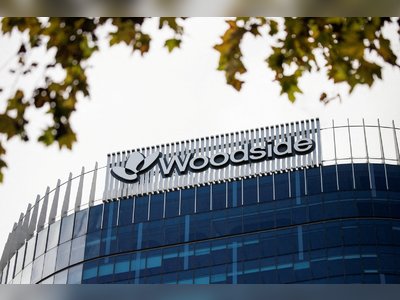
Industrial action has disrupted parts of the LNG workforce at major facilities operated by Woodside Energy, while additional strike threats have emerged at other export terminals.
Labor shortages, construction inflation, and contractor disputes are increasing costs across the sector.
There is also a deeper strategic concern behind the industry’s warnings.
LNG projects require massive upfront investment and often take close to a decade to move from approval to full export operation.
Executives fear that if approvals continue to slow, Australia could miss the final major wave of long-term LNG contracting before global demand growth plateaus later in the 2030s.
That concern reflects a structural shift underway across global energy markets.
While the Iran conflict has increased short-term demand for non-Middle Eastern LNG, many importing countries are simultaneously accelerating renewable energy investment, nuclear expansion, and electrification strategies to reduce exposure to geopolitical fuel shocks.
Several market analyses now project that global LNG supply could eventually outpace long-term demand once major projects in the United States and Qatar come online later this decade.
In practical terms, Australia’s LNG sector is trying to solve two conflicting problems at once.
It wants to capitalize on the geopolitical premium created by the Iran conflict while persuading investors that gas projects approved today will still generate strong returns in a world moving gradually toward lower-carbon energy systems.
The result is a high-pressure moment for Australian energy policy.
Producers are lobbying aggressively for faster approvals and more stable export settings.
Environmental groups and some economists argue the industry is using wartime volatility to push for expanded fossil fuel development that may become economically risky over the long term.
What is confirmed is that the war has already reshaped energy pricing and supply calculations across Asia-Pacific markets.
The practical question now confronting Australia is whether its regulatory system, political consensus, and investment climate can move fast enough for the country to convert temporary geopolitical disruption into durable commercial advantage.
The immediate trigger is the war involving Iran and the resulting disruption across Middle Eastern energy markets.
The conflict has destabilized supply flows linked to the Strait of Hormuz, a critical shipping corridor through which a large share of the world’s liquefied natural gas passes.
The interruption of exports from major Gulf producers has tightened global LNG supply, pushed Asian spot prices sharply higher, and increased strategic demand for alternative exporters.
Australia, already one of the world’s largest LNG exporters, should theoretically be among the main beneficiaries.
Producers are receiving stronger prices, Asian buyers are seeking supply security outside the Gulf, and long-term concerns over energy reliability have returned to the center of policymaking across Japan, South Korea, and parts of Southeast Asia.
But the central issue is that Australia’s LNG sector argues it lacks the investment environment needed to respond quickly.
Industry executives and producers have warned that permitting delays, environmental litigation, policy uncertainty, domestic gas reservation measures, and rising project costs are discouraging major capital commitments at precisely the moment global demand conditions favor expansion.
Executives speaking at Australia’s main energy industry conference this week described the sector as trapped in a contradiction: strategically valuable internationally but increasingly difficult to finance and expand domestically.
Their concern is not simply short-term profit.
The industry believes the current supply disruption could reshape long-term LNG trade patterns if buyers permanently diversify away from politically vulnerable regions.
The stakes are substantial because LNG is one of Australia’s most important export industries.
Gas exports generate tens of billions of dollars in annual revenue, support large engineering and shipping networks, and anchor long-term energy relationships with major Asian economies.
Higher LNG prices also improve government royalty and tax receipts, particularly during periods of global energy stress.
Yet the benefits are uneven.
Higher global gas prices can also increase domestic energy costs inside Australia, intensifying political pressure on the federal government to prioritize local supply and affordability over export expansion.
This has become a major fault line between Canberra and producers.
Recent government measures requiring portions of uncontracted gas to be directed toward domestic supply have become especially controversial.
Producers argue the policy weakens investment incentives and creates uncertainty around future export economics.
Critics of the industry counter that Australia exports enormous volumes of gas while households and manufacturers still face high domestic energy costs.
The dispute is unfolding alongside operational risks that underline how fragile the sector remains even during a pricing boom.
Industrial action has disrupted parts of the LNG workforce at major facilities operated by Woodside Energy, while additional strike threats have emerged at other export terminals.
Labor shortages, construction inflation, and contractor disputes are increasing costs across the sector.
There is also a deeper strategic concern behind the industry’s warnings.
LNG projects require massive upfront investment and often take close to a decade to move from approval to full export operation.
Executives fear that if approvals continue to slow, Australia could miss the final major wave of long-term LNG contracting before global demand growth plateaus later in the 2030s.
That concern reflects a structural shift underway across global energy markets.
While the Iran conflict has increased short-term demand for non-Middle Eastern LNG, many importing countries are simultaneously accelerating renewable energy investment, nuclear expansion, and electrification strategies to reduce exposure to geopolitical fuel shocks.
Several market analyses now project that global LNG supply could eventually outpace long-term demand once major projects in the United States and Qatar come online later this decade.
In practical terms, Australia’s LNG sector is trying to solve two conflicting problems at once.
It wants to capitalize on the geopolitical premium created by the Iran conflict while persuading investors that gas projects approved today will still generate strong returns in a world moving gradually toward lower-carbon energy systems.
The result is a high-pressure moment for Australian energy policy.
Producers are lobbying aggressively for faster approvals and more stable export settings.
Environmental groups and some economists argue the industry is using wartime volatility to push for expanded fossil fuel development that may become economically risky over the long term.
What is confirmed is that the war has already reshaped energy pricing and supply calculations across Asia-Pacific markets.
The practical question now confronting Australia is whether its regulatory system, political consensus, and investment climate can move fast enough for the country to convert temporary geopolitical disruption into durable commercial advantage.
AI Disclaimer: An advanced artificial intelligence (AI) system generated the content of this page on its own. This innovative technology conducts extensive research from a variety of reliable sources, performs rigorous fact-checking and verification, cleans up and balances biased or manipulated content, and presents a minimal factual summary that is just enough yet essential for you to function as an informed and educated citizen. Please keep in mind, however, that this system is an evolving technology, and as a result, the article may contain accidental inaccuracies or errors. We urge you to help us improve our site by reporting any inaccuracies you find using the "Contact Us" link at the bottom of this page. Your helpful feedback helps us improve our system and deliver more precise content. When you find an article of interest here, please look for the full and extensive coverage of this topic in traditional news sources, as they are written by professional journalists that we try to support, not replace. We appreciate your understanding and assistance.