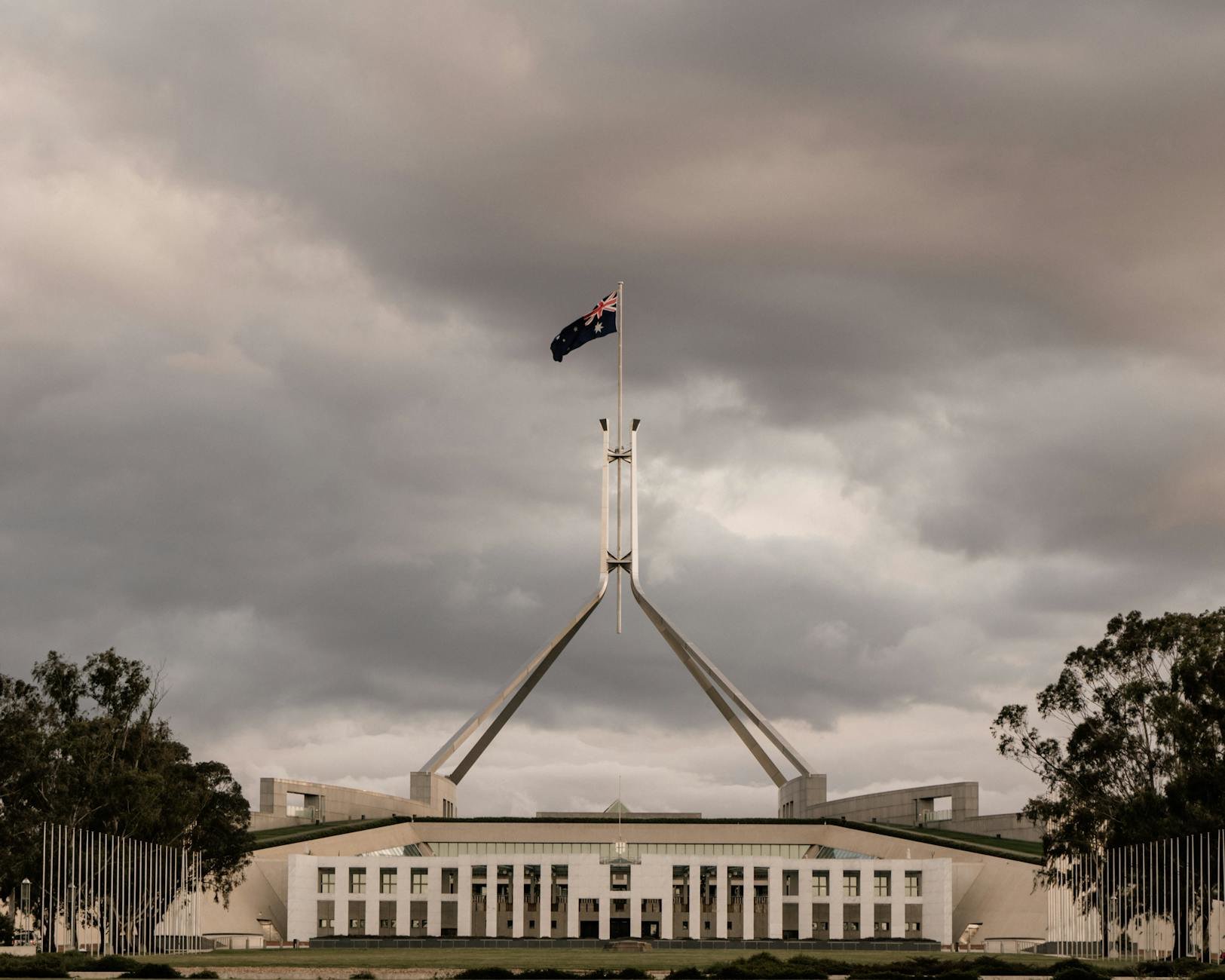
Australia’s Under-16 Social Media Ban Is Reshaping Global Tech Regulation — and Exposing the Limits of Enforcement
Five months after the law took effect, millions of accounts have been removed, major platforms face investigations, and critics argue the world-first policy is colliding with technical reality.
Australia’s social media age-restriction regime is fundamentally a regulatory experiment: a government-led attempt to force global technology platforms to redesign access to social media for minors.
The policy, which bars most Australians under sixteen from holding accounts on major social platforms, has become one of the most aggressive online safety interventions attempted by a democratic government and a major test of whether states can impose age-based controls on global digital infrastructure.
The law took effect in December 2025 after the Australian government concluded that voluntary safety measures by major platforms had failed to curb harms linked to compulsive use, online abuse, predatory behavior, self-harm content, and algorithmic amplification targeting children.
Platforms including Facebook, Instagram, TikTok, Snapchat, YouTube, Reddit, X, Threads, Twitch and Kick are now legally required to take what regulators call “reasonable steps” to stop Australians under sixteen from creating or maintaining accounts.
What is confirmed is that the policy has already forced large-scale account removals.
Australian regulators say roughly 4.7 million accounts believed to belong to underage users were restricted, removed, or deactivated shortly after enforcement began.
Meta alone blocked more than half a million accounts across Facebook, Instagram and Threads during the first implementation phase.
But the headline numbers conceal the central problem now confronting the policy: enforcement is proving far harder than legislation.
Australian regulators have opened investigations into several major platforms over suspected failures to comply with the law, while surveys of parents and teenagers indicate that many underage users continue accessing banned services through workarounds including false age declarations, facial-recognition manipulation, secondary devices, virtual private networks, and migration to less-regulated apps.
The key issue is that the law does not ban children from using the internet.
It specifically targets account-based access to designated social media platforms.
Messaging services, education tools, gaming services, and some community platforms remain outside the restriction framework.
That distinction has created a rapidly shifting digital landscape in which teenagers move toward platforms with weaker moderation or legal ambiguity.
Australia’s eSafety Commissioner has become the operational center of the system.
The regulator can compel information from platforms, investigate compliance failures, and seek penalties that can reach tens of millions of dollars.
Officials have publicly warned companies that symbolic compliance will not satisfy the law.
The government has framed the policy as a child-protection measure rather than a censorship initiative, arguing that companies built engagement systems optimized to maximize adolescent screen time while externalizing the social costs.
The law’s technical architecture is equally significant because it effectively forces platforms to develop or expand age-assurance systems.
Companies can use combinations of government identification checks, biometric age estimation, behavioral inference, parental verification, or device-linked signals.
That has triggered a parallel debate over privacy, surveillance, and data retention.
Critics argue that a law intended to protect children may accelerate the normalization of identity verification across the broader internet.
Digital rights advocates warn that mandatory age assurance creates incentives for centralized identity systems, expands corporate data collection, and increases risks tied to biometric processing.
Some researchers also argue that the policy shifts responsibility away from platform design and toward user authentication, leaving addictive recommendation systems largely intact.
Supporters counter that the previous model failed decisively.
They argue that platforms spent years resisting stronger child-safety rules while continuing to deploy engagement features designed to maximize behavioral retention among minors.
For advocates of the ban, imperfect enforcement is preferable to regulatory paralysis.
The policy has also created tensions inside Australia’s own technology and education sectors.
Researchers studying early outcomes have found that some teenagers who lost access to mainstream platforms now consume less news and participate less in civic discussion online.
Others migrated to fringe services with weaker moderation systems.
Mental health experts remain divided over whether reduced exposure to mainstream social media outweighs the risks of displacement into harder-to-monitor spaces.
Another unresolved operational challenge involves platform classification.
Australian authorities continue updating lists of which services fall under the restriction regime.
Some apps originally outside the framework have since been added after regulators concluded they functioned as social media platforms in practice.
Others remain exempt because they are categorized primarily as messaging, education, gaming, or productivity tools.
That fluid classification process has created uncertainty for companies operating hybrid services.
Internationally, Australia’s law is being closely watched because it moves beyond content moderation into direct age-based exclusion from platform participation.
Governments in Europe, North America and parts of Asia are studying elements of the model as pressure grows to regulate algorithmic harms affecting minors.
At the same time, foreign regulators are also examining the implementation difficulties now emerging in Australia, especially the gap between legal obligations and practical enforceability.
Big technology companies face a difficult strategic calculation.
Publicly opposing child-safety legislation carries political risk, particularly after years of criticism over online harms affecting minors.
Yet fully complying with Australia’s framework could require extensive redesign of onboarding systems, identity infrastructure, moderation processes, and regional data handling.
The commercial implications extend beyond Australia because any scalable age-verification architecture developed there could become a template for other jurisdictions.
The Australian government appears committed to escalation rather than retreat.
Regulators are moving from an implementation phase toward active enforcement, investigations into major platforms are continuing, and officials have signaled that financial penalties remain available if companies are found to have systematically failed to comply with the law.
The policy, which bars most Australians under sixteen from holding accounts on major social platforms, has become one of the most aggressive online safety interventions attempted by a democratic government and a major test of whether states can impose age-based controls on global digital infrastructure.
The law took effect in December 2025 after the Australian government concluded that voluntary safety measures by major platforms had failed to curb harms linked to compulsive use, online abuse, predatory behavior, self-harm content, and algorithmic amplification targeting children.
Platforms including Facebook, Instagram, TikTok, Snapchat, YouTube, Reddit, X, Threads, Twitch and Kick are now legally required to take what regulators call “reasonable steps” to stop Australians under sixteen from creating or maintaining accounts.
What is confirmed is that the policy has already forced large-scale account removals.
Australian regulators say roughly 4.7 million accounts believed to belong to underage users were restricted, removed, or deactivated shortly after enforcement began.
Meta alone blocked more than half a million accounts across Facebook, Instagram and Threads during the first implementation phase.
But the headline numbers conceal the central problem now confronting the policy: enforcement is proving far harder than legislation.
Australian regulators have opened investigations into several major platforms over suspected failures to comply with the law, while surveys of parents and teenagers indicate that many underage users continue accessing banned services through workarounds including false age declarations, facial-recognition manipulation, secondary devices, virtual private networks, and migration to less-regulated apps.
The key issue is that the law does not ban children from using the internet.
It specifically targets account-based access to designated social media platforms.
Messaging services, education tools, gaming services, and some community platforms remain outside the restriction framework.
That distinction has created a rapidly shifting digital landscape in which teenagers move toward platforms with weaker moderation or legal ambiguity.
Australia’s eSafety Commissioner has become the operational center of the system.
The regulator can compel information from platforms, investigate compliance failures, and seek penalties that can reach tens of millions of dollars.
Officials have publicly warned companies that symbolic compliance will not satisfy the law.
The government has framed the policy as a child-protection measure rather than a censorship initiative, arguing that companies built engagement systems optimized to maximize adolescent screen time while externalizing the social costs.
The law’s technical architecture is equally significant because it effectively forces platforms to develop or expand age-assurance systems.
Companies can use combinations of government identification checks, biometric age estimation, behavioral inference, parental verification, or device-linked signals.
That has triggered a parallel debate over privacy, surveillance, and data retention.
Critics argue that a law intended to protect children may accelerate the normalization of identity verification across the broader internet.
Digital rights advocates warn that mandatory age assurance creates incentives for centralized identity systems, expands corporate data collection, and increases risks tied to biometric processing.
Some researchers also argue that the policy shifts responsibility away from platform design and toward user authentication, leaving addictive recommendation systems largely intact.
Supporters counter that the previous model failed decisively.
They argue that platforms spent years resisting stronger child-safety rules while continuing to deploy engagement features designed to maximize behavioral retention among minors.
For advocates of the ban, imperfect enforcement is preferable to regulatory paralysis.
The policy has also created tensions inside Australia’s own technology and education sectors.
Researchers studying early outcomes have found that some teenagers who lost access to mainstream platforms now consume less news and participate less in civic discussion online.
Others migrated to fringe services with weaker moderation systems.
Mental health experts remain divided over whether reduced exposure to mainstream social media outweighs the risks of displacement into harder-to-monitor spaces.
Another unresolved operational challenge involves platform classification.
Australian authorities continue updating lists of which services fall under the restriction regime.
Some apps originally outside the framework have since been added after regulators concluded they functioned as social media platforms in practice.
Others remain exempt because they are categorized primarily as messaging, education, gaming, or productivity tools.
That fluid classification process has created uncertainty for companies operating hybrid services.
Internationally, Australia’s law is being closely watched because it moves beyond content moderation into direct age-based exclusion from platform participation.
Governments in Europe, North America and parts of Asia are studying elements of the model as pressure grows to regulate algorithmic harms affecting minors.
At the same time, foreign regulators are also examining the implementation difficulties now emerging in Australia, especially the gap between legal obligations and practical enforceability.
Big technology companies face a difficult strategic calculation.
Publicly opposing child-safety legislation carries political risk, particularly after years of criticism over online harms affecting minors.
Yet fully complying with Australia’s framework could require extensive redesign of onboarding systems, identity infrastructure, moderation processes, and regional data handling.
The commercial implications extend beyond Australia because any scalable age-verification architecture developed there could become a template for other jurisdictions.
The Australian government appears committed to escalation rather than retreat.
Regulators are moving from an implementation phase toward active enforcement, investigations into major platforms are continuing, and officials have signaled that financial penalties remain available if companies are found to have systematically failed to comply with the law.
AI Disclaimer: An advanced artificial intelligence (AI) system generated the content of this page on its own. This innovative technology conducts extensive research from a variety of reliable sources, performs rigorous fact-checking and verification, cleans up and balances biased or manipulated content, and presents a minimal factual summary that is just enough yet essential for you to function as an informed and educated citizen. Please keep in mind, however, that this system is an evolving technology, and as a result, the article may contain accidental inaccuracies or errors. We urge you to help us improve our site by reporting any inaccuracies you find using the "Contact Us" link at the bottom of this page. Your helpful feedback helps us improve our system and deliver more precise content. When you find an article of interest here, please look for the full and extensive coverage of this topic in traditional news sources, as they are written by professional journalists that we try to support, not replace. We appreciate your understanding and assistance.