0:00
0:00
Oil Shock From Strait of Hormuz Disruption Sends Ripples Through Australia’s Economy
Fuel price spikes, looming interest rate rises, helium shortages and surging electric-vehicle demand reveal how turmoil in the Gulf is reshaping daily life and business across Australia.
The disruption of shipping through the Strait of Hormuz, one of the world’s most critical energy corridors, is sending economic shockwaves far beyond the Middle East, with Australia now feeling the effects across its fuel markets, financial system and supply chains.
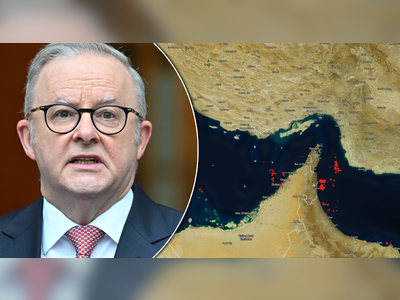
The narrow waterway between Iran and Oman carries roughly a fifth of the world’s oil supply and significant volumes of natural gas and petrochemical products.
Military escalation in the region has sharply reduced tanker traffic through the strait, pushing global energy prices higher and creating ripple effects across international trade and inflation.
For Australia, the most immediate impact has been a surge in fuel prices and tightening supply.
Petrol costs have jumped by as much as fifty cents per litre in recent weeks, while shortages have appeared in some regional areas as demand spikes and distribution networks struggle to keep pace.
The price shock is feeding directly into broader cost-of-living pressures.
Economists warn that higher oil prices raise the cost of transport, food production and freight, which in turn lifts inflation.
Major banks now expect the Reserve Bank of Australia to respond with additional interest rate increases, potentially pushing up mortgage repayments for households already facing rising living costs.
Australia’s exposure stems partly from its dependence on imported fuel.
While the country imports relatively little crude oil directly from the Middle East, a large share of its refined fuel is sourced from Asian refineries that rely heavily on Gulf crude transported through the Strait of Hormuz.
Disruption to that route can therefore restrict supply and raise prices even when shipments to Australia originate elsewhere.
Another unexpected consequence of the conflict is a looming shortage of helium, a gas essential for medical imaging equipment such as MRI scanners as well as scientific research.
Much of the world’s helium supply originates in Qatar, and attacks affecting production and shipping routes in the Gulf have interrupted global distribution.
Australia has no large-scale domestic helium production, leaving hospitals and laboratories dependent on imports.
The energy shock is also accelerating changes in consumer behaviour.
With petrol prices climbing sharply, demand for electric vehicles and hybrid cars has surged, with sales rising rapidly in recent months.
Analysts say the price gap between petrol and electricity has become a powerful incentive for motorists to consider switching to battery-powered transport.
Beyond transport, the oil surge is flowing through manufacturing supply chains.
Products derived from petrochemicals, including plastics and packaging materials, are becoming more expensive as the cost of crude oil rises.
At the same time, fertiliser prices linked to natural gas production are increasing, raising concerns that food costs could climb in the months ahead.
Economists note that these combined effects illustrate how a distant geopolitical conflict can quickly translate into economic consequences at home.
Energy markets respond immediately to disruptions in critical trade routes, and those price shifts ripple through everything from interest rates to supermarket shelves.
For Australia, the Strait of Hormuz crisis has underscored a structural vulnerability shared by many advanced economies: dependence on global energy networks that remain highly sensitive to geopolitical shocks.
The narrow waterway between Iran and Oman carries roughly a fifth of the world’s oil supply and significant volumes of natural gas and petrochemical products.
Military escalation in the region has sharply reduced tanker traffic through the strait, pushing global energy prices higher and creating ripple effects across international trade and inflation.
For Australia, the most immediate impact has been a surge in fuel prices and tightening supply.
Petrol costs have jumped by as much as fifty cents per litre in recent weeks, while shortages have appeared in some regional areas as demand spikes and distribution networks struggle to keep pace.
The price shock is feeding directly into broader cost-of-living pressures.
Economists warn that higher oil prices raise the cost of transport, food production and freight, which in turn lifts inflation.
Major banks now expect the Reserve Bank of Australia to respond with additional interest rate increases, potentially pushing up mortgage repayments for households already facing rising living costs.
Australia’s exposure stems partly from its dependence on imported fuel.
While the country imports relatively little crude oil directly from the Middle East, a large share of its refined fuel is sourced from Asian refineries that rely heavily on Gulf crude transported through the Strait of Hormuz.
Disruption to that route can therefore restrict supply and raise prices even when shipments to Australia originate elsewhere.
Another unexpected consequence of the conflict is a looming shortage of helium, a gas essential for medical imaging equipment such as MRI scanners as well as scientific research.
Much of the world’s helium supply originates in Qatar, and attacks affecting production and shipping routes in the Gulf have interrupted global distribution.
Australia has no large-scale domestic helium production, leaving hospitals and laboratories dependent on imports.
The energy shock is also accelerating changes in consumer behaviour.
With petrol prices climbing sharply, demand for electric vehicles and hybrid cars has surged, with sales rising rapidly in recent months.
Analysts say the price gap between petrol and electricity has become a powerful incentive for motorists to consider switching to battery-powered transport.
Beyond transport, the oil surge is flowing through manufacturing supply chains.
Products derived from petrochemicals, including plastics and packaging materials, are becoming more expensive as the cost of crude oil rises.
At the same time, fertiliser prices linked to natural gas production are increasing, raising concerns that food costs could climb in the months ahead.
Economists note that these combined effects illustrate how a distant geopolitical conflict can quickly translate into economic consequences at home.
Energy markets respond immediately to disruptions in critical trade routes, and those price shifts ripple through everything from interest rates to supermarket shelves.
For Australia, the Strait of Hormuz crisis has underscored a structural vulnerability shared by many advanced economies: dependence on global energy networks that remain highly sensitive to geopolitical shocks.
AI Disclaimer: An advanced artificial intelligence (AI) system generated the content of this page on its own. This innovative technology conducts extensive research from a variety of reliable sources, performs rigorous fact-checking and verification, cleans up and balances biased or manipulated content, and presents a minimal factual summary that is just enough yet essential for you to function as an informed and educated citizen. Please keep in mind, however, that this system is an evolving technology, and as a result, the article may contain accidental inaccuracies or errors. We urge you to help us improve our site by reporting any inaccuracies you find using the "Contact Us" link at the bottom of this page. Your helpful feedback helps us improve our system and deliver more precise content. When you find an article of interest here, please look for the full and extensive coverage of this topic in traditional news sources, as they are written by professional journalists that we try to support, not replace. We appreciate your understanding and assistance.